Flowers
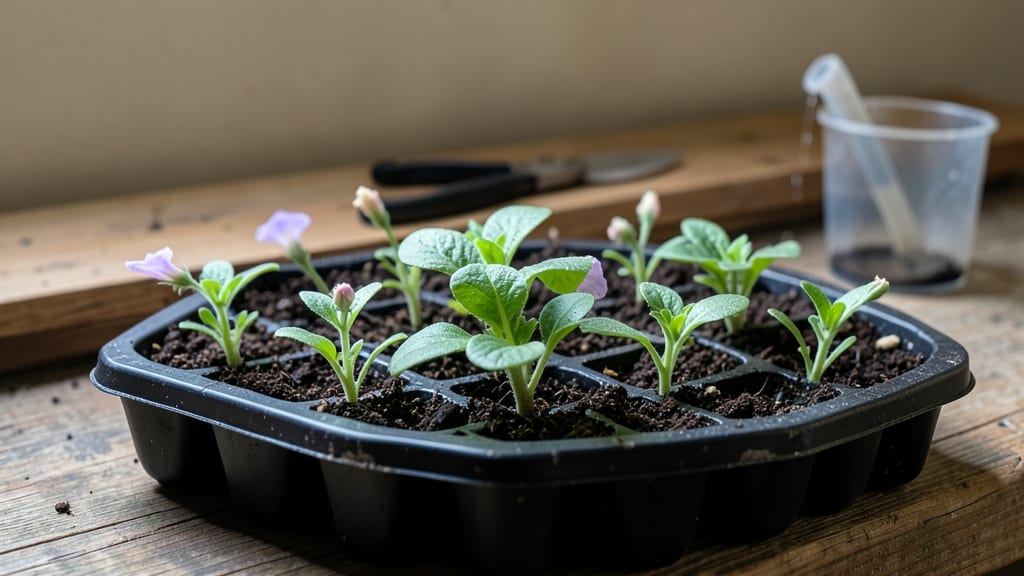
Identifying flower seedlings starts with a single glance at those first delicate leaves—because every plant whispers its identity through shape and growth. I’ve spent years pulling up mislabeled seedlings only to realize I’d missed clues hidden in the leaf veins or stem hairiness.
The right identification means the difference between thriving blooms and stunted plants that never reach their potential.
Your toolkit is simpler than you think: a magnifying glass for close-ups, your original seed packet (if you have it), and a basic understanding of how leaves unfurl. For example, snapdragons have fuzzy stems and rounded leaves, while petunias sport smooth stems and pointed, slightly waxy foliage.
Even small differences in leaf edges—serrated, lobed, or smooth—can reveal the plant’s true name.
When in doubt, compare your seedlings to trusted resources like gardening apps or local nursery guides. A quick photo search can confirm whether those oddly shaped leaves belong to a marigold or a misplaced basil.
The payoff? Transplanting with confidence, knowing each seedling gets the perfect spot and care it needs to flourish.
This skill grows with practice—start with common annuals, then tackle tricky perennials. Soon, you’ll spot the subtle signals that turn a random sprout into a future showstopper. Let’s get those seedlings named right from the start.
📚 In This Guide
- What you need
- Instructions
- Tips and common mistakes
- Wrapping up and next steps
What you need
- ● Seedlings or young plants: 1–10 plants (depending on your project size), preferably at the cotyledon or first true leaf stage for accurate identification.
- ● Magnifying glass or hand lens: 10x magnification (for examining fine details like leaf veins, hairs, or texture).
- ● Ruler or measuring tape: 6-inch or 15-cm ruler (to measure leaf size, spacing, and growth patterns).
- ● Notebook or digital device: For recording observations (leaf shape, color, arrangement, and growth habits).
- ● Field guide or plant identification app: e.g., PlantNet, iNaturalist, or a regional flora guide (for cross-referencing features).
- ○ Gloves (optional): Lightweight gardening gloves (to protect hands from soil, thorns, or sap).
- ● Camera or smartphone: With a macro setting (to capture close-ups of leaves, stems, and flowers).
- ● Grow lights or sunny windowsill: To encourage healthy growth while you observe (12–16 hours of light/day).
- ● Humidity dome or plastic wrap: For seedlings needing extra moisture (e.g., succulents vs. ferns).
- ● Pruning shears: Small, sharp pair (for gently trimming leaves if needed for clearer identification).
- ● pH testing kit: To check soil acidity (some seedlings thrive in specific pH ranges).
- ● Seedling trays or pots: 2–4 inch pots (if repotting for better growth observation).
Step-by-Step guide to identifying flower seedlings
Here's how to tell your seedlings apart before they bloom.
Observe the First True Leaves
Seedlings first produce cotyledons—those initial, simple leaves that look almost identical across species. But the second set of leaves (true leaves) reveals everything. Snap a photo of each seedling's true leaves under bright light; shadows can distort shapes. Compare them to reference charts or seed packets—most include leaf diagrams.
Look for key traits: Are the edges smooth or serrated? Is the leaf shape rounded, lobed, or elongated? For example, marigolds have feathery, fern-like leaves, while petunias show smooth, oval leaves with a pointed tip. I always keep a small notebook nearby to sketch unfamiliar seedlings—it saves confusion later.
Examine the Growth Pattern
Notice how leaves attach to the stem. Some seedlings grow in a spiral pattern (like snapdragons), while others alternate evenly (common in sunflowers). Count the number of leaves between each pair of opposite leaves—this is called the phyllotaxy. A pattern of 3-4 leaves per node often indicates a tomato or basil seedling, but flowers like zinnias grow in a more staggered arrangement.
Pay attention to the stem thickness and color too. Healthy seedlings have sturdy stems with a vibrant green hue. If stems are thin and pale, they’re likely etiolated from insufficient light. I’ve seen beginners mistake leggy seedlings for a different species—always cross-reference with growth habits.
Check the Seedling’s Habit
Some seedlings grow upright and bushy (like cosmos), while others sprawl (e.g., nasturtiums). Observe how the plant fills its space: Is it compact or sprawling? Does it have fine hairs on the stems or leaves? For instance, delphiniums have fuzzy, silvery leaves, while impatiens leaves are smooth and waxy.
If seedlings are still small, gently brush your fingers along the stems. Hairs or rough textures can hint at the species. I keep a small magnifying glass handy for close-ups—it’s surprising how much detail reveals itself under scrutiny. Compare your seedlings to trusted online resources or gardening forums for visual confirmation.
Verify with Root and Stem Structure
Carefully lift a seedling from its pot to inspect the root system. Some flowers, like snapdragons, develop deep taproots early, while others (like pansies) have fibrous roots. If you’re hesitant to disturb the roots, check the stem’s base for color changes or nodules—these can indicate the plant’s maturity stage.
Root structure isn’t always reliable for identification, but it’s a useful clue. For example, a thick, woody stem at the base often signals a biennial or perennial flower. I’ve found that seedlings with a slightly swollen base (like hollyhocks) are easier to identify early. If you’re unsure, wait until the third set of true leaves appears—this usually provides enough detail for accurate matching.
Tips & tricks for perfect flower seedling identification
Here's what I've learned after years of sorting through seedling confusion—these tricks make all the difference when you're trying to tell them apart.
Leaf Shape is Your Best Clue: The second set of true leaves (not the initial cotyledons) is where you'll find the most reliable information. For instance, marigolds have those distinctive feathery, fern-like leaves that look nothing like any other flower seedling. I've seen beginners overlook this detail and end up with completely wrong plants. Grab a magnifying glass if needed—those tiny serrations or lobes can be the game-changer in identification.
Growth Pattern Reveals Species: Pay close attention to how leaves attach to the stem in Step 2. Snapdragons grow in a beautiful spiral pattern, while sunflowers have leaves that alternate evenly. This phyllotaxy pattern is like a fingerprint for many plants. When I first started gardening, I missed this detail completely and ended up with a mix of zinnias and cosmos that looked identical until they bloomed!
Stem Texture Gives Away the Species: Run your fingers along the stems—some plants like delphiniums have fuzzy, silvery stems that feel almost velvety, while others like impatiens have smooth, waxy surfaces. This texture difference is often overlooked but can be a dead giveaway. I keep a small notebook by my seedlings to jot down these details before they grow too large to handle.
Root Structure Provides Final Confirmation: When you're still unsure, carefully inspect the roots as mentioned in Step 4. Snapdragons develop deep taproots early, while pansies have fibrous roots that spread outward. This step might feel invasive, but it's often the final piece of the puzzle. I've found that seedlings with slightly swollen bases (like hollyhocks) are much easier to identify early on.
Pro Tips for Identify Flower Seedlings
- Here's what I've learned after years of sorting through seedling confusion—these tricks make all the difference when ...
- Leaf Shape is Your Best Clue: The second set of true leaves (not the initial cotyledons) is where you'll find the mos...
- Growth Pattern Reveals Species: Pay close attention to how leaves attach to the stem in Step 2. Snapdragons grow in a...
Frequently asked questions
Got questions about spotting those tiny flower seedlings? You’re not alone! Here are some of the most common queries—plus quick answers to help you grow with confidence.
How do I tell if a seedling is a flower vs. a weed?
Look for key identifiers: flower seedlings often have broad, rounded, or lobed leaves (like roses or petunias), while weeds like dandelions or grass have long, thin, or jagged leaves. Check for tiny buds or color variations—even in seedlings, some may show hints of their adult form!
When is the best time to identify flower seedlings in my garden?
Wait until seedlings have 2-4 true leaves (not just the first seed leaves). This usually happens 10-20 days after planting, depending on the flower type. Early identification prevents overcrowding and helps you thin seedlings properly for stronger growth.
What should I do if my seedlings look healthy but aren’t flowering yet?
Patience is key! Many flowers need 6-12 weeks (or longer) to mature. Ensure they get 6+ hours of sunlight daily and consistent watering. If growth stalls, check for nutrient deficiencies (yellow leaves = nitrogen; purple stems = phosphorus).
Can I identify flower seedlings indoors before transplanting?
Yes! Use a grow light and a seedling identification chart (many nurseries offer free PDFs). Focus on leaf shape, vein patterns, and stem thickness. If unsure, label seedlings with toothpicks and plant them in separate pots to monitor growth.
My seedlings are leggy or falling over—how do I fix it?
Leggy seedlings need more light or less space. Move them closer to a sunny window or grow light, and thin crowded seedlings to improve airflow. For support, gently bury stems deeper when transplanting (they’ll root along the buried part!).
Wrapping up and next steps
Identifying flower seedlings can feel like unlocking a secret code—but now, you’ve got the keys! 🌱 By mastering leaf shapes, growth patterns, and a few pro tips, you’ll confidently spot the next blooming star in your garden. Remember, patience and observation are your best friends in this green adventure.
Ready to take the next step? Grab a notebook (or your phone!) and start documenting your seedlings’ progress. Over time, you’ll build an unbeatable eye for recognizing them—and maybe even predict their future colors and scents. Happy gardening! 🌸