
Companion Plants
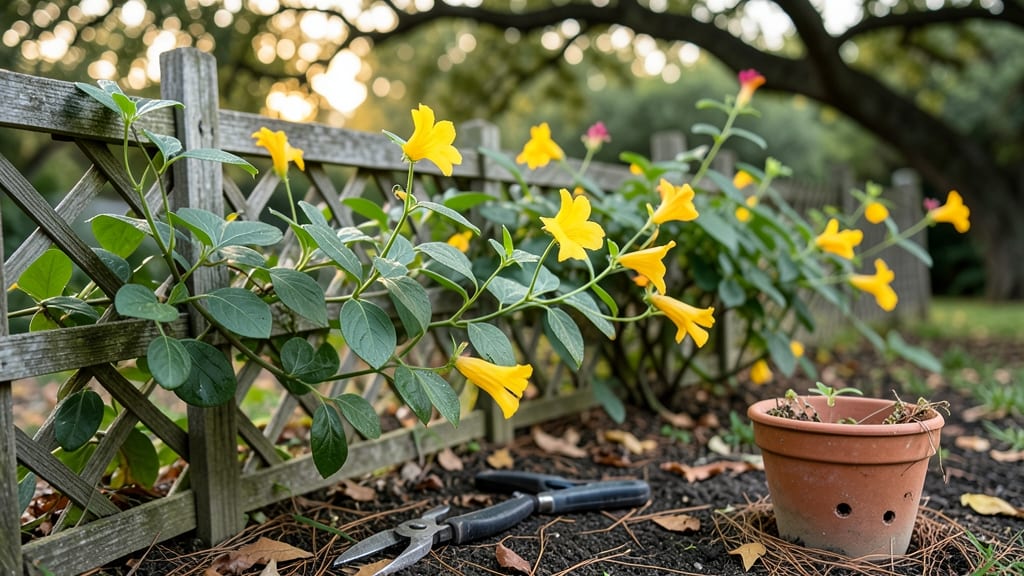
A climber plant with yellow flowers can turn even the simplest fence into a dazzling display—no fancy trellis needed. 🌻 I’ve watched my own fences go from plain to showstopping just by adding these sun-hungry vines, and they thrive where other plants struggle.
The key is matching the right climber to your space: some need full sun to burnish their petals, while others adapt beautifully to dappled light near patios.
My top picks for dramatic impact include honeyvine milkweed (butterfly magnet), golden hops (fast-growing and fragrant), and passionflower (exotic blooms that last all summer). These vines handle our region’s damp winters better than you’d think—just give them good drainage and a sturdy support.
The payoff? A garden that feels like a sunlit meadow without taking up precious ground space.
Pair them with deep greens like ivy or clematis for contrast, or let them shine solo against a neutral fence. The best part? Most bloom from late spring through fall, giving you months of cheerful color.
Whether you’re dressing up a balcony or reclaiming an eyesore fence, these climbers deliver effortless elegance with minimal fuss.
For maximum drama, plant taller varieties (like golden trumpet vine) near the center of your vertical display, with trailing types (such as morning glory) spilling over edges.
A little strategic placement turns ordinary walls into living art—no green thumb required. Ready to bring the sun to your garden’s dark corners?
📚 In This Guide
- What you need
- Instructions
- Tips and common mistakes
- Wrapping up and next steps
What you need
- ● Climber plant with yellow flowers: 1–3 plants (e.g., Clematis, Honeysuckle, or Passiflora—choose based on your zone and sunlight access).
- ● Note: Ensure the variety is suitable for PNW’s USDA Zones 7–9 and partial shade to full sun.
- ● Support structure: 1 trellis, arbor, or fence (height: 6–10 feet, width: 3–4 feet for optimal airflow).
- ○ Optional: Use a wire mesh or bamboo poles for a budget-friendly DIY setup.
- ● Potting mix: 5–10 gallons of well-draining soil blend (e.g., 50% garden soil, 30% compost, 20% perlite/pumice for aeration).
- ● Container or in-ground space: For containers: 15–20 gallon pots with drainage holes (if growing in pots).
- ● For in-ground: Ensure 6+ inches of loose soil for root spread.
- ● Watering can or hose: With a gentle spray nozzle to avoid damaging delicate vines.
- ● Fertilizer: Balanced, slow-release fertilizer (e.g., 10-10-10) or orgainic compost (apply at planting and monthly during growing season).
- ● Gloves (to protect hands from thorns or rough stems).
- ● Pruning shears (for shaping and deadheading spent blooms).
- ● Mulch (e.g., wood chips or straw) to retain moisture and suppress weeds.
- ● Plant ties or soft twine (to guide vines along trellises until they establish).
- ○ Sunlight meter (optional, to check if your spot gets 4–6+ hours of sun/day).
- ● Drip irrigation system (for automated watering in larger gardens).
How to cultivate sun-loving climber vines in the Pacific Northwest
These vibrant vines thrive with minimal fuss—just sun, support, and regular water.
🌱 Step 1: Choose the Right Climber for Your Space
For the Pacific Northwest’s climate, honeysuckle and clematis are top picks—they handle our mild summers and cooler winters beautifully. Honeysuckle’s tubular blooms attract hummingbirds, while clematis offers bold, long-lasting yellow flowers. I always check the mature height (some reach 15-20 feet) and pick a variety that fits your trellis or fence.
If you’re working with limited space, star jasmine stays compact at 6-10 feet but still packs a punch with its fragrant yellow flowers. Plant it near a patio or balcony railing for easy access to its sweet scent. Avoid wisteria unless you have a sturdy arbor—it grows aggressively and needs serious support.
☀️ Step 2: Select a Sunny Spot and Install Support
These climbers need at least 6 hours of direct sun daily—more if possible. In the Pacific Northwest, that means a south- or west-facing wall, fence, or trellis. I’ve seen vines struggle in shady spots, turning leggy and producing fewer flowers. If your yard is mostly shaded, opt for star jasmine, which tolerates partial shade better than others.
Install support before planting. A strong trellis, arbor, or metal fence works best—avoid flimsy wooden stakes that may break under the vine’s weight. For clematis, I bury a 4-foot wooden post near the planting hole to give it early support while roots establish. If using a fence, attach horizontal wires or netting every 2-3 feet to guide the vine upward.
💧 Step 3: Plant and Water for Strong Establishment
Dig a hole twice as wide as the root ball but only as deep as the container’s root base. Amend the soil with 2-3 inches of compost mixed into the bottom of the hole—these vines love rich, well-draining soil. Place the plant so the top of the root ball sits 1 inch below soil level (this prevents rot and encourages root growth).
Water deeply right after planting to settle the soil and remove air pockets. Keep the area moist but not soggy for the first 4-6 weeks—you’ll know it’s right when the soil feels damp 2 inches down. Mulch around the base with 2-3 inches of wood chips to retain moisture and suppress weeds. Overwatering now leads to root rot, so check soil moisture before watering again.
✂️ Step 4: Prune for Health and More Blooms
Pruning timing depends on the vine. Honeysuckle and star jasmine bloom on new growth, so I cut back one-third of the oldest stems in early spring to encourage fresh, flower-filled branches. For clematis, which blooms on old wood, I prune right after flowering to remove dead stems and shape the plant. Always use clean, sharp shears to avoid tearing the bark.
Deadhead faded flowers regularly to redirect the plant’s energy into new blooms. I also trim any leggy or crossing branches to improve airflow—this prevents fungal diseases, which are common in our damp climate. If a vine outgrows its support, don’t hesitate to trim it back by half in late winter. It’ll bounce back stronger and bushier.
🌿 Step 5: Feed and Protect for Long-Term Growth
Feed climbers in early spring with a balanced, slow-release fertilizer (10-10-10 works well). Scatter granules around the base and water deeply to activate them. I avoid high-nitrogen fertilizers—they promote leafy growth at the expense of flowers. Instead, I top-dress with compost in late summer to replenish nutrients naturally.
Watch for aphids or spider mites, which love the new growth. A strong spray of water usually knocks them off, but for stubborn infestations, I use neem oil (mix 1 tablespoon per quart of water). In winter, wrap young vines with burlap if temperatures drop below 10°F—this protects tender stems from frost damage. Most climbers are hardy, but a little extra care ensures they return stronger each season.
Tips & tricks for perfect climber plant cultivation
Here's what nobody tells you about getting those vibrant yellow blooms to thrive in our Pacific Northwest climate.
Sunlight Strategy: That 6-hour minimum of direct sun is non-negotiable, but I've found positioning matters just as much. In our cloudy months, face your trellis toward the west—it captures the afternoon sun when we actually get it. For clematis specifically, I've noticed the yellow flowers deepen in color when they receive morning sun plus at least 4 hours of afternoon light. If your space only gets morning sun, star jasmine will be your best bet for reliable blooms.
Support System: The 4-foot wooden post for clematis is a game-changer, but I've learned to go even further. For vines reaching 15-20 feet, add a second post at planting time—about 6 feet away from the first. This creates a natural angle that prevents the vine from becoming top-heavy and snapping in storms. For fences, I use heavy-duty garden twine instead of netting—it's more durable and gives the vine better grip as it climbs.
Watering Wisdom: Those 4-6 weeks of consistent moisture are critical, but I've developed a simple test to avoid overwatering. Stick your finger 2 inches down—if it comes out clean, water. If it's damp, wait another day. I've seen too many gardeners drown their vines by following a schedule rather than the soil's actual needs. For container-grown climbers, I water every other day during our dry summers, but always check that 2-inch depth first.
Pruning Precision: When cutting back honeysuckle or star jasmine by one-third in early spring, I make sure to leave at least 3-4 buds on each stem. These buds are where new growth—and those yellow flowers—will emerge. For clematis, I mark the pruning spots with a piece of tape before cutting, so I remember which stems to keep. This visual cue has saved me from accidentally removing too much of the old wood where next year's blooms will form.
Pro Tips for Climber Plant With Yellow Flowers
- Here's what nobody tells you about getting those vibrant yellow blooms to thrive in our Pacific Northwest climate.
- Sunlight Strategy: That 6-hour minimum of direct sun is non-negotiable, but I've found positioning matters just as much.
- Support System: The 4-foot wooden post for clematis is a game-changer, but I've learned to go even further.
Frequently asked questions
Got questions about adding a climber plant with yellow flowers to your Pacific Northwest garden? You’re not alone! Here are answers to the most common queries to help you grow with confidence.
Which climber plants with yellow flowers thrive best in the PNW’s wet climate?
Look for hardy, moisture-tolerant vines like honeysuckle (Lonicera spp.) or clematis (Clematis viticella). These handle the region’s dampness while blooming bright yellow. Avoid tropical climbers like passionflower, which struggle with cool, wet winters.
How do I train a climber to grow vertically on a trellis or fence?
Start by tying young stems gently to the trellis with soft plant ties or twine. Prune leggy growth to encourage bushier vines, and rotate the trellis occasionally to prevent shading. Most climbers (like star jasmine) twine naturally—just guide them early!
When is the best time to plant a yellow-flowering climber in the PNW?
Plant in early spring (March–April) or fall (September–October) for established roots before winter. Bare-root plants can go in late winter (February), but avoid planting in summer heat, which stresses young vines.
Are there yellow-flowering climbers that repel pests naturally?
Yes! Honeysuckle and star jasmine (Trachelospermum jasminoides) deter pests like aphids and deer with their scent. Even clematis can reduce spider mites. Just avoid over-fertilizing—healthy plants are the best pest deterrents!
What if my climber isn’t blooming? How do I fix it?
Check these fixes:
- Sunlight: Most yellow climbers need 6+ hours of sun—move to a sunnier spot.
- Pruning: Cut back old wood (for spring bloomers) or new growth (for summer bloomers) annually.
- Fertilizer: Use a balanced, low-nitrogen feed in early spring.
- Water: Drought stress can halt blooms—keep soil consistently moist but not soggy.
What’s a low-maintenance alternative to high-climbing vines?
Try coral honeysuckle (Lonicera sempervirens) or butterfly bush (Buddleja davidii)—both have yellow blooms, thrive in partial shade, and require minimal pruning. For ground cover, creeping jenny (Lysimachia nummularia) adds yellow cheer without climbing.
Wrapping up and next steps
Transforming your vertical garden into a vibrant, sun-driven oasis is easier than you think with climber plants boasting bright yellow blooms. From the hardy Clematis to the delicate Honeysuckle, these Pacific Northwest favorites not only add stunning vertical interest but also thrive with minimal fuss. 🌸
Now that you’re armed with the right tools, tips, and answers, it’s time to roll up your sleeves! Start small—plant one climber in a sunny spot, observe its growth, and let its cheerful yellow flowers inspire your next gardening project. Happy climbing! 🌿