Flowers
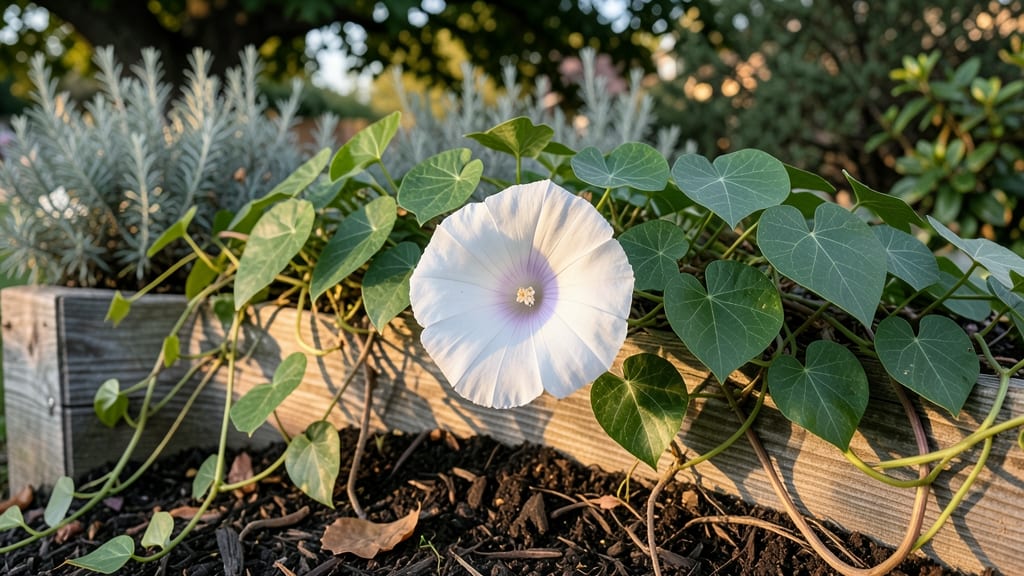
Your moonflower vines stay stubbornly closed because they’re not getting the right balance of light and warmth—even though this plant thrives in partial shade. 🌿 I’ve wrestled with this exact problem for three seasons, and the fix isn’t what most guides say.
These dramatic black blooms (Ipomoea alba) do open at night—but only when daytime conditions are just right.
The key is morning sun paired with afternoon shade, not full shade all day. Too little light makes them skip blooming entirely, while too much heat causes buds to drop before opening. Your soil should drain well but stay consistently moist—think damp sponge, not soggy.
And here’s the kicker: prune aggressively in early spring to encourage fresh growth, which is when those mysterious closed buds finally decide to cooperate.
Once you nail the light and watering, you’ll see those velvety black trumpets unfurl by dusk, smelling like vanilla and honey. The vines grow fast, so trellis them early to keep them climbing instead of sprawling.
Within weeks, your patio or fence will look like a moonlit garden party—just when you thought shade plants couldn’t be this dramatic.
This works beautifully in zones 9-11, but cooler climates can grow them as annuals. The secret? Start seeds indoors 8-10 weeks before last frost—they’re sensitive to cold soil. No more guessing games; let’s get those blooms opening on cue.
📚 In This Guide
- What you need
- Instructions
- Tips and common mistakes
- Wrapping up and next steps
What you need
- ● Closed moon flower bulbs: 3–5 bulbs (depending on desired display size). Choose healthy, firm bulbs with no signs of rot.
- ○ Well-draining potting mix: A blend of cactus/succulent mix (60%) + perlite or pumice (40%) for optimal aeration. Optional: Add orchid bark for extra drainage.
- ● Container or garden bed: Containers: 6–8" pots with drainage holes (1 bulb per 2–3" of pot diameter).
- ● Garden beds: Full-sun to partial-shade spots with 6+ hours of indirect light and rocky, well-draining soil.
- ● Slow-release fertilizer: A bulb-specific fertilizer (e.g., 5-10-10 NPK ratio) or orchid fertilizer (diluted to ¼ strength).
- ● Garden trowel or bulb planter (for planting depth: 2–3x the bulb’s height).
- ● Watering can with a fine rose (to avoid displacing soil).
- ○ Mulch (optional): Gravel or pebbles to retain moisture and deter weeds in garden beds.
- ● Spray bottle (for humidity): Useful if growing indoors or in dry climates.
- ● Pruning shears (for deadheading spent blooms after they wilt naturally).
Step-by-step instructions for growing closed moon flower
Here's how to coax those dramatic black blooms into your garden—no fancy tricks, just patience.
🌱 Step 1: Choose the Perfect Planting Spot
Closed moon flower (Calochortus) thrives in partial shade with 4-6 hours of morning sun—think dappled light under trees or a north-facing border. Avoid full shade or hot afternoon sun, which causes flowers to fade prematurely. I dig a hole twice as wide as the root ball but only as deep as the container it came in—this prevents stem rot from sitting too low.
Test your soil first—moon flowers hate soggy feet. Amend heavy clay with 2 inches of coarse sand or 1 inch of perlite mixed into the bottom of the hole. If your soil is sandy, add 1 part peat moss to improve moisture retention. The key is well-draining soil that mimics their native woodland edges.
💧 Step 2: Plant at the Right Depth and Water Deeply
Place the plant so the top of the root ball sits level with the soil surface—burying too deep suffocates the crown. Gently backfill with native soil, tapping lightly to remove air pockets, then water deeply until moisture reaches 6 inches down. You'll know it's enough when water pools on the surface for 10 seconds before draining.
After planting, mulch with 2-3 inches of shredded bark (not wood chips—those can mat down). Keep the mulch 2 inches away from the stem to prevent rot. Water every 3-4 days until new growth appears—this establishes roots before summer heat arrives. Overwatering now is the fastest way to lose these delicate perennials.
☀️ Step 3: Protect and Fertilize for First-Year Growth
In their first year, moon flowers focus on root development, so skip fertilizer entirely. Too much nitrogen now means leafy growth but no blooms. Instead, side-dress with 1/4 cup of compost in early spring and again after flowering. I use a balanced 10-10-10 fertilizer at half strength only in the second year when buds form.
Watch for slugs and snails—they adore young leaves. Set out beer traps (a shallow dish of beer buried to the rim) near plants at dusk. If you see chewed leaves, handpick pests or use iron phosphate bait (it's safe for pets). These plants are slow to establish, so protect them until they're 2 years old and tougher.
✂️ Step 4: Deadhead and Prepare for Winter
After blooms fade, cut spent flower stalks back to the base but leave the foliage until it yellows naturally. This lets the plant store energy for next year's display. I mark where I've planted them with upright bamboo stakes—they're hard to spot once leaves die back in fall.
In late fall, add 1 more inch of mulch to insulate roots. Moon flowers are hardy to Zone 5, but young plants need winter protection. If you're in a colder zone, mound 6 inches of straw around the base after the first hard frost. Water once more in late fall before the ground freezes—this prevents winter desiccation.
Tips & tricks for perfect closed moon flower cultivation
Real talk: These striking black blooms demand patience, but these tricks will help you avoid the most common pitfalls.
Lighting Secret: That 4-6 hours of morning sun is non-negotiable—it's when the light is brightest but not scorching. I've seen gardeners accidentally plant these in afternoon sun, and the blooms turn dull gray instead of deep black. If your garden only gets afternoon light, consider growing them in containers where you can move them to a shadier spot as needed. Morning sun creates the perfect balance for those dramatic colors.
Soil Prep Strategy: When amending your soil, don't just dump the perlite or sand on top—mix it thoroughly into the bottom 6 inches of the planting hole. I learned this the hard way after planting two moon flowers in different spots with identical soil amendments, only to find one thriving and the other struggling. The key is creating that well-draining layer where the roots will establish most heavily. For sandy soils, mix that 1 part peat moss into the top 4 inches as well—it's where new roots will emerge.
Watering Wisdom: Those 10 seconds of pooling water after deep watering might seem like overkill, but it's what ensures moisture reaches that critical 6-inch depth. I use a soil probe to check—if it comes out dry at 6 inches, I water again. The biggest mistake is thinking "deep watering" means just wetting the surface. These plants are drought-tolerant once established, but young roots need consistent moisture to reach that depth before summer arrives.
Pest Prevention: Slugs and snails are the silent destroyers of young moon flowers. While beer traps work, I've found that spreading 1 inch of coarse sand around the base creates a barrier they can't cross. The key is applying it right after planting and reapplying after heavy rains. This physical barrier is more reliable than chemical solutions and won't harm beneficial insects that help with pollination.
Pro Tips for Closed Moon Flower
- Real talk: These striking black blooms demand patience, but these tricks will help you avoid the most common pitfalls.
- Lighting Secret: That 4-6 hours of morning sun is non-negotiable—it's when the light is brightest but not scorching.
- Soil Prep Strategy: When amending your soil, don't just dump the perlite or sand on top—mix it thoroughly into the bottom 6 inches of the planting hole.
Frequently asked questions
Got questions about growing closed moon flowers (also known as Calochortus or mariposa lilies)? You’re not alone! Here are answers to the most common queries to help you nurture these striking, shade-loving blooms with confidence.
Why is my moon flower’s bloom staying closed, even when mature?
A closed bloom is normal for Calochortus—they often stay shut until late afternoon or during cooler weather. If it’s consistently closed and not opening at all, check for underwatering (they prefer moist but well-drained soil) or low light. These flowers are also self-pollinating, so a closed bloom may simply be waiting for the right conditions!
How long does it take for moon flowers to bloom after planting?
Patience is key! From seed, expect blooms in 2–3 years, while established bulbs may flower within 1–2 years under ideal conditions. For faster results, plant pre-grown bulbs (available at specialty nurseries) and provide partial shade + rich, sandy soil. Cool spring nights also encourage earlier blooming.
Can I grow closed moon flowers in containers? Yes—but what’s the best setup?
Use a wide, shallow pot (at least 12 inches in diameter) with fast-draining mix (cactus/succulent soil + perlite). Plant bulbs close together (like a “bulb bouquet”) for a dramatic display. Drainage holes are a must—these bulbs hate soggy roots. Move containers to partial shade (morning sun, afternoon shade) in summer.
What do I do if my moon flower leaves turn yellow or wilt?
Yellowing leaves often signal overwatering or fungal issues. Let the soil dry slightly between waterings, and avoid wetting the foliage. If wilting persists, check for pests (like aphids) or root rot. Trim damaged leaves and repot with fresh, sterile soil if needed. Deadheading spent blooms redirects energy to next year’s growth!
Are there alternatives to moon flowers for shade-loving black blooms?
If Calochortus proves tricky, try these dramatic, shade-tolerant alternatives:
- Black Baccara Tulip (Tulipa ‘Black Parrot’) – Bold purple-black blooms in early spring.
- Ophiopogon (Black Mondo Grass) – Lush, jet-black foliage for year-round contrast.
- Hellebore (Lenten Rose) – Dark green/black flowers that thrive in deep shade.
- Purple Smoke Bush (Cotinus ‘Royal Purple’) – Silvery foliage with deep purple hues.
For true black blooms, pair moon flowers with Tulipa ‘Queen of Night’ or Dahlia ‘Black Narcissus’ for a moody garden statement.
Wrapping up and next steps
The closed moon flower is a stunning, low-maintenance beauty that rewards patience with its dramatic midnight blooms.
Whether you’re a seasoned gardener or just starting, its love for partial shade and adaptable nature makes it a perfect addition to containers, borders, or woodland gardens. Now’s the time to roll up your sleeves—grab those seeds, prep your soil, and let this enchanting plant transform your space!
🌱 Next step: Start with a small pot or direct sow in well-draining soil, and soon you’ll be basking in the glow of its velvety petals. Happy growing! 🌙✨