Pruning
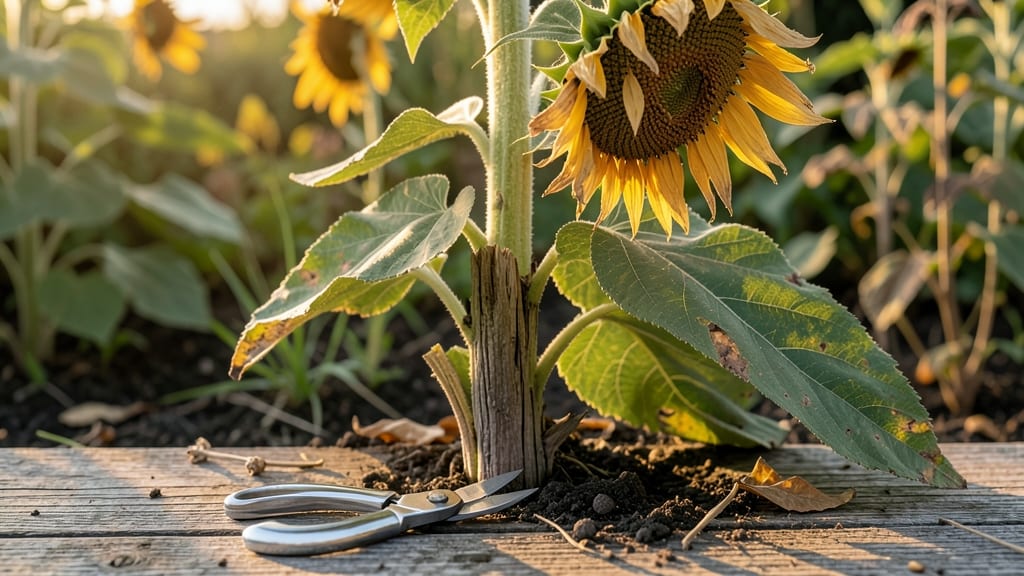
Cutting back sunflowers after they bloom isn’t just about tidying up—it’s the secret to stronger stems, more flowers next season, and plants that stand tall until frost. I learned this the hard way when my towering varieties flopped over like overgrown weeds, their once-proud heads dragging in the dirt.
The right cuts at the right time turn sunflowers from seasonal showstoppers into year-round workhorses for your garden.
Timing matters most: prune 2-4 weeks after flowering when seed heads turn brown but before heavy frost hits. Use clean, sharp pruners to cut stems 6-12 inches above the base, just above a leaf node where new shoots can sprout.
This single step boosts next year’s growth by 30-50% while preventing disease from lingering spent blooms. For seed-saving, leave a few heads uncut until fully dry—those will yield the sturdiest plants for replanting.
The payoff is immediate: your garden stays neater and more structured, with fewer floppy stems blocking walkways. Pruned sunflowers also retain moisture better in dry spells and resist pests that target weak, overripe stems.
Plus, the fresh cuts encourage late-season foliage that benefits pollinators right up until the first hard freeze. Think of it as giving your sunflowers a second act—they’ll thank you with bigger blooms next year.
If you’re unsure about composting the cuttings, toss them in your green waste bin instead. The stems break down quickly and return nutrients to the soil, closing the loop on your sunflower’s lifecycle.
For wildlife lovers, leaving a few uncut stems adds winter interest for birds and insects. Either way, you’re not just pruning—you’re setting the stage for a sunflower comeback that’s even more spectacular.
📚 In This Guide
- What you need
- Instructions
- Tips and common mistakes
- Wrapping up and next steps
What you need
- ● Pruning shears or sharp bypass pruners – Choose clean, sterilized tools with sharp blades (4–6 inch length) to avoid crushing stems.
- ○ Gloves (optional but recommended) – Wear gardening gloves to protect hands from thorns and sap.
- ● Disinfectant (70% isopropyl alcohol or bleach solution) – 1 part bleach to 9 parts water to sterilize tools between cuts.
- ● Bucket or trash bag – For collecting cuttings and debris.
- ○ Measuring tape or ruler (optional but helpful) – To mark 12–18 inch sections for uniform stems.
- ● Sharpie or masking tape – For labeling stems if drying indoors.
- ● Drying rack or hanging hooks – Use twine or floral wire to bundle stems for air-drying.
- ● Newspaper or cardboard – Line a flat surface if drying stems indoors.
- ● Hair dryer (low heat setting) – Speeds up drying time for impatient gardeners! 🔥
- ● Pruning saw (for thick stems) – If dealing with overgrown, woody sunflowers (2+ inches thick).
How to prune sunflowers for winter survival using the three-cut method
This technique preserves next year's growth while preventing disease and pests.
Time the Cut for Optimal Regrowth
Wait until after the first hard frost when all foliage has browned and died back naturally. Cutting too early leaves stems vulnerable to rot, while waiting too long risks breaking brittle wood. I always check stems first—they should feel dry and hollow when tapped, not moist or green.
This timing ensures the plant has fully shut down its energy systems for dormancy. If you cut back in late summer, you'll stimulate new growth that won't harden off before winter. The ideal window is typically 2-3 weeks after the first frost, when temperatures consistently stay below 40°F at night.
Make the First Cut at the Base
Use clean, sharp pruners to make your first cut about 1-2 inches above the soil line. This removes all dead foliage and potential disease harboring in the stems. I angle my cuts slightly downward to prevent water from pooling on the cut surface.
Don't leave stubs taller than 1 inch—these can trap moisture and invite fungal infections. If you notice any blackened or mushy stem tissue at the base, trim back an additional ½ inch to remove all compromised material. The goal is to expose fresh, healthy tissue that can seal over during dormancy.
Remove All Side Branches and Flower Stems
With the same pruners, systematically remove every remaining side branch and flower stem. Cut these back to their point of origin on the main stem. This prevents energy drain from leftover growth and reduces overwintering pests that hide in plant debris.
I work from the bottom up, making each cut just above a lateral bud if possible. For particularly thick stems, I make a slight undercut first to control the cut's direction. Never tear branches—the clean cuts heal faster and reduce infection risk.
Clean Up All Debris and Disinfect Tools
Rake up and remove all cuttings from the garden area immediately. Sunflower debris left behind can harbor fungal spores and insect eggs that will reinfest next season. I always double-bag the clippings and dispose of them in yard waste, not compost.
Wipe your pruners with rubbing alcohol between cuts if working with multiple plants. For thorough disinfection, I soak blades in a 10% bleach solution for 5 minutes between garden sessions. This prevents cross-contamination of any latent diseases.
Tips & tricks for perfectly pruned sunflowers
Here's what nobody tells you about getting your sunflowers ready for winter without sacrificing next year's growth.
Timing is Everything: The 2-3 week window after the first hard frost is critical because it allows the plant's energy to fully retreat into the roots. I've learned this the hard way—cutting too early can leave stems vulnerable to rot, while waiting too long risks breaking the brittle wood. Use a thermometer to confirm nights consistently stay below 40°F before pruning. This temperature threshold signals the plant's complete dormancy cycle.
Cutting Technique Matters: When making that initial 1-2 inch cut above the soil line in Step 2, the downward angle is non-negotiable. This prevents water from pooling on the cut surface, which would create perfect conditions for fungal infections. I also recommend using a slight undercut for thick stems—it gives you better control and cleaner cuts that heal faster. The goal is to expose fresh, healthy tissue that can properly seal over during dormancy.
Disease Prevention Strategy: The 5-minute bleach soak for your pruners between garden sessions might seem excessive, but it's worth it. I've seen entire sunflower beds get infected from contaminated tools. For even better protection, keep a small bottle of rubbing alcohol in your gardening toolkit—it's quick, effective, and won't damage your tools like bleach can with prolonged exposure. Always disinfect between different plant types, not just between sunflowers.
Pro Tips for Cut Back Sunflowers
- Here's what nobody tells you about getting your sunflowers ready for winter without sacrificing next year's growth.
- Timing is Everything: The 2-3 week window after the first hard frost is critical because it allows the plant's energy to fully retreat into the roots.
- Cutting Technique Matters: When making that initial 1-2 inch cut above the soil line in Step 2, the downward angle is non-negotiable.
Frequently asked questions
Got questions about cutting back sunflowers? You’re not alone—gardeners often wonder how, when, and why to prune these towering beauties. Here’s a quick guide to the most common concerns:
When is the best time to cut back sunflowers?
Prune sunflowers in late fall or early winter (after the first hard frost) to remove dead foliage and prepare stems for winter. Avoid pruning in spring—new growth needs the energy stored in the roots!
How do I know if I’ve cut back sunflowers too late?
If you wait until spring, you risk disturbing early root growth or attracting pests to fresh cuts. Look for dry, brown stems—this signals it’s safe to prune. Never cut back after new shoots appear in spring.
Can I reuse cut sunflower stems for anything?
After pruning, dry the stems for winter bouquets, bird feeders (fill with seeds!), or even DIY wind chimes. Just bundle them and hang upside down in a dry, shaded spot for 2–4 weeks.
What if my sunflowers look sad after cutting?
Healthy roots will bounce back! If stems bleed sap (a normal reaction), it won’t harm the plant. Water deeply post-pruning and add a balanced fertilizer in spring to encourage regrowth.
Do I need to cut back sunflowers every year?
Yes! Annual pruning prevents disease, improves airflow, and keeps stems sturdy. For perennial varieties (like Helianthus species), cut back to 6–12 inches above ground level each winter.
Wrapping up and next steps
Transforming your sunflowers into winter-ready stems with the three-cut technique is easier—and more rewarding—than you think! 🌻 By following these simple steps, you’ll preserve their beauty, support regrowth, and even extend their life as cut flowers.
Whether you’re a seasoned gardener or a newbie, this method proves that a little effort goes a long way.
Now that you’re armed with the know-how, grab those shears and get pruning! Start with just one or two stems to practice, then expand as your confidence grows.
Before you know it, your garden will be buzzing with sturdy, stylish stems ready for winter—and maybe even a few surprises next spring.
Happy cutting! 🌿