Container Gardens
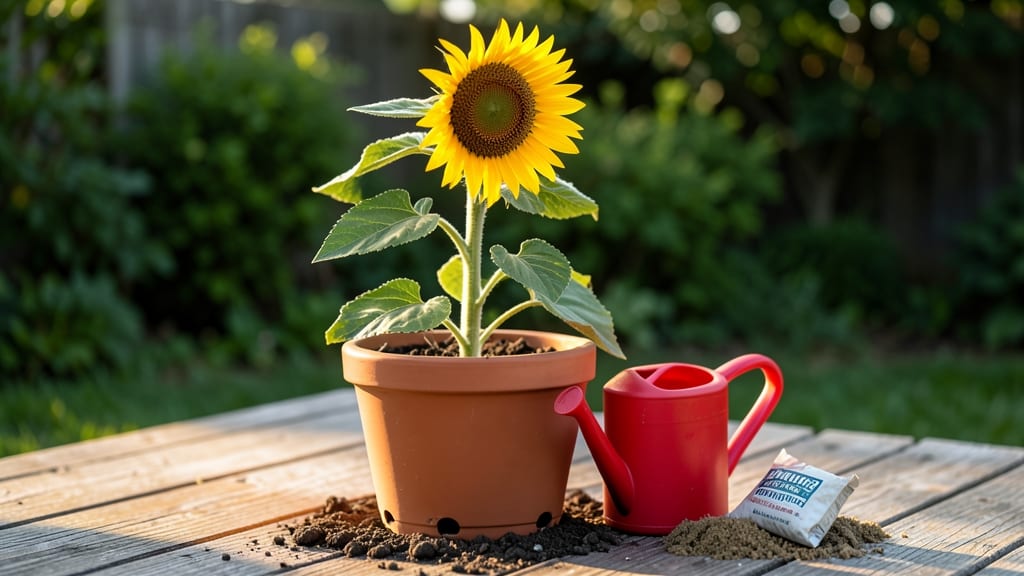
Caring for sunflowers in a pot turns your balcony or patio into a sunlit spectacle—tall, golden blooms that draw hummingbirds and turn heads. 🌻 The key isn’t just throwing seeds in dirt; it’s matching the right pot size, soil, and sunlight to their fast growth.
I’ve grown sunflowers in containers for years, and the secret is simple: deep roots need deep pots, thirsty stems need consistent water, and those towering stalks need staking before they topple.
You’ll need a pot at least 12 inches deep (bigger for giant varieties), well-draining soil mixed with compost, and a sunny spot with 6+ hours of light daily.
Sunflowers drink water like there’s no tomorrow—check soil moisture every 2-3 days in summer, but never let them sit in soggy soil. The first blooms appear in 6-8 weeks, and with proper care, you’ll get multiple stems per plant, not just one lonely flower.
Here’s the magic: pinch off the first buds to encourage branching, and feed with balanced fertilizer every 4-6 weeks for bigger blooms. Even in pots, sunflowers reach 6-10 feet tall—so tie them to sturdy stakes early. The payoff? A summer-long show of golden faces that outshines any store-bought bouquet.
Works for patios, decks, or even large windowsills—just move pots indoors before frost if you’re in a cooler zone. Let’s get those seeds sprouting!
📚 In This Guide
- What you need
- Instructions
- Tips and common mistakes
- Wrapping up and next steps
What you need
- ● Sunflower seeds or seedlings: Choose dwarf varieties (like 'Teddy Bear' or 'Moulin Rouge') for pots—ideal height: 2–5 feet.
- ● Quantity: 1–3 seeds per pot (thin to the strongest sprout).
- ● Container: Size: At least 12–18 inches deep and wide (bigger pots = happier sunflowers!).
- ● Material: Terracotta, fabric, or plastic with drainage holes.
- ● Potting mix: Type: Well-draining, nutrient-rich mix (e.g., 60% potting soil + 30% perlite + 10% compost).
- ● Quantity: Enough to fill your pot 2/3 full before planting.
- ○ Drainage materials (optional but recommended): Small rocks, gravel, or broken pottery pieces (1–2 inches layer at the pot’s base).
- ● Watering can or hose with gentle spray: Aim for 1–2 gallons per watering (adjust for size).
- ● Fertilizer: Balanced liquid fertilizer (10-10-10 or 20-20-20) or slow-release granules.
- ● Dosage: Follow package instructions (typically every 2–4 weeks).
- ● Stakes or supports (for tall varieties): Bamboo stakes or tomato cages (insert early to avoid root disturbance).
- ● Mulch (straw or shredded leaves) to retain moisture and suppress weeds.
- ● Self-watering pot or moisture meter to monitor soil hydration.
- ● Epsom salt (1 tbsp dissolved in water monthly) for magnesium boosts.
- ● Sunflower-specific plant food for a nutrient kick.
- ● Decorative pot sleeves or paint to match your patio decor!
Step-by-Step guide to growing sunflowers in containers
Here’s how to keep your sunflowers tall, vibrant, and sturdy—even in limited space.
🪴 Step 1: Choose the Right Pot and Soil Mix
Sunflowers need depth and stability, so pick a container at least 18 inches deep and 12 inches wide for each plant. I use fabric grow bags for extra airflow or heavy ceramic pots to prevent tipping. Drainage holes are non-negotiable—sunflowers hate soggy roots.
Fill the pot with a lightweight, nutrient-rich mix: blend 50% potting soil, 30% perlite, and 20% compost. This combo prevents compaction while feeding roots steadily. Tap the pot gently to settle the soil, but don’t pack it down—roots need room to expand. Add a slow-release fertilizer (like 10-10-10) mixed into the top 2 inches for a growth boost.
☀️ Step 2: Plant Seeds at the Right Depth and Support
Drop 2-3 seeds per pot about 1 inch deep—sunflower seeds are large, so planting too shallow delays germination. Space them 6 inches apart if growing multiple in one container. Cover lightly with soil, then water until the mix feels evenly moist but not drenched.
Here’s the thing—sunflowers get top-heavy fast. As soon as the first true leaves appear (about 7-10 days), install a sturdy stake or tomato cage (at least 5 feet tall) and loosely tie the stem to it. This prevents flopping before the plant can strengthen its stem. I use soft plant ties to avoid damaging the stem as it grows.
💧 Step 3: Water Deeply and Monitor Soil Moisture
Sunflowers in pots dry out faster than in-ground plants. Water deeply when the top 2 inches of soil feel dry—stick your finger in to check. Overwatering is worse than underwatering; sunflowers can handle brief dry spells but rot quickly in soggy soil. I water in the early morning to let excess moisture evaporate during the day.
Watch for wilting leaves—this is your cue to water. If the soil feels dry only at the surface but damp below, the roots are struggling to reach moisture. At this stage, mulch the surface with 1 inch of straw to retain humidity and keep roots cool. Avoid mulching too early; damp soil slows germination.
✂️ Step 4: Prune for Strength and Encourage Blooms
Once your sunflower reaches 3-4 feet tall, pinch off the top set of leaves just above a secondary branch. This triggers bushier growth and more blooms. I do this in late afternoon to minimize stress on the plant. Avoid heavy pruning—sunflowers rely on their main stem for stability.
Remove dead flowers (deadheading) as they fade to redirect energy into new buds. This keeps the plant focused on producing larger, showier blooms instead of wasting resources on seed development. If you’re growing for seeds, leave one flower per stem to mature—just don’t overcrowd the pot.
🌿 Step 5: Rotate and Adjust for Sunlight Needs
Sunflowers lean toward light like sun-worshipping sunbathers. Rotate the pot a quarter turn every 2-3 days to keep stems straight. Place the container in a south-facing spot where it gets 6-8 hours of direct sunlight daily. If your sunflowers start stretching with long, pale stems, they’re not getting enough light—move them closer to the window or supplement with a grow light for 14 hours daily.
Real talk: If your sunflowers develop yellow leaves, it’s usually a sign of overwatering or nutrient burn. Cut back on water slightly and flush the soil with plain water to leach excess salts. Yellowing at the bottom leaves is normal as the plant matures—just remove them to keep energy flowing upward.
Tips & tricks for thriving container-grown sunflowers
These insider tricks will help you grow sunflowers that rival garden giants—even in pots.
Pot Stability Secret: In Step 1, when selecting your container, consider adding a sand or gravel layer at the bottom before adding soil mix. This extra weight prevents tipping as your sunflower grows top-heavy, especially in windy conditions. For extra security, place your pot on a non-slip mat or use a pot with a wider base. The 18-inch depth requirement becomes even more critical when accounting for this stability layer.
Germination Boost: After planting your 2-3 seeds in Step 2, place the pot in a warm location (70-75°F) to speed germination. A seedling heat mat or sunny windowsill works perfectly. Keep the soil consistently moist during this phase—sunflower seeds need warmth and hydration to break dormancy. Once sprouts appear (around 7-10 days), immediately install your support stake to prevent damage when handling the delicate seedlings.
Watering Wisdom: In Step 3, when checking soil moisture, focus on the middle layer rather than just the surface. Sunflowers develop deep taproots that need consistent moisture at depth. I've found that watering every other morning during hot weather maintains perfect moisture balance—adjust based on your climate. The mulch layer helps maintain this moisture without creating soggy conditions.
Light Optimization: For the 6-8 hours of sunlight requirement in Step 5, position your pot where it gets morning sun and late afternoon sun—these are the most intense rays. If supplementing with grow lights for 14 hours, place them 6-12 inches above the plants and use full-spectrum bulbs. I've noticed sunflowers grown under grow lights develop slightly more compact stems, which can be an advantage in container gardening.
Pro Tips for Care For Sunflowers In A Pot
- These insider tricks will help you grow sunflowers that rival garden giants—even in pots.
- Pot Stability Secret: In Step 1, when selecting your container, consider adding a sand or gravel layer at the bottom ...
- Germination Boost: After planting your 2-3 seeds in Step 2, place the pot in a warm location (70-75°F) to speed germi...
Frequently asked questions
Got questions about growing sunflowers in pots? You’re not alone! Here are answers to the most common concerns—from timing to troubleshooting—to help your sunflowers shine bright and tall.
How deep should a pot be for sunflowers?
Sunflowers need 12–18 inches of depth to support their roots. Shallow pots (under 12") will stunt growth, while deeper containers (20"+) allow for larger varieties like 'Mammoth' or 'Russian Giant.' Always include drainage holes—root rot is a sneaky villain!
When is the best time to plant sunflowers in pots?
Wait until after the last frost (spring) when soil temps hit at least 50°F (10°C). Sunflowers hate cold, so avoid early planting. For fall blooms, start seeds indoors 8–10 weeks before your first frost date. Pro tip: Use a heat mat for faster germination!
Why are my potted sunflowers wilting or drooping?
Wilting usually means thirst or root stress. Check soil moisture—sunflowers need 1–2 inches of water weekly (more in heat). If the pot feels light, water deeply. Overwatering? Yellow leaves or foul smells signal root rot—let the soil dry slightly between waterings.
Can I grow sunflowers in pots without a trellis?
Yes! Most dwarf varieties (like 'Teddy Bear' or 'Little Becka') thrive in pots without support. For taller types, stake them early with bamboo stakes or tomato cages to prevent toppling. Place pots in full sun (6+ hours/day) and rotate them weekly for even growth.
What pests should I watch for in potted sunflowers?
Keep an eye out for aphids, spider mites, and earwigs. Wipe leaves with soapy water for mild infestations. For stubborn pests, try neem oil or introduce ladybugs. Yellowing leaves or chewed stems? Inspect the undersides of foliage—early action prevents damage!
How often should I fertilize potted sunflowers?
Feed every 2–3 weeks with a balanced liquid fertilizer (10-10-10) during the growing season. Stop fertilizing once buds form to encourage blooming. Overdoing it? Yellow leaves or weak stems are red flags—cut back and flush soil with water.
Wrapping up and next steps
Caring for sunflowers in a pot is a rewarding journey that brings joy and beauty to your space! 🌻 With the right container, soil, sunlight, and a little TLC, you’ll watch these cheerful giants grow tall and proud.
Remember, consistency in watering, supporting their stems, and providing nutrients will ensure your sunflowers thrive—even in limited space.
Now that you’re equipped with these container gardening secrets, it’s time to roll up your sleeves and get planting! Start by picking your favorite sunflower variety, grab a pot, and let the magic happen. Happy gardening—and enjoy the sunshine! 🌟