
Propagation
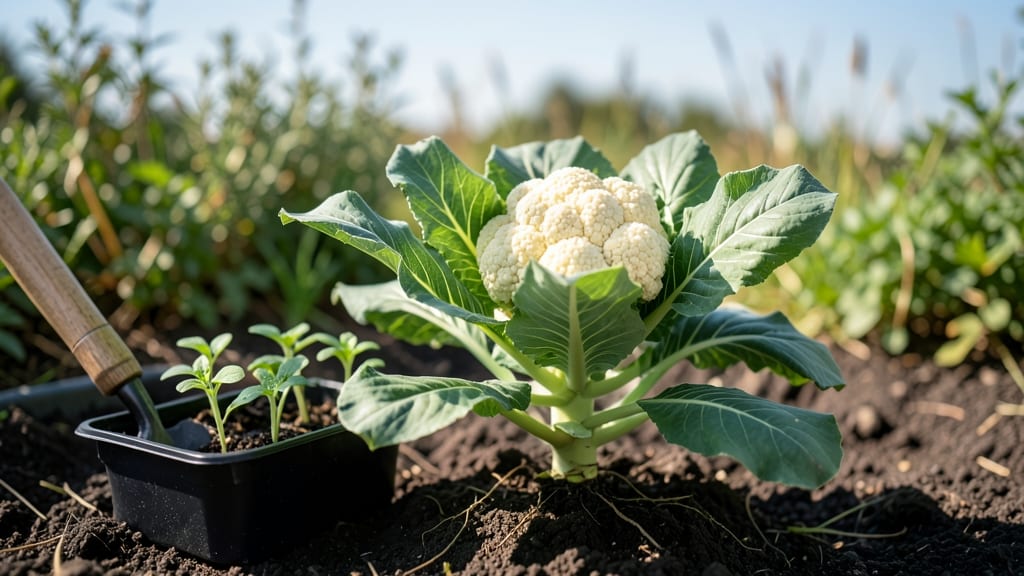
Planting cauliflower from seeds gives you the biggest, most flavorful heads—but timing and soil prep make all the difference. 🌱 I learned the hard way that rushing these cool-weather crops leads to bitter, stunted plants.
The secret lies in starting seeds 6-8 weeks before your last frost when soil temperatures drop below 75°F, and choosing a spot with at least 6 hours of sun daily.
You'll need loose, well-draining soil amended with compost (cauliflower hates soggy roots), plus patience—these seeds take 7-14 days to germinate, especially in cool conditions. The key move? Plant seeds ½ inch deep and 18 inches apart in rows spaced 24 inches apart to prevent crowding.
For containers, use 5-gallon pots with drainage holes and plant one seed per pot—they resent being transplanted.
Once sprouted, keep seedlings consistently moist but never waterlogged, and watch for cabbage worms. A light row cover in early spring protects young plants from pests while letting sunlight through.
By midseason, you'll be harvesting 6-8 inch heads with tight, snow-white curds—if you've avoided the common mistakes of overcrowding or letting soil dry out.
This method works equally well in raised beds or in-ground plots, though containers need extra care in hot climates. The payoff? Homegrown cauliflower that outshines store-bought in both size and sweetness. Ready to grow your best crop yet?
📚 In This Guide
- What you need
- Instructions
- Tips and common mistakes
- Wrapping up and next steps
What you need
- ● Cauliflower seeds: Choose disease-resistant varieties like Snowball Y Improved or Purple of Sicily. You’ll need about 10–20 seeds per plant (or 3–5 seeds per pot if starting indoors).
- ● Seed-starting mix: A lightweight, sterile potting mix (e.g., Pro-Mix or FoxFarm Seedling Mix). Use 1–2 cubic feet for indoor starts or 10–20 gallons for direct sowing in garden beds.
- ○ Containers (optional but helpful): Small seedling pots (2–3 inches deep, 5–10 units) for indoor starts.
- ● Biodegradable peat pots (3-inch diameter) to reduce transplant shock.
- ● Garden bed or large containers: If direct-sowing, prepare a 12-inch-deep bed with well-draining soil (cauliflower hates soggy roots!). For containers, use 5-gallon pots or larger with drainage holes.
- ● Fertilizer: Starter fertilizer: A balanced, water-soluble option like 10-10-10 (mix 1 tbsp per gallon of water).
- ● Organic matter: Compost or well-rotted manure (2–3 cups per planting hole) for nutrient-rich soil.
- ● Mulch: Straw or shredded leaves (2–3 inches thick) to retain moisture and regulate soil temp.
- ● Garden tools: Trowel or transplanting spade.
- ● Watering can with a gentle spray nozzle (cauliflower seeds need consistent moisture!).
- ● Climate: Cauliflower thrives in cool weather (50–75°F). Avoid planting when temps exceed 80°F—it’ll bolt (go to seed)!
- ● Sunlight: 6+ hours of full sun daily (partial shade in hot climates helps).
- ● Soil pH: Aim for 6.0–7.0 (test your soil or amend with lime if needed).
- ● Spacing: Indoor starts: Thin seedlings to 1 plant per 2-inch pot.
- ● Garden bed: Space plants 18–24 inches apart in rows 30 inches apart.
- ● Row covers: Lightweight fabric to protect seedlings from pests or frost.
- ● Shade cloth: 30–50% shade for hot climates (avoid direct sun during peak heat).
- ● Slow-release fertilizer: Granular 10-10-10 or fish emulsion for steady nutrients.
- ● Plant labels: Mark varieties and planting dates to track growth.
Step-by-step instructions for growing cauliflower from seeds
Here's how I've grown 12-inch heads of sweet, firm cauliflower—direct-sown and thriving.
🌱 Step 1: Time Your Planting for Cool Weather
Cauliflower hates heat—plant seeds 4-6 weeks before your last frost when soil temps stay below 75°F. I test soil readiness by pressing my finger in: if it feels cool to the wrist, it's safe. For early spring, aim for March-April in most climates; fall plantings work too, but avoid summer's peak heat.
Here's the thing—cauliflower seeds germinate best at 60-70°F. If your spring soil warms faster, start seeds indoors 6-8 weeks before transplanting (though direct-sowing saves space). I cover seeds with ¼ inch of soil—any deeper and they'll struggle to break through.
💧 Step 2: Prepare Soil and Plant Seeds Properly
Cauliflower thrives in well-draining, fertile soil with a pH of 6.0-7.0. Work in 2-3 inches of compost or aged manure before planting—this feeds the heavy feeders. I rake the area smooth and create ½-inch deep furrows spaced 18-24 inches apart (rows will need space for those big heads).
Drop 3-4 seeds every 18 inches along each furrow, then cover lightly with soil. Press gently to ensure seed-to-soil contact. Water immediately with a fine spray—don't flood the area. You'll see sprouts in 7-14 days, but keep soil consistently moist until then (a damp paper towel over the bed helps retain humidity).
☀️ Step 3: Provide Consistent Moisture and Light
Young seedlings need full sun (6+ hours daily) but even moisture—never let the soil dry out completely. I water at the base every 2-3 days until seedlings show first true leaves, then increase to 1 inch of water per week. Mulch with 2 inches of straw to lock in moisture and prevent crusting.
Here's where it gets tricky: cauliflower heads form best when days are cool. If your summer heats up, watch for bolting (rapid stem elongation)—this happens when plants sense heat and rush to flower. If this occurs, harvest smaller heads immediately or enjoy the flowers as edible greens. For larger heads, prioritize fall plantings in warm climates.
✂️ Step 4: Thin and Support for Maximum Head Size
When seedlings reach 2 inches tall, thin to 1 plant every 18-24 inches using scissors (pulling risks disturbing roots). Leave the strongest seedling—look for dark green leaves and thick stems. I save thinnings for stir-fries; they're delicious when young.
As plants grow, their heavy heads may topple. I stake each plant with 3-foot bamboo stakes tied loosely at the base. For extra support, weave twine between stakes in a square pattern. Heads typically form 70-90 days after planting—watch for tight, compact curds that feel firm to touch. Harvest when heads are 6-8 inches wide before they split.
Tips & tricks for perfect direct-sown cauliflower
Here's what nobody tells you about growing cauliflower from seeds—details that make all the difference between decent plants and showstopping heads.
Timing is Everything: The 4-6 week window before your last frost isn't just about avoiding heat—it's about giving plants enough cool days to develop properly. I've learned the hard way that planting too early in cold climates can stunt growth, while planting too late risks heat stress. Check your local frost dates and adjust: in Zone 5, I plant in late April for spring harvests, but in Zone 8, I wait until September for fall planting. Use a soil thermometer to confirm temps stay below 75°F—this is non-negotiable for germination.
Seed Depth Matters: That ¼-inch soil covering might seem insignificant, but it's critical. Seeds need just enough light to germinate but not so much that they dry out. I've seen seeds planted too deep (½ inch or more) fail to emerge completely, while those planted too shallow (less than ⅛ inch) dry out before sprouting. For best results, use your finger to create a shallow furrow and press seeds gently into place—this ensures consistent depth without compacting the soil.
Soil Prep Secret: The 2-3 inches of compost recommendation is a baseline, but don't stop there. I mix in a handful of bone meal at planting time for phosphorus—this boosts root development and head formation. For even better results, add a sprinkle of Epsom salt (1 tablespoon per plant) when seedlings are 2 inches tall. The magnesium helps prevent yellowing leaves that can signal nutrient deficiencies. Just be careful not to overdo it—too much can cause salt burn.
Watering Wisdom: The 1 inch per week watering guideline works, but timing matters more than quantity. Water deeply in the morning so leaves have time to dry before evening—this prevents fungal diseases that thrive in damp conditions. I use soaker hoses for seedlings to avoid disturbing the soil, and always water at the base rather than overhead. For the first 7-14 days after germination, I cover the bed with clear plastic domes to maintain humidity until sprouts appear.
Pro Tips for Plant Cauliflower From Seeds
- Here's what nobody tells you about growing cauliflower from seeds—details that make all the difference between decent plants and showstopping heads.
- Timing is Everything: The 4-6 week window before your last frost isn't just about avoiding heat—it's about giving plants enough cool days to develop properly.
- Seed Depth Matters: That ¼-inch soil covering might seem insignificant, but it's critical.
Frequently asked questions
Got questions about growing cauliflower from seeds? You’re not alone! Here are answers to the most common concerns—from timing to troubleshooting—so you can confidently grow those perfect heads.
How long does it take for cauliflower seeds to germinate?
Cauliflower seeds typically germinate in 7–14 days when soil temperatures are between 60–75°F (15–24°C). Keep the soil moist but not soggy, and place a clear plastic dome or row cover over the bed to retain warmth and humidity. Patience is key—cool soil slows germination, while overly hot soil (above 80°F/27°C) can stunt sprouts.
Can I plant cauliflower seeds directly in the garden, or should I start indoors first?
Both methods work, but starting indoors 4–6 weeks before the last frost gives seedlings a head start (pun intended!). Direct-sowing is fine in warm climates (Zones 8–10) or for late-season varieties, but transplanting hardened-off seedlings often yields larger, more uniform heads. Pro tip: Harden off seedlings for 7–10 days before transplanting to avoid shock.
Why aren’t my cauliflower heads forming, even though the plants look healthy?
Missing heads? Common culprits include:
- Heat stress: Cauliflower bolts (prematurely flowers) in temps above 80°F (27°C). Use shade cloth or plant in cooler seasons.
- Nutrient deficiency: Lack of nitrogen or phosphorus can stunt growth. Side-dress with compost or a balanced fertilizer when plants are 6 inches tall.
- Daylength-sensitive varieties: Some cauliflower needs 10+ hours of daylight to form heads. Check your seed packet!
Try blanching (tying leaves over the head) to encourage tight curd formation.
What’s the best way to store homegrown cauliflower?
Fresh cauliflower stays crisp for 5–7 days in the fridge. Wrap the head loosely in a damp paper towel, place it in a plastic bag, and store it in the crisper drawer. For longer storage (up to 2 weeks), freeze it raw or blanched. Cut into florets, spread on a tray, and freeze before bagging to prevent clumping.
Are there cauliflower varieties that are easier for beginners?
Try these low-maintenance varieties:
- ‘Snowball Y Improved’: Reliable, compact heads; great for cooler climates.
- ‘Purple of Sicily’: Heat-tolerant and colorful—perfect for direct sowing.
- ‘Cheddar’: Orange-fleshed, disease-resistant, and beginner-friendly.
Look for “self-blanching” varieties (like ‘White Magic’) to skip the hassle of tying leaves.
Wrapping up and next steps
Growing cauliflower from seeds is a rewarding journey that leads to bountiful, homegrown harvests—and you’ve got all the tools to succeed! 🌱 With the right soil, timing, and care, you’ll soon be enjoying those creamy, nutritious heads straight from your garden. Don’t stop here! Once your seedlings sprout, explore our care guide to keep them thriving until harvest.
Happy planting—your future meals will thank you!