
Shrubs
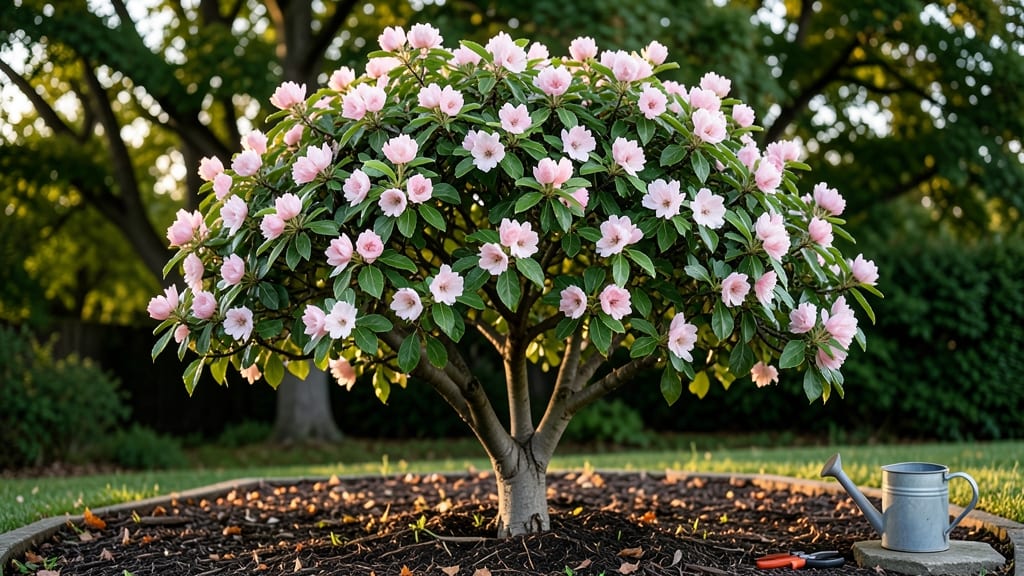
The pink spires flowering crabapple turns Pacific Northwest winters into a dreamy spectacle of color when most gardens are asleep. 🌸 I planted mine last spring after admiring how it stood out against the gray skies—its delicate pink blossoms seem to glow even on cloudy days.
Unlike many spring-blooming trees, this variety thrives in our chilly climate, putting on a show when few others do.
What makes it a design standout is its multi-season appeal: fragrant spring flowers, glossy dark green foliage that turns golden in fall, and clusters of small fruit that birds adore.
It’s the perfect focal point for entryways, mixed borders, or even as a standalone specimen where its graceful branching can be fully appreciated. The 30-foot mature height works beautifully in larger landscapes, while dwarf varieties fit smaller spaces.
Pair it with evergreen shrubs like rhododendrons for year-round structure, or let it anchor a spring-blooming combination with tulips or daffodils at its base. The contrast of its pink blooms against deep green foliage creates a striking visual—something that feels both classic and fresh.
Once established, it requires minimal care, making it a low-maintenance superstar for busy gardeners.
For best results, plant it where it gets full sun to partial shade—the more light it gets, the more vibrant those pink spires become. In our damp climate, it handles wet soil like a champ, though well-draining spots prevent any potential root issues.
The key to maximizing its impact? Position it where its early spring bloom will be the first splash of color visitors see all year.
📚 In This Guide
- What you need
- Instructions
- Tips and common mistakes
- Wrapping up and next steps
What you need
- ● Pink Spires flowering crabapple tree (Malus 'Pink Spires'): 1–2 mature trees (5–6 ft tall) for optimal visual impact
- ● Container-grown (3–5 gal) or bare-root (for dormant planting in early spring/fall)
- ● Planting site: Full sun to partial shade (6+ hours of sunlight daily)
- ● Well-draining soil (amend heavy clay with compost or sand)
- ● Space: 15–20 ft apart (for mature size) or 10 ft for smaller landscapes
- ● Organic mulch (2–3 inches): Shredded bark, wood chips, or pine needles (avoid fresh wood chips near the trunk)
- ○ Slow-release fertilizer (optional but recommended): Balanced 10-10-10 or acidic fertilizer (e.g., 8-3-9) for early growth
- ● Hand trowel or spade (for digging holes)
- ● Garden hose or watering can (with a gentle spray nozzle)
- ● Pruning shears (sterilized with rubbing alcohol)
- ● Garden gloves (to protect hands from thorns)
- ● Soil pH test kit (ideal pH: 5.5–6.5; amend with sulfur or lime if needed)
- ○ Staking supplies (optional): 3 wooden stakes + soft tree ties (if planting in windy areas)
- ● Best planting times: Early spring (March–April) or fall (October–November) to avoid frost stress.
- ● Hardiness: USDA Zones 4–8 (perfect for PNW’s chilly winters!)
- ● Watering: Deep water 2–3 times per week for the first year (drought-tolerant once established).
Step-by-Step guide to planting and caring for Pink Spires flowering crabapple
This stunning Pacific Northwest native thrives with the right approach—here's how to plant and nurture it for years of vibrant blooms.
🌱 Step 1: Choose the Perfect Planting Location
Pink Spires flowering crabapple loves full sun to partial shade, with at least 6 hours of direct sunlight daily for optimal flowering. In the Pacific Northwest's cooler climate, a spot with morning sun and afternoon shade prevents leaf scorch while still encouraging abundant blooms. Avoid low-lying areas where cold air settles—this tree handles frost beautifully, but prolonged cold puddles can rot roots.
Test the soil pH before planting—this variety prefers slightly acidic to neutral soil (pH 6.0-7.0). If your soil is heavy clay (common in PNW regions), amend with 2-3 inches of compost mixed into the top 12 inches of soil. The tree's shallow roots will thank you for better drainage and aeration. Here's the thing—don't plant too deep. The root flare (where roots meet trunk) should sit 1-2 inches above ground level after backfilling.
🪴 Step 2: Dig and Prepare the Planting Hole
Dig a hole twice as wide as the root ball but no deeper—this prevents soil compaction around the roots. The extra width encourages roots to spread outward naturally, which is crucial for stability in windy PNW climates. Gently loosen the roots if they're circling tightly in the container, but don't prune them unless you see serious root binding.
Create a mound of native soil in the center of the hole. Place the tree on this mound so the root flare sits at the correct height (1-2 inches above ground level). Backfill with the native soil you removed, tamping lightly every 6 inches to eliminate air pockets. Avoid compacting too firmly—you want roots to settle naturally. Water deeply as you fill to help soil particles bond around the roots.
☀️ Step 3: Establish Proper Watering and Mulching Routines
Water deeply 2-3 times per week for the first 6-8 weeks after planting, providing about 10-15 gallons per watering depending on tree size. The goal is to wet the soil to a depth of 12-18 inches—this encourages deep root growth. You'll know you've watered enough when soil 12 inches down feels moist (use a trowel to check). In the PNW's damp climate, you'll need to monitor less frequently once established, but container-grown trees need more frequent watering initially.
Apply 3-4 inches of organic mulch (like wood chips or bark) in a 3-foot diameter circle around the base, keeping it 6 inches away from the trunk. This mulch layer protects roots from temperature swings and retains moisture. Refresh the mulch annually in early spring—never let it pile against the trunk, as this invites rot. Here's where it gets fun: the mulch also suppresses weeds, giving your tree less competition for nutrients during its critical first growing season.
✂️ Step 4: Prune for Shape and Health
Wait until late winter or early spring (just before buds swell) to prune your Pink Spires. This timing ensures you remove dead wood while avoiding the tree's active growth period. Focus on removing crossing branches, dead wood, and any branches growing toward the center of the tree. Use clean, sharp pruners to make cuts just outside the branch collar (the swollen area where the branch meets the trunk).
For shaping, aim to maintain an open vase-like structure that allows light and air to circulate through the canopy. This variety naturally grows with a multi-stemmed habit, so avoid heavy pruning that could encourage a single dominant leader. Real talk: don't remove more than 25% of the tree's foliage in any single year—this can stress the tree and reduce flowering. After pruning, apply a thin layer of wound dressing (like tree sealant) to cuts larger than ½ inch in diameter to prevent disease entry.
Tips & tricks for perfect Pink Spires flowering crabapple planting
A few key insights will help your Pink Spires thrive for decades—these are the lessons I learned after planting several myself.
Sunlight Strategy: While the instructions mention full sun to partial shade, I've found that morning sun with afternoon shade is ideal in the Pacific Northwest's cooler climate. This balance prevents leaf scorch during peak afternoon heat while still providing the 6 hours of direct sunlight needed for optimal flowering. If your yard has limited sun exposure, consider planting near a south-facing wall that reflects light back onto the tree.
Root Ball Preparation: When loosening circling roots in Step 2, use your fingers to gently separate them rather than cutting with pruners. This minimizes trauma while encouraging outward root growth. I've seen trees with severely pruned roots struggle to establish properly in windy PNW conditions—taking this extra step makes all the difference for long-term stability. Remember, the hole should be twice as wide as the root ball, not deeper.
Watering Wisdom: The 6-8 week intensive watering period is critical, but don't assume your watering is sufficient just because you're hitting the 10-15 gallons recommendation. Use a soil probe to check moisture at 12 inches deep)—if it's dry, keep watering until it's consistently moist. In our damp climate, overwatering is just as dangerous as underwatering—aim for that Goldilocks zone of just-right moisture.
Pruning Precision: When shaping your tree in Step 4, focus on creating that open vase structure by removing branches that grow inward. I've found that making cuts just outside the branch collar (where the branch meets the trunk) promotes faster healing. For cuts larger than ½ inch, applying wound dressing immediately after pruning prevents disease entry—a common oversight that can lead to long-term issues.
Pro Tips for Pink Spires Flowering Crabapple
- A few key insights will help your Pink Spires thrive for decades—these are the lessons I learned after planting several myself.
- Sunlight Strategy: While the instructions mention full sun to partial shade, I've found that morning sun with afternoon shade is ideal in the Pacific Northwest's cooler climate.
- Root Ball Preparation: When loosening circling roots in Step 2, use your fingers to gently separate them rather than cutting with pruners.
Frequently asked questions
Got questions about the Pink Spires flowering crabapple? You’re not alone! This stunning shrub is a favorite in the Pacific Northwest, but it’s natural to have a few curiosities before planting. Below, we’ve answered the most common questions to help you grow with confidence.
When is the best time to plant Pink Spires flowering crabapple?
The ideal time to plant is in early spring or early fall when soil temperatures are cool (50–70°F). This gives roots time to establish before summer heat or winter frost. Avoid planting in extreme heat or deep freeze—roots need consistency! Pro tip: Water deeply after planting to settle soil and reduce transplant shock.
How cold can Pink Spires handle?
This crabapple is a frost-resistant superstar, thriving in USDA Zones 3–8. It can handle temperatures as low as -30°F without issue, making it perfect for the PNW’s chilly winters. Just ensure it gets full sun to partial shade—cold winds can stress young trees, so a windbreak helps.
Do Pink Spires produce edible fruit?
While the pink blooms are the star, the small, tart fruit that follows is not typically eaten fresh—it’s more ornamental than culinary. Birds and wildlife love them, though! If you’re after edible crabapples, look for varieties like ‘Dolgo’ or ‘Harvest Gold.’ For Pink Spires, focus on its stunning spring display and disease resistance.
What are some common pests or diseases to watch for?
Pink Spires is highly disease-resistant, but watch for apple scab (gray fungal spots) or cedar apple rust (orange pustules). To prevent issues:
- Prune for airflow in spring.
- Avoid overhead watering.
- Apply neem oil if pests like aphids appear.
Can I grow Pink Spires in a container?
While possible, it’s not ideal—this tree grows 15–25 feet tall with a wide spread. If you’re set on container growing:
- Use a large, sturdy pot (2+ feet deep).
- Plant in well-draining soil with compost.
- Expect frequent watering and potential root-binding.
What’s a good alternative if I want a smaller flowering tree?
If space is limited, consider these compact flowering crabapples:
Variety
Height
Bloom Color
‘Adirondack’
12–15 ft
Pink
‘Snowdrift’
15–20 ft
White
‘Centennial’
12–15 ft
Pink/white
Wrapping up and next steps
The Pink Spires flowering crabapple isn’t just a stunning addition to your Pacific Northwest garden—it’s a low-maintenance, frost-hardy powerhouse that brings joy year-round. With its vibrant blooms, wildlife-friendly appeal, and resilience, it’s the perfect choice for gardeners who want beauty without the fuss. 🌸
Ready to transform your outdoor space? Start by choosing the right location and preparing the soil, then plant with confidence! Whether you’re a seasoned gardener or just starting out, this crabapple will reward you with seasonal splendor for years to come.