
Planting
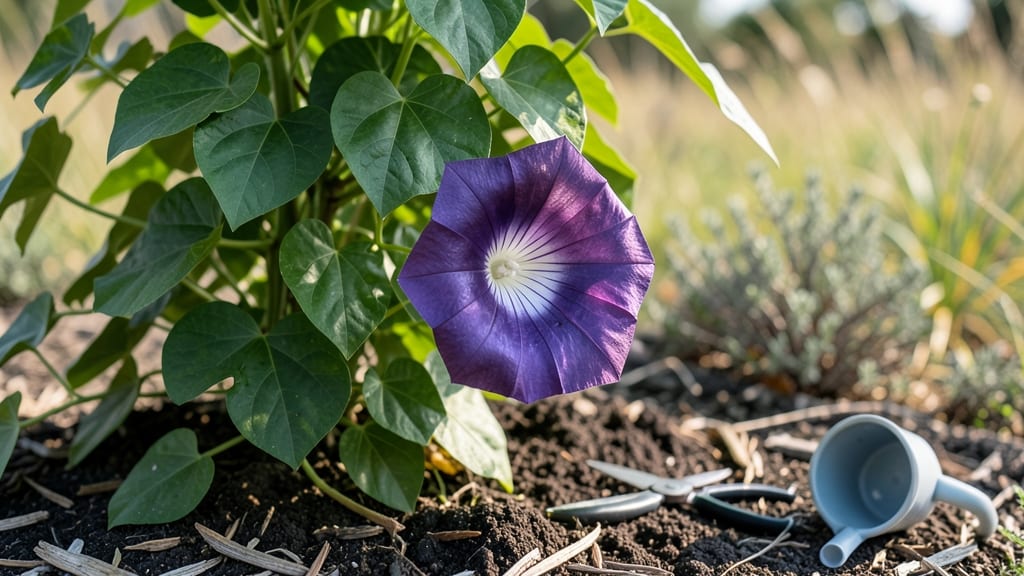
The Purple Moonflower's velvety midnight blooms will transform your garden into a hummingbird haven after sunset. 🌿 I planted mine last spring, and now my patio buzzes with activity long after my neighbors' gardens have gone quiet.
These twilight flowers aren't just stunning—they're the secret weapon for gardeners who want to extend their growing season's magic hours.
The key to success starts with well-draining soil and full sun exposure—at least 6 hours daily. Moonflowers thrive in zones 3-11, making them adaptable across most climates. My plants climb a simple trellis, reaching heights of 10-15 feet with minimal support.
The real magic happens when you provide consistent moisture without soggy roots—think of it as watering deeply twice weekly during dry spells.
By midsummer, you'll be rewarded with 3-inch-wide lavender blooms that open only at dusk, their sweet fragrance drawing hummingbirds from miles around. The vines produce flowers continuously until frost, creating a mesmerizing nightly display.
Just be prepared for their aggressive growth habit—they'll fill empty spaces faster than you can say "moonlight garden."
For best results, prune back leggy growth in early summer to encourage bushier vines. Deadhead spent blooms to prolong flowering, and watch as your garden becomes the neighborhood's after-dark hotspot. The only challenge? Resisting the urge to stay up just to watch the show every night.
📚 In This Guide
- What you need
- Instructions
- Tips and common mistakes
- Wrapping up and next steps
What you need
- ● Seeds or Seedlings: 5–10 Ipomoea alba seeds (or 1–2 young plants for faster blooms). Opt for organic, non-GMO seeds for best results.
- ● Well-Draining Potting Mix: 1–2 bags (10–15 quarts) of a lightweight, airy mix (e.g., 60% peat moss, 20% perlite, 20% compost). Avoid heavy clay soil.
- ● Containers or Garden Bed: Containers: 5–10 gallon pots (with drainage holes) for each plant. Use fabric grow bags for flexibility.
- ● Garden Bed: A sunny spot with 6+ hours of direct sunlight and loose, fertile soil (amend with compost if needed).
- ● Fertilizer: A balanced, slow-release granular fertilizer (10-10-10 or 5-5-5) or liquid seaweed fertilizer for organic growth.
- ● Watering Can or Hose: With a gentle spray nozzle to avoid disturbing seeds.
- ● Trellis or Support: A 6–8 foot tall trellis, fence, or obelisk (moonflowers are vigorous climbers!). Use bamboo stakes or metal cages if space is limited.
- ● Mulch: Straw or shredded leaves (1–2 inches) to retain moisture and suppress weeds.
- ● Growth lights (for indoor starters or low-light conditions).
- ● Hummingbird feeders (place nearby to attract pollinators before blooms appear!).
- ● Soil moisture meter to track watering needs.
- ● Epsom salt (1 tbsp per gallon of water monthly) for magnesium boosts.
- ● Pruning shears for shaping vines or removing dead blooms.
Step-by-Step guide to growing purple moonflower for late-evening hummingbird visits
This twilight beauty thrives with minimal fuss—just follow these proven steps.
🌱 Step 1: Choose the Perfect Planting Spot and Soil
Moonflowers (Ipomoea violacea) need full sun—at least 6-8 hours daily—but they’ll tolerate partial shade in hot climates where afternoon sun can scorch delicate blooms. I plant mine where they’ll receive morning sun and dappled afternoon light, especially in zones with intense summer heat.
They’re not picky about soil, but well-draining, slightly sandy loam prevents root rot. Amend heavy clay with 2-3 inches of compost before planting. Moonflowers have deep taproots, so avoid disturbing the soil once planted—these babies hate being transplanted after germination.
🌱 Step 2: Sow Seeds Directly After Last Frost
Moonflowers grow best from direct-sown seeds—they resent transplanting. Scatter 4-5 seeds per spot (they’re prolific germinators) about ½ inch deep and 12 inches apart. Press them lightly into soil that’s moist but not soggy—think damp sponge, not dripping wet.
Cover seeds with a thin layer of vermiculite (not soil) to retain moisture while allowing light to reach them. Keep the area consistently moist until germination, which typically takes 7-14 days at 65-75°F. Real talk: If your soil dries out during this window, seeds may fail to sprout.
☀️ Step 3: Support Vines and Prune for Bushier Growth
Once seedlings reach 4-6 inches tall, provide a 5-6 foot tall trellis or sturdy fence for vines to climb. Moonflowers grow 6-10 feet long in one season, so secure the trellis firmly—these vines get heavy with blooms. I use flexible garden twine to gently weave vines upward as they grow.
Pinch back the top set of leaves when vines hit 3 feet to encourage bushier growth. This redirects energy to lateral shoots, resulting in more blooms and a fuller plant. Deadhead spent flowers in the morning to prompt continuous blooming through the season.
💧 Step 4: Water Deeply and Fertilize Strategically
Moonflowers are drought-tolerant once established, but consistent moisture during their first 6 weeks ensures strong root development. Water deeply 2-3 times per week, soaking the soil to 12 inches down. You’ll know it’s right when water runs out the drainage holes without pooling.
Fertilize lightly with a balanced 10-10-10 formula at planting and again when vines start climbing. Over-fertilizing leads to leafy growth at the expense of blooms—these plants reward restraint. I skip fertilizer entirely after mid-summer to let the plant focus on night-blooming flowers rather than foliage.
⏰ Step 5: Enjoy Midnight Blooms and Protect for Next Year
Moonflowers open their lavender-purple trumpets at dusk, closing by noon the next day. To extend their season, plant a second batch 4-6 weeks after the first—this staggered approach ensures blooms from early summer through frost. Hummingbirds will visit nightly once flowers appear.
After the first frost, cut back vines to 6 inches tall and mulch heavily. Many gardeners treat moonflowers as annuals, but they self-seed readily. If you want perennial blooms, let a few vines mature seeds—they’ll sprout reliably the following spring with minimal care.
Tips & tricks for perfect purple moonflower growth
Here's what nobody tells you—these insider tricks will help you cultivate moonflowers that thrive and bloom like crazy.
Sunlight Strategy: While moonflowers tolerate partial shade, the 6-8 hours of full sun in Step 1 is non-negotiable for optimal blooming. I've found that positioning them where they get morning sun and afternoon shade (especially in hot climates) prevents leaf scorch while still ensuring those magical evening blooms.
Germination Secret: The 7-14 day germination window mentioned in Step 2 can be tricky—especially if your soil temperature dips below 65°F. I recommend using a seedling heat mat set to 75°F if you're in a cooler climate. This isn't in the instructions, but it's my game-changer for consistent germination.
Pruning Precision: When you pinch back those top leaves at the 3-foot mark in Step 3, focus on removing just the top set of leaves—not the entire growing tip. This redirecting technique encourages bushier growth, but you need to be precise. I use clean, sharp scissors to make clean cuts right above a leaf node.
Watering Wisdom: The 2-3 times per week watering in Step 4 should be timed strategically. Water in the early morning so the soil has time to dry slightly before evening—this prevents fungal issues while still maintaining that 12-inch deep moisture crucial for root development.
Pro Tips for Purple Moonflower Plant
- Here's what nobody tells you—these insider tricks will help you cultivate moonflowers that thrive and bloom like crazy.
- Sunlight Strategy: While moonflowers tolerate partial shade, the 6-8 hours of full sun in Step 1 is non-negotiable for optimal blooming.
- Germination Secret: The 7-14 day germination window mentioned in Step 2 can be tricky—especially if your soil temperature dips below 65°F.
Frequently asked questions
Got questions about growing and caring for the enchanting purple moonflower plant? You're not alone! Here are some of the most common queries—plus straightforward answers to help you cultivate this hummingbird favorite like a pro.
When does the purple moonflower bloom, and why is it called the "moonflower"?
The Ipomoea violacea (purple moonflower) earns its name by blooming at dusk and night, often opening just as the sun sets. Its flowers typically appear in late summer to early fall (July–September in most zones), though warm climates may see blooms year-round. The scent is strongest after dark—perfect for attracting nocturnal pollinators like moths and hummingbirds!
Can I grow purple moonflower in containers, or does it need a garden bed?
Yes! While moonflowers thrive in garden beds with room to sprawl (they can reach 10–15 feet), they also do well in large containers (15+ gallons). Use a fast-draining potting mix and provide a trellis or sturdy support. Just ensure the container gets full sun (6+ hours daily) and keep it well-watered during dry spells.
Why aren’t hummingbirds visiting my purple moonflower?
Hummingbirds love moonflowers, but a few factors might deter them:
- Timing: Plant in early summer (after last frost) to give vines time to establish before blooming season.
- Location: Ensure it’s in full sun—shady spots reduce flower production.
- Water: Drought stress weakens blooms. Water deeply 1–2 times weekly (more in extreme heat).
- Pests: Check for aphids or spider mites, which can damage flowers. Spray with neem oil if needed.
Pro tip: Add a shallow dish of sugar water (4:1 ratio) nearby to attract hummingbirds while you wait for blooms!
How do I overwinter purple moonflower in cold climates?
Moonflowers are tender perennials (hardiness zones 9–11) and typically die back in frost. To regrow next season:
- Cut back vines to the ground after the first frost.
- In zones 8 or colder, dig up tubers (if growing in containers) or mulch heavily around the base with straw or leaves (6+ inches).
- Wait to replant seeds or tubers until after last frost in spring.
Alternatively, treat it as an annual and replant seeds yearly for reliable blooms.
What are some purple moonflower alternatives for shadier spots?
If your garden lacks full sun, try these hummingbird-friendly alternatives that tolerate partial shade:
- Coral vine (Antigonon leptopus) – Vibrant red/pink flowers, drought-tolerant.
- Cup-and-saucer vine (Cobaea scandens) – Bell-shaped flowers, fast-growing annual.
- Honeysuckle (Lonicera spp.) – Fragrant blooms; some varieties thrive in shade.
- Fuchsia (Fuchsia spp.) – Unique dangling flowers; great for containers.
For full shade, opt for columbines or bleeding hearts, though they won’t attract hummingbirds.
Wrapping up and next steps
The purple moonflower plant isn’t just a stunning night-blooming beauty—it’s a hummingbird haven and a low-maintenance star for any garden! 🌙 With its fragrant, velvety blooms and easy-care nature, it’s the perfect addition for both beginners and seasoned gardeners.
Whether you’re drawn to its magical midnight allure or its ability to attract pollinators, this plant delivers effortless charm.
Ready to invite some enchantment into your space? Start by grabbing your seeds or cuttings, picking a sunny spot, and watching your garden transform into a hummingbird hotspot. Your next step? Plant one today—your garden (and local wildlife) will thank you!