
Flowers
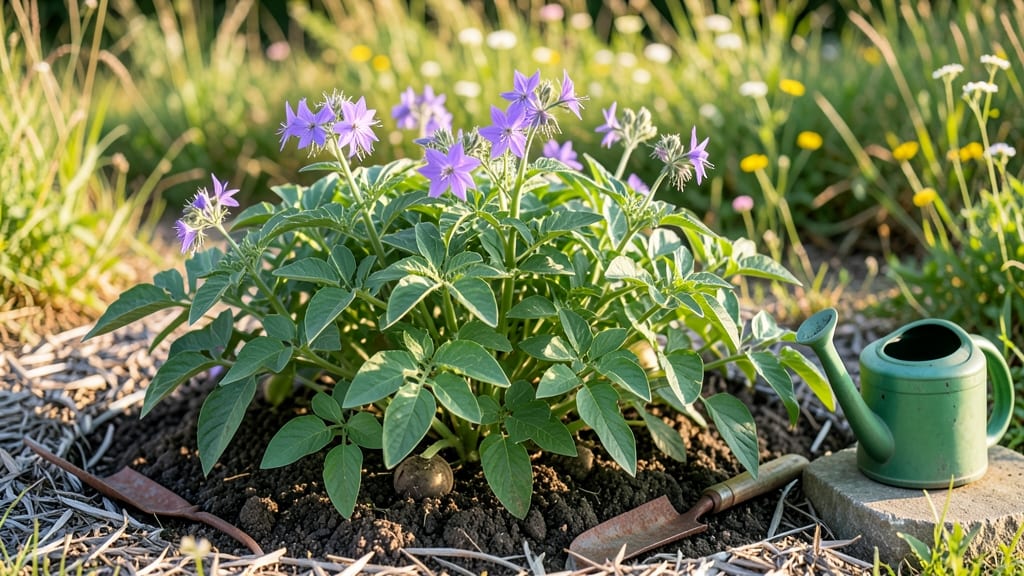
The purple potato flower transforms your garden into a dreamy, violet-hued escape—something I never expected from a humble tuber. 🌿 These striking blooms aren’t just pretty; they’re a sign of healthy plants producing flavorful, nutrient-rich potatoes too.
The secret lies in choosing the right varieties like 'Purple Majesty' or 'Violetta' and giving them the cool, consistent conditions they crave.
You’ll need well-draining soil, full sun to partial shade, and patience—these aren’t fast growers, but the payoff is worth it. Start seeds indoors 8-10 weeks before your last frost, or plant certified organic seed potatoes in early spring.
The key to those lavender trumpets? Keep soil moist but not soggy, and fertilize lightly with compost or a balanced organic fertilizer.
By midsummer, you’ll be rewarded with vibrant purple blooms that attract pollinators while the tubers below swell with color. The flowers even add a pop of drama to cut arrangements—imagine bouquets with deep violet centers.
Just watch for late blight (a common potato foe) and rotate crops yearly to keep your plants thriving.
Perfect for cottage gardens, containers, or even as a striking edible border. Once you grow these, you’ll never look at potatoes the same way again!
📚 In This Guide
- What you need
- Instructions
- Tips and common mistakes
- Wrapping up and next steps
What you need
- ● Purple potato flower seeds or tubers: 3–5 (for a small patch) or 10+ (for a full garden display). Look for Solanum rantonnetii or Solanum jasminoides varieties.
- ● Well-draining potting mix: 1–2 gallons (for containers) or enough to fill raised beds. A blend of 50% garden soil, 30% compost, and 20% perlite/sand works best.
- ● Containers or garden bed: Containers: 5–10-inch pots (1 plant per container) with drainage holes.
- ● Garden bed: Full sun (6+ hours/day) with loose, fertile soil.
- ● Watering can or hose with a gentle spray nozzle: For consistent moisture without overwatering.
- ● Garden gloves: To protect hands from prickly stems.
- ● Trowel or transplanting spade: For digging and planting.
- ● Mulch (straw or shredded leaves): 1–2 inches to retain moisture and suppress weeds.
- ● Fertilizer (balanced 10-10-10 or compost tea): 1 application every 4–6 weeks during growing season.
- ○ Trellis or small stakes (optional): If you want to train vines upward for a vertical display.
- ● Pruning shears: For trimming leggy growth or deadheading spent blooms.
- ● 🌡️ Climate: Hardy to USDA Zones 8–11. In colder zones, grow in containers and bring indoors in winter.
- ● 📅 Timing: Seeds: Start indoors 8–10 weeks before last frost or sow directly after danger of frost.
- ● Tubers: Plant after soil warms to 60°F (15°C) in spring.
- ● 💡 Patience: Flowers may take 6–8 weeks to bloom after planting!
Step-by-step guide to cultivating purple potato flowers
Here’s how to grow these striking, cold-resistant blooms with minimal fuss.
🌱 Step 1: Select and Prepare Tubers for Planting
Choose certified organic purple potato tubers—their deep violet hues signal the striking foliage and flowers to come. Cut larger tubers into 2-inch chunks, ensuring each piece has at least one eye (the tiny bud). Let the cut pieces air-dry for 24 hours to prevent rot. This isn’t just about speed; it’s about giving those buds a fighting chance against fungal invaders.
While waiting, fill 6-inch-deep containers with well-draining potting mix—think 60% compost, 30% perlite, and 10% coarse sand. Avoid garden soil; it’s too dense and can suffocate roots. Moisten the mix until it feels like a damp sponge, not a swamp. The goal is even moisture without waterlogging, which these tubers despise.
☀️ Step 2: Plant and Position for Optimal Growth
Place each tuber 2 inches deep, eyes facing up. Space them 12 inches apart—crowding leads to weak stems and fewer blooms. Gently press the soil around the tubers to eliminate air pockets, but don’t compact it. These plants thrive in full sun to partial shade, so a south-facing window or a 6-hour daily sunlight exposure works best. If growing outdoors, wait until soil temperatures reach 50°F—cold soil stunts growth.
Water lightly but consistently for the first 2 weeks, keeping the soil evenly moist but not soggy. Overwatering now drowns the tubers before they sprout. You’ll know you’re doing it right when the soil surface feels cool to the touch but doesn’t glisten with excess water. Patience here pays off—first shoots emerge in 3-4 weeks, and they’re delicate.
🌿 Step 3: Encourage Foliage and Flower Development
Once true leaves (not the initial seedling leaves) appear, increase watering to 1 inch per week, adjusting for rainfall. Purple potato flowers love consistent moisture but hate soggy roots. Mulch with 2 inches of straw to retain humidity and suppress weeds—this is where those year-round charm promises begin. The mulch also insulates roots, helping the plant withstand light frosts (down to 25°F) without damage.
Fertilize once a month with a balanced 10-10-10 formula, diluted to half-strength. Too much nitrogen now means lush leaves but fewer flowers. You’ll see the first violet blooms in 8-10 weeks, and they’ll keep coming if you deadhead spent flowers regularly. Here’s the thing—these plants reward gentle care, not heavy-handedness. Let the soil dry slightly between waterings after the first month, and you’ll avoid the root rot that plagues overwatered specimens.
✂️ Step 4: Prune and Extend the Blooming Season
After the first flush of flowers, trim back leggy stems to encourage bushier growth. Cut just above a leaf node, and new branches will sprout within 2 weeks. This isn’t just about aesthetics—it’s about prolonging the bloom cycle. Purple potato flowers are self-cleaning, but removing faded blooms redirects energy to new flowers instead of seed production.
In late summer, reduce watering slightly to ½ inch per week to harden the plant for winter. If growing in containers, move them to a garage or unheated shed when temperatures drop below 40°F. These plants are cold-hardy, but they’ll reward you with spring regrowth if you protect them from freezing soil. With this approach, you’ll enjoy year-round foliage and seasonal blooms—the very charm the name promises.
Tips & tricks for perfect purple potato flower cultivation
Between us, these striking blooms don't demand much—but they do need a few key tricks to thrive. Here's what nobody tells you about growing these cold-hardy stunners.
Tuber Prep Matters: When cutting your certified organic purple potato tubers into 2-inch chunks, make sure each piece has at least one eye facing up. I learned this the hard way after planting chunks without eyes—no sprouts appeared. The 24-hour air-drying step is non-negotiable; it creates a protective barrier against fungal infections that could ruin your entire crop. Place the cut pieces on a paper towel-lined tray in a dry, well-ventilated area during this time.
Soil Science is Everything: The 60-30-10 mix of compost-perlite-sand isn't just arbitrary—it's about creating the perfect balance. The compost provides nutrients, perlite ensures aeration, and sand prevents compaction. After filling your containers, give the mix a gentle squeeze—it should hold its shape but not be bone dry. Too much sand makes it hard for roots to establish, while too much compost can suffocate them. Think "damp sponge" consistency, not "wet towel."
Light and Temperature Synergy: These plants love 6 hours of daily sunlight, but here's the thing—if you're growing indoors near a window, rotate your containers every few days. Plants lean toward the light source, and uneven growth leads to weak stems. For outdoor planting, wait until soil temperatures hit exactly 50°F—any cooler and your tubers won't sprout properly. I use a soil thermometer for this critical step, especially in spring when temperatures fluctuate wildly.
Watering Wisdom: The first two weeks are critical—water lightly but consistently, keeping the soil surface cool to the touch but never glistening. I've seen beginners drown these tubers by overwatering, thinking they need constant moisture. Remember, these are potato tubers, not tropical plants. Once true leaves appear, increase to 1 inch per week, but always check the top inch of soil first—if it's dry, water; if it's still damp, wait. This simple check prevents 90% of root rot issues.
Pro Tips for Purple Potato Flower
- Between us, these striking blooms don't demand much—but they do need a few key tricks to thrive.
- Tuber Prep Matters: When cutting your certified organic purple potato tubers into 2-inch chunks, make sure each piece has at least one eye facing up.
- Soil Science is Everything: The 60-30-10 mix of compost-perlite-sand isn't just arbitrary—it's about creating the perfect balance.
Frequently asked questions
How long does it take for purple potato flowers to bloom after planting?
Patience is key! With proper care, you can expect Solanum rantonnetii to produce its first flowers 6–12 months after planting. Young plants may take longer, but mature specimens often bloom year-round in mild climates or spring through fall in cooler zones. Prune spent blooms to encourage more flowers!
Are purple potato flowers truly cold-hardy? What’s their USDA zone range?
These tough beauties thrive in USDA Zones 7–11 and can survive light frosts down to 20°F (-7°C). In colder zones (6 or below), grow them in containers and move them indoors or under cover during winter. Mulch heavily to protect roots—just avoid soggy soil!
Can I grow purple potato flowers in containers? What’s the ideal pot size?
Containers are perfect for these trailing vines! Use pots at least 12–18 inches wide and deep with drainage holes. A 5-gallon container works well for a single plant, and ensure it’s sunny and sheltered from harsh winds. Terracotta or fabric pots help prevent root rot in humid climates.
Why aren’t my purple potato flowers blooming? Troubleshooting tips!
No flowers? Check these fixes:
- Not enough light: Move to full sun (6+ hours/day)—partial shade reduces blooms.
- Over-fertilizing: Too much nitrogen = leafy growth, not flowers. Use a low-nitrogen, high-phosphorus fertilizer (like 5-10-10) in spring.
- Stress or pests: Inspect for aphids or spider mites. Prune damaged foliage and treat with neem oil if needed.
- Age or dormancy: Young plants or those in winter may hold off. Be patient or prune lightly to encourage new growth.
What are some great alternatives if purple potato flowers don’t thrive in my climate?
If your zone is too cold or dry, try these low-maintenance, cold-tolerant flowering plants:
- Russian Sage (Perovskia atriplicifolia) – Drought-resistant, purple-blue spikes, Zones 4–9.
- Lavender (Lavandula) – Fragrant, silvery foliage, Zones 5–9.
- Heather (Calluna vulgaris) – Evergreen, winter blooms, Zones 4–8.
- Sweet Potato Vine (Ipomoea batatas) – Fast-growing, trailing, Zones 9–11 (or container-grown).
Wrapping up and next steps
The purple potato flower isn’t just a stunning addition to your garden—it’s a low-maintenance, cold-hardy superstar that thrives year-round with minimal effort. From its striking blooms to its resilience in tough climates, this plant proves that beauty and simplicity go hand in hand.
Whether you’re a seasoned gardener or a beginner, grow one today and watch your outdoor space transform!
Next steps:
- 🌱 Pick your spot—sunny or partially shaded—and prep the soil.
- 🛒 Grab your tubers (or seeds!) and follow the planting guide above.
- 📅 Mark your calendar for seasonal care—like dividing clumps in early spring!