
Planting
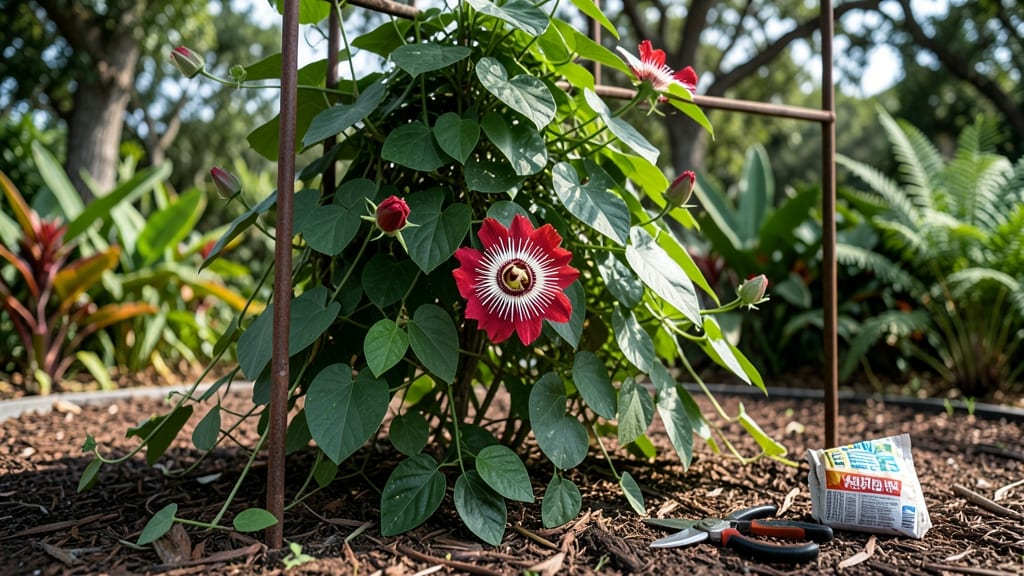
The red passion flower plant grows faster than most vines I've tried, transforming bare trellises into lush, blooming cascades within a single season. 🌱 Those striking red flowers don't just look amazing—they're also a magnet for hummingbirds and butterflies, turning your garden into a lively ecosystem.
The best part? With the right care, you'll enjoy continuous blooms from spring through fall, and sometimes even into winter in warmer climates.
This tropical beauty thrives in zones 8-11 but can be grown as an annual or container plant in cooler areas. It loves full sun to partial shade and well-draining soil—think of it as the drama queen of the garden that won't tolerate soggy roots.
A sturdy trellis or fence gives its vines something to climb, and with regular watering (but not drowning), you'll encourage those vibrant red blooms you've been dreaming of.
What makes this plant truly special is its dual purpose: the flowers are showstoppers, but some varieties like Passiflora edulis produce edible fruit too. Picture crisp, sweet-tart passion fruit ripening on the vine—if you're lucky enough to live in a warm enough zone.
Even if you don't get fruit, the foliage stays lush and the flowers keep coming, making it a low-maintenance, high-reward addition to any garden.
Whether you're growing it for its bold blooms, wildlife benefits, or even potential harvest, red passion flower delivers. The key is patience—those vines grow fast, but they need time to establish before they really take off. Once they do, you'll wonder why you didn't start sooner.
📚 In This Guide
- What you need
- Instructions
- Tips and common mistakes
- Wrapping up and next steps
What you need
- ● Red passion flower seeds or cuttings: Choose high-quality seeds or healthy cuttings from a trusted nursery.
- ● Well-draining potting mix: A blend of 2 parts garden soil, 1 part perlite, and 1 part compost works best.
- ● Large containers or garden bed: Passion vines need space—opt for at least 10-gallon pots or a sunny garden spot with 6+ feet of vertical support (trellis, fence, or arbor).
- ● Support structure: A wooden trellis, metal cage, or sturdy fence (6–10 feet tall).
- ● Slow-release fertilizer: A balanced 10-10-10 NPK fertilizer (or organic options like composted manure).
- ● Pruning shears: Sharp, sterilized shears for trimming vines and deadheading.
- ● Watering can or hose with a gentle nozzle: Passion flowers love moisture but hate soggy roots.
- ● Mulch: Shredded bark or straw to retain moisture and regulate soil temperature.
- ● Epsom salt: A spoonful in water monthly boosts magnesium for vibrant blooms.
- ● Garden gloves: Protect your hands from thorns and rough vines.
- ● Grow lights (indoor growers): If starting seeds inside, a full-spectrum LED helps mimic sunlight.
How to grow a thriving red passion flower vine
Here's how to get those bold red blooms established quickly—no waiting months for results.
🌱 Step 1: Choose the Perfect Planting Spot
Red passion flowers need full sun to partial shade, ideally 6+ hours of direct sunlight daily. I always check the sun patterns in my yard first—these vines will grow toward the light, so a south-facing wall or trellis works best. The more sun, the more vibrant those signature red flowers will be.
If your climate gets hotter than 90°F, provide afternoon shade to prevent leaf scorch. I've seen passion flowers wilt dramatically in intense afternoon heat, but they bounce back once shaded. Test your spot by observing how long sunlight lingers—morning sun is gentler, while afternoon sun can be harsh.
🪴 Step 2: Prepare the Soil and Plant
Passion flowers thrive in well-draining, slightly acidic soil with a pH between 6.0 and 7.0. Mix 2 inches of compost into the top 12 inches of soil to give roots the nutrients they crave. These vines grow fast, so rich soil prevents nutrient deficiencies that cause weak growth.
Dig a hole twice as wide as the root ball but only as deep. Position the plant so the top of the root ball sits 1 inch above ground level—this prevents rot from sitting water. Gently backfill with soil, pressing lightly to remove air pockets. Water deeply right after planting to settle everything in place.
☀️ Step 3: Install a Sturdy Trellis or Support
Red passion flowers can grow 20-30 feet per year if happy, so a strong trellis is non-negotiable. I use a 10-foot metal or wooden arbor for mine, buried 2 feet deep to prevent toppling. The vines will twine naturally, but you can also gently tie them with soft plant ties every few feet to guide their growth.
Here's the thing—if you skip the trellis, the vines will sprawl everywhere, and those stunning flowers will end up hidden under leaves. A trellis keeps everything visible and makes maintenance easier. Install it at planting time so roots can anchor to it as the vine grows.
💧 Step 4: Water Consistently and Fertilize
Water newly planted vines deeply 2-3 times per week until established, keeping the soil evenly moist but not soggy. You'll know it's right when water runs out the drainage holes but doesn't pool on the surface. Passion flowers hate "wet feet"—root rot will kill them faster than anything.
Once established, reduce watering to once weekly, letting the top 2 inches of soil dry out between waterings. Feed with a balanced 10-10-10 fertilizer every 4-6 weeks during growing season. I always fertilize after a deep watering so nutrients soak into the root zone.
✂️ Step 5: Prune for Health and More Blooms
Prune in late winter or early spring to shape the vine and encourage new growth. Cut back one-third of the previous year's growth to the first set of healthy buds. This might sound drastic, but it triggers bushier, more productive growth. I always sterilize my pruners with rubbing alcohol between cuts to prevent disease spread.
Remove any dead, diseased, or crossing branches immediately—they compete for energy and can block sunlight. You'll see new shoots emerge within 2-3 weeks of pruning, signaling the plant is recovering. Deadhead spent blooms regularly to redirect energy into new flowers instead of seed production.
Tips & tricks for perfect red passion flower growth
Took me a while to figure these out, so here goes—these tricks will help your passion flower vine thrive faster than you'd expect.
Sunlight Strategy: If your yard gets intense afternoon sun (especially above 90°F), I recommend installing a temporary shade cloth during peak hours. I've seen passion flowers recover from wilting, but the shock can delay flowering. A simple 30% shade cloth stretched over a hoop works perfectly—it diffuses harsh light while still allowing plenty of sunlight for photosynthesis.
Soil Prep Secret: The 2 inches of compost in the top 12 inches of soil might sound like a lot, but trust me on this—passion flowers are heavy feeders. For even faster results, mix in a handful of worm castings with that compost. The beneficial microbes in worm castings help roots absorb nutrients more efficiently, which translates to more vibrant blooms. You'll notice the difference in just a few weeks.
Trellis Timing: Installing that 10-foot trellis at planting time seems like overkill, but here's why it matters: The vine's tendrils need something sturdy to latch onto immediately. If you wait until the vine is already sprawling, you'll spend hours untangling it from other plants. Burying the trellis 2 feet deep also prevents it from toppling when the vine reaches its full 20-30 feet per year—this is especially important in windy climates.
Watering Hack: The key to that "evenly moist but not soggy" soil is actually checking the soil 1 inch below the surface. Stick your finger in—if it feels dry, water again. I've ruined passion flowers by either drowning them or letting them dry out completely. For container-grown vines, use a moisture meter for precision, especially in hotter climates where evaporation happens faster.
Pro Tips for Red Passion Flower Plant
- Took me a while to figure these out, so here goes—these tricks will help your passion flower vine thrive faster than you'd expect.
- Sunlight Strategy: If your yard gets intense afternoon sun (especially above 90°F), I recommend installing a temporary shade cloth during peak hours.
- Soil Prep Secret: The 2 inches of compost in the top 12 inches of soil might sound like a lot, but trust me on this—passion flowers are heavy feeders.
Frequently asked questions
How fast does a red passion flower plant grow?
A healthy red passion flower vine can grow 10–15 feet per year with proper care! In ideal conditions (full sun, well-draining soil, and regular watering), expect rapid growth—especially in spring and summer. Pro tip: Prune in late winter to encourage bushier, more productive vines.
When is the best time to plant red passion flower?
Plant in early spring (after the last frost) or fall (6–8 weeks before frost) for best results. Avoid planting in extreme heat or cold, as young roots are sensitive. If you’re in a warm climate (zones 8–11), plant in late winter to give roots time to establish before summer.
How often should I water my red passion flower?
Water deeply 1–2 times per week during the first year to establish roots, then once a week (or more in extreme heat). Let the top 2–3 inches of soil dry out between waterings—overwatering can lead to root rot. Mulch around the base to retain moisture and regulate soil temperature.
What pests or diseases should I watch for?
Common issues include:
- Aphids (sap-sucking insects) – Spray with soapy water or neem oil.
- Spider mites (tiny webs on leaves) – Increase humidity or use insecticidal soap.
- Fungal diseases (like powdery mildew) – Improve airflow and avoid overhead watering.
Pro tip: Inspect leaves weekly for early signs of trouble—early action prevents major damage!
Can I grow red passion flower in a container?
Yes! Choose a large pot (at least 15–20 gallons) with drainage holes and a well-draining potting mix. Red passion flowers thrive in containers but may need annual repotting (spring) to accommodate root growth. Place in a sunny spot and fertilize monthly during growing season for best results.
Wrapping up and next steps
The red passion flower plant is a vibrant, low-maintenance gem that brings year-round color and wildlife appeal to any garden. With its fast-growing vines and striking blooms, it’s perfect for adding drama and life to trellises, fences, or containers—plus, it’s a pollinator magnet! 🌸
Ready to transform your space? Start by gathering your supplies, choosing the right spot, and following the simple steps to plant and care for your passion flower. Your garden’s next star is just a few seeds (or cuttings) away!
- Next step: Pick a sunny spot, prep your soil, and get planting—your red passion flower will thank you with bold blooms all season!