Blooming
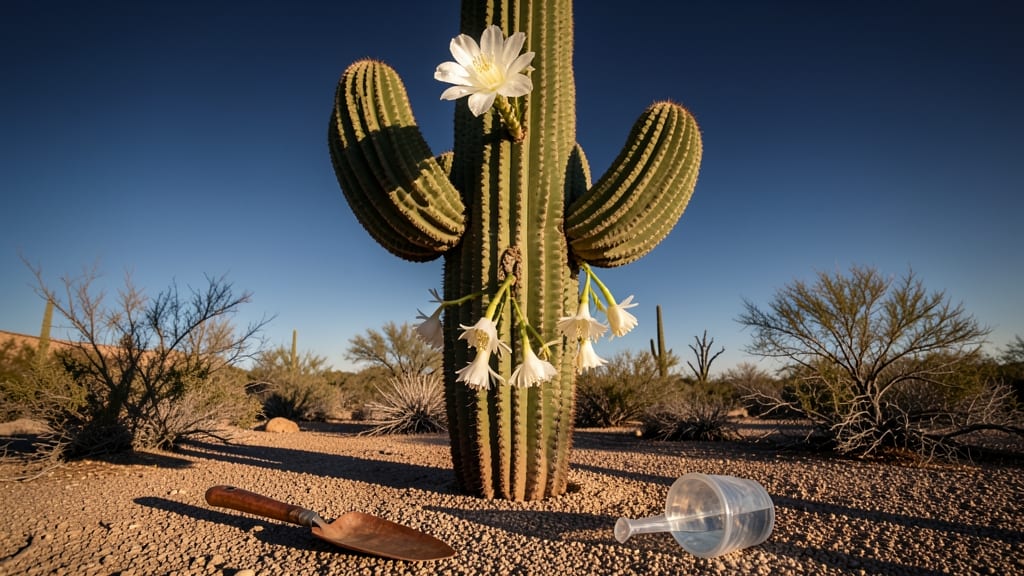
The saguaro blossom flower transforms your desert landscape into a surreal masterpiece—each creamy-white bloom lasts just one night but leaves a memory that outlasts the season.
I’ve watched these ghostly flowers unfurl after years of patient care, their delicate petals opening at dusk only to vanish by morning, replaced by bright red fruit. The magic isn’t in forcing blooms but in creating the right conditions for nature to take its course.
Saguaro cacti thrive where most plants fail—hot, dry climates with full sun and well-draining soil. They need almost no water once established, but young plants benefit from occasional deep soakings during their first few years.
The key is mimicking their native Sonoran Desert habitat: rocky, alkaline soil and temperatures that stay above freezing year-round. Patience is the real secret—these giants grow less than an inch annually but reward decades of care with their stunning, fleeting blooms.
When your saguaro finally flowers—often after 10-15 years—you’ll know it’s ready. The blossoms appear in May or June, triggered by consistent warmth and moisture from winter rains. Each flower attracts bats and birds, turning your yard into a nocturnal spectacle.
The red fruit that follows provides food for wildlife, completing the cycle. With proper care, your saguaro can live 150+ years, each season bringing you closer to witnessing its breathtaking, once-in-a-lifetime display.
This isn’t a fast-growing project, but the payoff is unmatched. Start with a young plant, give it space to grow, and let time do the work.
The blooms may come and go in a night, but the experience of nurturing a saguaro—from a tiny transplant to a towering desert sentinel—is one you’ll never forget. Let’s get your desert oasis started right.
📚 In This Guide
- What you need
- Instructions
- Tips and common mistakes
- Wrapping up and next steps
What you need
- ● Saguaro cactus seeds or a young plant (ensure they’re Carnegiea gigantea—the real deal!)
- ● Well-draining cactus/succulent soil mix (avoid regular garden soil—it’s a recipe for root rot!)
- ● Pot with drainage holes (terracotta or fabric pots work best; 6–8 inches for seedlings, larger for mature plants)
- ● Gravel or pumice (for the bottom 1–2 inches of the pot to improve drainage)
- ● Slow-release fertilizer (formulated for cacti/succulents, like a 5-10-5 blend)
- ● Gloves (cactus spines are no joke—opt for thick gardening gloves!)
- ● Small hand trowel or spoon (for planting seeds or transplanting)
- ● Watering can with a narrow spout (to avoid disturbing soil)
- ● Sunlight access (full sun, 6+ hours daily—mimic their desert habitat!)
- ● Patience! 🐢 (Saguaro flowers bloom after 50–75 years, but the journey is half the fun.)
- ● Cactus fertilizer spray (for a nutrient boost during growing season)
- ● Mulch (gravel or rocks) (keeps soil dry and mimics desert conditions)
- ● Humidity tray (if your climate is very dry, for seed germination)
- ● Plant labels (to track growth—these giants take time!)
How to cultivate a thriving saguaro blossom flower
These iconic desert blooms reward patience with stunning, night-blooming flowers. Here's how to nurture them with ease.
🌱 Step 1: Select and Prepare the Perfect Planting Site
Saguaro blossoms thrive where they naturally grow—full sun exposure for at least 6 hours daily. Choose a location with well-draining soil, as saguaros despise soggy roots. If your soil is heavy clay, amend it with 3-4 inches of coarse sand or gravel mixed into the top 12 inches of soil to improve drainage.
Here's the thing—saguaros grow slowly, so give them space. Plant each at least 10 feet apart to allow room for their massive, columnar trunks to develop. If you're planting multiple saguaros, arrange them in a way that mimics their natural clustering in the desert.
Dig a hole twice as wide as the root ball but only as deep as the container it came in. This prevents burying the base, which can cause rot. Gently loosen the roots if they're circling the pot before placing the plant in the hole.
☀️ Step 2: Provide Optimal Sunlight and Heat
Saguaro blossoms need intense sunlight to produce their iconic white flowers. If you're in a cooler climate, position them in the southernmost part of your yard or use a south-facing wall to reflect extra heat. In hotter regions, provide afternoon shade during the hottest months to prevent sunburn on the delicate blooms.
Watch for signs of stress—yellowing leaves or slow growth often mean insufficient light. If your saguaros start stretching toward the sun with long, thin stems, they're begging for more brightness. Move them closer to the light source or supplement with a grow light during shorter winter days.
Real talk: saguaros are drought-tolerant once established, but they still need consistent moisture during their first 2-3 years to help roots spread. Water deeply once a week during dry spells, soaking the soil to a depth of 12-18 inches. Reduce watering once the plant shows signs of maturity, like thicker stems and new growth.
💧 Step 3: Water and Fertilize for Long-Term Health
Overwatering is the biggest mistake with saguaros—they rot easily. After the first 2-3 years, water only when the soil feels completely dry to the touch, about 2-3 inches deep. This might mean watering only every 3-4 weeks during the monsoon season or once a month in winter.
Fertilize lightly in early spring with a low-nitrogen, high-phosphorus fertilizer (like a 5-10-10 blend) to encourage root growth without promoting excessive foliage. Apply half the recommended dose and water it in well. Avoid fertilizing in summer, as the plant enters dormancy and doesn’t need extra nutrients.
You'll know you're doing it right when the saguaro develops thick, ribbed stems and small, spiny pads along the sides. These are signs of a healthy, well-established plant ready to bloom in 7-10 years (yes, it takes that long—patience is key!).
✂️ Step 4: Prune and Protect for Longevity
Pruning saguaros is rare, but if you notice dead or damaged arms (the horizontal branches), you can remove them with sterilized pruning shears in late winter. Cut just above a healthy joint to encourage new growth. Never prune more than one-third of the plant at a time, as this can stress it severely.
Protect young saguaros from wildlife and freezing temperatures. In areas where temperatures drop below 20°F, wrap the base with burlap or frost cloth to insulate the roots. Mature saguaros can handle brief freezes, but their roots are their most vulnerable part.
Here's where it gets fun—watch for the first signs of blooming, which usually appear in May or June after the plant reaches 10-15 feet tall. The flowers open at night and last only 24 hours, so time your visits carefully if you want to see them in person!
Tips & tricks for perfect saguaro blossom cultivation
Patience and precision pay off with these saguaro care secrets that'll help your desert beauty thrive.
Site Selection Insight: The 6 hours of daily sun requirement is non-negotiable for those iconic night-blooming flowers. I've seen saguaros planted in partial shade still grow, but they'll never produce those stunning white blossoms. If your yard has limited sun exposure, consider planting in containers and placing them on a sunny patio or balcony during the growing season. This gives you the flexibility to move them when sunlight is scarce.
Planting Depth Matters: When you're digging that hole twice as wide as the root ball but only as deep as the container, resist the urge to bury the base further. Saguaro roots are sensitive to rot, and too much soil depth can suffocate them. A good test is to plant so the base sits just slightly above ground level—this mimics their natural desert environment where they grow in well-drained rocky soil.
Watering Wisdom: That first 2-3 years is critical for root establishment, but don't drown them. The deep watering once a week should soak the soil to 12-18 inches—think of it like giving them a long desert rainstorm. Use your finger to check moisture at 2-3 inches deep before watering established plants. I've seen many well-meaning gardeners overwater, thinking more is better, only to watch their saguaros develop rot at the base.
Frost Protection Strategy: For those below 20°F nights, the burlap wrap around the base is your best defense. I've used frost cloth as well, but make sure it's secured tightly—desert winds can be surprisingly strong. Remember that mature saguaros can handle brief freezes, but their roots are always the weak link. If you're in a particularly cold climate, consider planting near a south-facing wall where it can absorb reflected heat during the day.
Pro Tips for Saguaro Blossom Flower
- Patience and precision pay off with these saguaro care secrets that'll help your desert beauty thrive.
- Site Selection Insight: The 6 hours of daily sun requirement is non-negotiable for those iconic night-blooming flower...
- Planting Depth Matters: When you're digging that hole twice as wide as the root ball but only as deep as the containe...
Frequently asked questions
Got questions about the stunning saguaro blossom flower? You’re not alone!
Here are answers to the most common queries—from blooming secrets to care tips—so you can enjoy this desert marvel with ease.
When do saguaro blossoms typically bloom, and how long do they last?
The saguaro blossom (also called Carnegiea gigantea) usually blooms in May and June, though timing varies by region. Each flower lasts just 24–48 hours, opening at night and wilting by noon. Plan a late-night visit for the full magic!
Why isn’t my saguaro flowering, even though it’s mature?
Patience is key—saguaro cacti often don’t bloom until 50–75 years old! Ensure it gets full sun, well-draining soil, and minimal water (overwatering stresses them). Cold snaps (<32°F) can also delay blooms. If your plant is healthy but young, keep nurturing it—nature’s timeline isn’t yours!
Can I grow a saguaro blossom indoors, or is it strictly an outdoor plant?
Saguaro cacti are outdoor-only due to their massive size (some reach 50+ feet!) and need for hot desert climates. However, you can grow smaller cactus varieties (like Echinocereus) indoors with bright light and minimal care. For true saguaros, outdoor desert gardens are a must!
Are saguaro blossoms edible, and can I harvest them?
Yes! The flowers and fruit are edible and were a food source for Native Americans. The fruit (called a "tuna") is sweet and seedy, while the blossoms are delicate and best enjoyed fresh. Harvest responsibly: Only pick a few flowers from healthy plants to avoid harming the cactus.
What should I do if my saguaro’s blossoms are falling off too soon?
Premature wilting often signals stress from overwatering, pests (like cactus moths), or extreme heat/cold. Check these fixes:
- Reduce watering—saguaro roots need drought conditions.
- Inspect for pests and treat with neem oil if needed.
- Provide afternoon shade in scorching climates.
Wrapping up and next steps
The saguaro blossom flower is a stunning symbol of desert resilience and beauty—proof that even the driest landscapes can bloom with grace when given the right care. With minimal effort, you can cultivate this iconic flower and enjoy its ethereal white blossoms, a true desert oasis in your garden. 🌵✨
Ready to bring a piece of the Sonoran Desert home? Start by gathering your supplies—whether you’re planting seeds or caring for a young cactus—and follow the simple steps to nurture this hardy beauty. Before you know it, your garden will be alive with the magic of the saguaro blossom!