Flowers
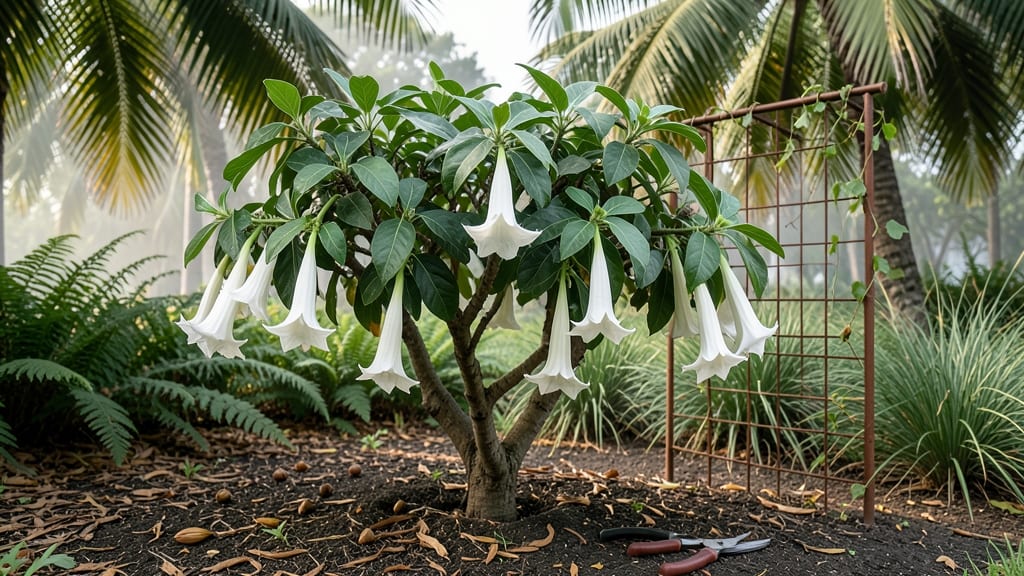
When you spot that angel trumpet white flower glowing in the twilight, you know summer has arrived in the Pacific Northwest. ✨ These dramatic vines (Brugmansia spp.) thrive where other tropicals wilt, their trumpet-shaped blooms perfuming the evening air with intoxicating fragrance.
I’ve grown them for years in my Zone 8 garden, and they’ve never failed to deliver—just don’t let the kids (or your dog) get too close.
The secret to success starts with the right site: partial shade to protect the leaves from scorching afternoon sun, and rich, well-draining soil that stays moist but never soggy. My plants get a spring boost of compost and a slow-release fertilizer, which keeps them flowering from June through frost.
They’re not fussy about soil pH, but they’ll reward you with foot-long white trumpets if you give them consistent care.
You’ll love how these vines transform a shady corner into a moonlit sanctuary, their fragrant blooms opening at dusk. Just be prepared for their toxic sap—keep them away from pets and children, as ingestion can cause serious illness.
With the right placement and a little patience, you’ll have a vine that’s as cold-hardy as it is stunning.
Once established, these vines need minimal maintenance beyond light pruning to shape them and remove spent blooms. They self-seed aggressively, so you might end up with more plants than you bargained for—but that’s a Pacific Northwest gardener’s dream. Ready to grow your own? Let’s get started.
📚 In This Guide
- What you need
- Instructions
- Tips and common mistakes
- Wrapping up and next steps
What you need
- ● Angel trumpet (Brugmansia) plants: 1-3 white-flowering Brugmansia (seeds, cuttings, or nursery-grown plants)
- ● Cold-hardy varieties: Look for Brugmansia × candida or Brugmansia suaveolens (zones 7-10 with winter protection)
- ● Well-draining soil: 50% garden soil + 50% organic matter (compost, aged manure, or peat moss)
- ○ Optional: 1 cup perlite or sand per 5-gallon pot for container growing
- ● Sunlight: Full sun to partial shade (6+ hours of morning sun, afternoon shade in hot zones)
- ● Watering tools: Watering can or hose with a gentle spray nozzle (to avoid damaging large leaves)
- ○ Drip irrigation system (optional but ideal for consistent moisture)
- ● Fertilizer: Balanced 10-10-10 or 20-20-20 fertilizer (diluted to half-strength)
- ● Organic options: Fish emulsion, compost tea, or worm castings
- ● Support structure (if needed): Tall trellis, stake, or cage (3-6 ft tall) for vining varieties
- ● Garden tools: Trowel or transplant spade
- ● Pruning shears (sterilized with rubbing alcohol)
- ○ Gloves (optional—angel trumpet has mild toxins; wear if sensitive)
- ● Container growers: 5+ gallon pots with drainage holes
- ● Saucer trays (to catch excess water)
- ● Cold protection (PNW-specific): Frost cloth or burlap wraps (for zones 7-8)
- ● Mulch (straw or shredded leaves) to insulate roots
- ○ Optional extras: Epsom salt (for magnesium boosts)
- ● Mulch (wood chips or pine needles to retain moisture)
- ● Pest control: Neem oil or insecticidal soap (for aphids/mealybugs)
Step-by-Step guide for planting angel trumpet vines in the Pacific Northwest
Here's how to establish these dramatic, cold-tolerant climbers with minimal fuss.
🌱 Step 1: Choose the Perfect Planting Site and Timing
Angel trumpet vines thrive in partial shade—think 4-6 hours of morning sun followed by afternoon shade protection. In the Pacific Northwest's cooler climate, this prevents leaf scorch while allowing enough light for robust growth. I always plant mine near north-facing walls or large evergreens where they get dappled light.
Timing matters more than you'd think. Plant in early spring (March-April) when soil temperatures reach 50°F or in early fall (September-October) to give roots time to establish before winter. The vine's cold-hardiness lets it survive our region's winters, but young plants need that head start.
🪴 Step 2: Prepare the Soil and Planting Hole
These vines aren't picky about soil, but they perform best in well-draining, slightly acidic mixes (pH 6.0-6.5). Amend heavy clay soils with 2-3 inches of compost mixed into the top 12 inches of soil. I like to work in a 50/50 blend of native soil and compost—this gives them the nutrients they crave without overwhelming them.
Dig a hole twice as wide as the root ball but only as deep—planting too deep suffocates the roots. The top of the root ball should sit 1 inch above ground level to prevent rot. Gently loosen any circling roots before placing the vine in the hole. Water deeply before backfilling to eliminate air pockets.
☀️ Step 3: Provide Support and Initial Care
Angel trumpets need strong vertical support—install a 6-8 foot trellis, arbor, or sturdy fence before planting. The vines grow 10-20 feet annually, so choose something that can handle their weight. I use metal trellises because they resist wind damage better than wooden options in our rainy climate.
Water deeply 2-3 times per week for the first month to encourage deep root growth. You'll know it's enough when water drains 6-8 inches deep. After establishment, they tolerate some drought but produce better blooms with consistent moisture. Mulch with 3 inches of wood chips around the base to retain moisture and regulate soil temperature.
✂️ Step 4: Prune for Shape and Winter Hardiness
Prune in late winter (February) before new growth begins. Remove dead or crossing branches first, then cut back any leggy growth by one-third to encourage bushier, more productive vines. This is also when I shape the vine—directing it along the trellis in a spiral pattern creates dramatic vertical interest.
In fall, cut back any remaining foliage to 6 inches above the ground. The vine's cold-hardiness means it'll regrow from the base in spring, but this prevents winter moisture buildup that could cause rot. I've seen these vines survive 20°F with proper pruning—just don't prune in fall if you're expecting a late frost.
Tips & tricks for perfect angel trumpet white flower planting
These cold-hardy vines reward patience with stunning blooms—here's how to give them the best start possible.
Light Balance: The 4-6 hours of morning sun in Step 1 is non-negotiable for Pacific Northwest success. I've found that positioning your vine on the east side of buildings or near deciduous trees (which lose leaves in winter) gives that perfect light balance. Too much afternoon sun will scorch leaves, while too little morning light means weak growth. Think of it as giving your vine a gentle wake-up call rather than a midday sunburn.
Soil pH Precision: While these vines tolerate a range, the slightly acidic pH of 6.0-6.5 in Step 2 makes all the difference for vigorous growth. Test your soil first—if it's too alkaline, mix in 2-3 inches of peat moss along with the compost. I've seen vines in unamended soil grow, but they never reach their full dramatic potential. The key is creating that perfect balance between native soil and organic matter.
Root Ball Strategy: That 1-inch above-ground placement in Step 2 might seem small, but it's critical. The root ball needs room to breathe while staying stable. I've learned the hard way that burying too deep causes rot, while planting too shallow means poor anchorage. Use your finger to create a slight depression around the root ball before backfilling—this helps direct water exactly where you want it. The first deep watering after planting is your best chance to eliminate air pockets.
Winter Prep: The 20°F cold-hardiness mentioned in Step 4 is impressive, but don't let it fool you into skipping winter prep. After your fall pruning to 6 inches, wrap the base with burlap or frost cloth for extra protection. I've seen vines survive our winters just fine, but adding this extra layer gives you that peace of mind—especially if you're expecting an unusually cold snap. Think of it as giving your vine a cozy blanket for the season.
Pro Tips for Angel Trumpet White Flower
- These cold-hardy vines reward patience with stunning blooms—here's how to give them the best start possible.
- Light Balance: The 4-6 hours of morning sun in Step 1 is non-negotiable for Pacific Northwest success.
- Soil pH Precision: While these vines tolerate a range, the slightly acidic pH of 6.0-6.5 in Step 2 makes all the difference for vigorous growth.
Frequently asked questions
Got questions about growing angel trumpet white flower (Brugmansia candida) in your Pacific Northwest garden? You’re not alone! Here are answers to the most common queries to help you cultivate these stunning, fragrant vines with confidence.
How cold-hardy is the angel trumpet white flower, and can it survive PNW winters?
The white angel trumpet (Brugmansia candida) is the most cold-tolerant Brugmansia variety, often surviving brief dips to 25°F (-4°C). However, the PNW’s wet winters can stress it—plant in well-draining soil, mulch heavily, and consider winter protection (like burlap wraps or a mini greenhouse) for younger plants. In colder zones (below 7b), grow it as an annual or overwinter indoors.
When is the best time to plant angel trumpet white flowers in the PNW?
Wait until after the last frost (typically late May in most of the PNW) to plant outdoors. Start seeds indoors 8–10 weeks earlier (March) in warm conditions (70–75°F). If transplanting, do it on a cloudy day or evening to reduce shock. Young plants are delicate—avoid planting too early when soil temps are still chilly!
Why aren’t my angel trumpet flowers blooming, even though the plant looks healthy?
Angel trumpets need full sun (6+ hours/day) and rich, well-draining soil to bloom. Common culprits for no flowers:
- Too much shade (they thrive in morning sun + afternoon shade in hotter PNW areas).
- Over-fertilizing with nitrogen (promotes leafy growth, not blooms). Use a low-nitrogen, high-phosphorus fertilizer instead.
- Stress from wind or cold drafts—these vines prefer sheltered spots.
Give it time—some plants take 1–2 years to mature and flower!
Are angel trumpet flowers toxic to pets or humans, and should I wear gloves when handling them?
Yes! All parts of the angel trumpet (leaves, flowers, seeds) contain toxic alkaloids that can cause nausea, vomiting, or neurological issues if ingested. Keep plants away from children and pets. While not highly poisonous like some plants, it’s wise to wear gloves when pruning or handling to avoid skin irritation. Always wash hands afterward.
What are some low-maintenance alternatives to angel trumpet if I want fragrant white flowers?
If Brugmansia feels too high-maintenance, try these PNW-friendly, fragrant white bloomers:
- Night-blooming jasmine (Cestrum nocturnum) – Hardy to 20°F, thrives in shade, and smells heavenly at dusk.
- Angel’s trumpet vine (Tecoma stans) – Drought-tolerant, cold-hardy to 10°F, and attracts hummingbirds.
- White gardenia (Gardenia jasminoides) – Perennial in milder PNW zones, loves shade, and has intoxicating blooms.
- White clematis (Clematis montana) – Fast-growing, cold-resistant, and fragrant (though not as potent as Brugmansia).
All are less toxic than angel trumpet but still stunning!
Wrapping up and next steps
The angel trumpet white flower is a stunning, cold-hardy vine that brings drama and elegance to Pacific Northwest gardens—whether you’re a seasoned gardener or just starting out. With the right care, these fragrant blooms will reward you with lush growth, resilience, and breathtaking beauty year after year. 🌸
Ready to transform your space? Start by selecting the perfect spot—whether it’s a trellis, fence, or container—and give your angel trumpet the love it deserves. Happy gardening! 🌱