Flowers
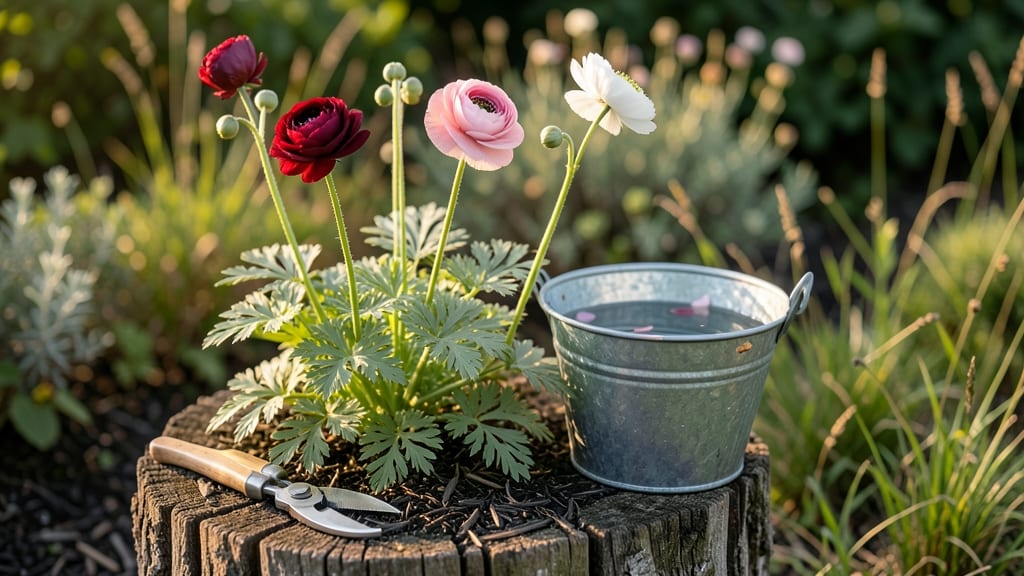
Cutting ranunculus flowers at their peak transforms your garden into a bouquet factory—each stem holding layers of delicate petals that last for 10-14 days in a vase. 🌸 I learned the hard way that snipping too early or too late ruins both the bloom and the plant, but once you master the timing and technique, you'll have flowers that rival professional arrangements.
The secret lies in patience and precision: wait until 2-3 outer petals unfurl completely, then use sharp scissors to cut stems at a 45-degree angle just above a leaf node. This small detail keeps the flowers hydrated longer and encourages the plant to produce even more blooms.
Most gardeners overlook how gentle you need to be—ranunculus petals bruise easily, so handle them like you would a glass ornament.
What you'll end up with are stems that stay fresh through the week, their layered petals opening gradually for a show that lasts. The plants themselves reward careful cutting by sending up new shoots within 3-5 days, proving that a little attention goes a long way.
Even if you've struggled with wilting cut flowers before, this method delivers results that feel like magic.
Works for both garden maintenance and bouquet-making, whether you're harvesting a dozen stems or just a few for your kitchen table.
The same principles apply whether you're working with the classic red varieties or the softer pastels—once you understand the basics, you can experiment with color combinations to your heart's content.
📚 In This Guide
- What you need
- Instructions
- Tips and common mistakes
- Wrapping up and next steps
What you need
- ● Sharp floral shears or pruning snips: Look for bypass-pruning shears (4-6 inches) with stainless-steel blades to avoid crushing stems.
- ● Clean, sharp knife or scissors: As a backup—sterilize with rubbing alcohol before use!
- ● Bucket or vase: Fill with fresh, room-temperature water (1–2 gallons, depending on quantity).
- ● Floral preservative: 1 packet (like Floralife or Chrysal Clear) per gallon of water.
- ● Ranunculus flowers: Freshly cut stems (12–24 inches long, depending on variety).
- ● Hydrogen peroxide (1 tsp per gallon): Kills bacteria and keeps water crystal clear.
- ● Sugar (1 tsp per gallon): Provides quick energy for stems.
- ● Acidifier (like lemon juice or white vinegar, 1 tsp): Balances pH for longevity.
- ● Floral foam or chicken wire: For arranging stems in bouquets or centerpieces.
- ● Rubbing alcohol wipes: For sterilizing tools between cuts.
Step-by-Step instructions for trimming ranunculus stems
Here's how to extend your ranunculus bouquets by days with simple, precise cuts.
✂️ Step 1: Choose the Right Time and Tools
Trim stems in the early morning when they're fully hydrated. Use a clean, sharp pair of floral shears or pruning scissors—dull blades crush stems and block water flow. I always wipe the blades with rubbing alcohol before cutting to prevent bacterial buildup that shortens vase life.
Look for stems that feel firm and crisp when you gently squeeze them. Avoid cutting stems that already show wilting or browning at the base—these won't recover well. The ideal stem should have a slight snap when bent, indicating freshness.
💧 Step 2: Make the Perfect Cut Angle
Hold the stem at a 45-degree angle about 1-2 inches above a leaf node where new growth emerges. This angled cut maximizes water absorption surface while keeping stems submerged in water. I like to make a clean diagonal cut rather than straight across—it prevents stems from sitting flat on the vase bottom and blocking water uptake.
Use one smooth motion with your shears. A jagged cut can create entry points for bacteria. For thicker stems, I make two shallow cuts first to create a clean break before completing the final diagonal. This prevents tearing of the stem tissue.
☀️ Step 3: Prepare Stems for Maximum Hydration
Immediately place trimmed stems in lukewarm water (around 70°F) for 30 minutes before arranging. This temperature opens the stem cells for better water absorption. I like to add a commercial floral preservative or homemade solution (1 teaspoon sugar + 1 teaspoon bleach per quart of water) to prevent bacterial growth.
Remove any lower leaves that would sit underwater—these rot quickly and foul the water. Strip leaves back to about 2-3 inches from the stem base. This simple step can add 2-3 extra days to your bouquet's life by preventing microbial buildup in the water.
🌿 Step 4: Maintain Freshness Daily
Change the water every 2-3 days and recut stems at a fresh angle each time. I set a reminder on my phone because even beautiful ranunculus flowers need this refresh. Always use clean vases—rinse thoroughly with hot water and a drop of dish soap before each use.
Keep arrangements away from direct sunlight, heating vents, and drafts. Ranunculus petals are delicate and will crisp or fade faster in hot, dry conditions. A cool spot (around 65-70°F) with indirect light preserves their vibrant colors longest. Watch for stems that start to droop—this is your signal to recut and refresh the water immediately.
Tips & tricks for perfect ranunculus trimming
A few small details make all the difference when it comes to keeping your ranunculus bouquets fresh for days. Here's what I've learned after working with these delicate flowers for years.
The Right Time Matters: Early morning is non-negotiable for best results. That's when stems are fully hydrated from overnight dew. I've found that trimming after 10 AM often means stems that wilt faster—even when you follow all the other steps perfectly. The cooler morning temperatures also help prevent immediate wilting after cutting.
Tool Prep is Critical: Don't overlook sanitizing your shears! I keep rubbing alcohol in a small spray bottle next to my cutting tools. After every few cuts, I give the blades a quick wipe—this prevents bacterial buildup that can shorten your bouquet's life by nearly half. A dull blade will crush stems, blocking their ability to absorb water, so I sharpen my shears every few weeks.
Angle Precision Pays Off: That 45-degree angle in Step 2 isn't just arbitrary—it creates about 25% more surface area for water absorption compared to a straight cut. For thicker stems, I make two shallow cuts first to create a clean break before completing the diagonal. This prevents tearing of the stem tissue, which is where bacteria love to hide.
Hydration Hack: The 30-minute lukewarm water soak in Step 3 is where the magic happens. If you're short on time, even 15 minutes helps, but don't skip it entirely. I've noticed that stems soaked in water colder than 70°F sometimes develop brown edges—they're essentially getting a mild frostbite! Keep the water level high enough to submerge at least 3 inches of stem during this soak.
Pro Tips for Cutting Ranunculus Flowers
- A few small details make all the difference when it comes to keeping your ranunculus bouquets fresh for days.
- The Right Time Matters: Early morning is non-negotiable for best results.
- Tool Prep is Critical: Don't overlook sanitizing your shears!
Frequently asked questions
Got questions about cutting ranunculus flowers like a pro?
You’re in the right place! Here are answers to the most common queries—from timing tricks to troubleshooting tips—to help you keep those blooms fresh and stunning.
When is the best time to cut ranunculus flowers for the longest vase life?
Harvest your ranunculus in the early morning when stems are fully hydrated and temperatures are cool. Avoid cutting after heavy rain or in extreme heat—both can shorten vase life. Aim for 50-70% bloom (when petals are just starting to unfurl) for maximum longevity.
How deep should I cut the stems, and does it matter?
Always cut stems at a 45-degree angle about 2-3 inches from the base using sharp, sterilized shears. This increases water uptake and prevents air bubbles. Pro tip: Recut stems every 2-3 days to keep them fresh!
Why do my ranunculus flowers wilt quickly after cutting?
Wilting often signals bacterial buildup or poor hydration. Use clean vases, change water every 2 days, and add a flower food packet to prevent clogging. Also, avoid placing stems near fruit (ethylene gas speeds wilting) and keep them out of direct sunlight.
Can I cut ranunculus from my garden and still grow more blooms?
Yes! Cut stems from the outer edges of the plant to encourage bushier growth. Avoid over-cutting—leave at least half the foliage intact to support photosynthesis. For potted ranunculus, trim stems just above a leaf node for regrowth.
What’s the best way to arrange cut ranunculus for maximum impact?
Ranunculus thrive in loose, organic arrangements. Mix them with tall stems (like snapdragons) and filler flowers (like baby’s breath) for depth. Their layered petals add texture—try clustering 3-5 stems per bunch for a full, lush look!
Wrapping up and next steps
Mastering the art of cutting ranunculus flowers ensures your bouquets stay vibrant and fresh for days—if not weeks! 🌸 With the right tools, timing, and technique, you’ll transform simple stems into stunning centerpieces or gifts.
Whether you’re a gardener or a DIY enthusiast, every snip brings you closer to floral perfection.
Ready to elevate your flower game? Grab those sharp shears and practice on a fresh batch of ranunculus—your future arrangements will thank you! For extra inspiration, experiment with different cutting angles or preservative mixes to see what works best for your blooms.