
Shrubs
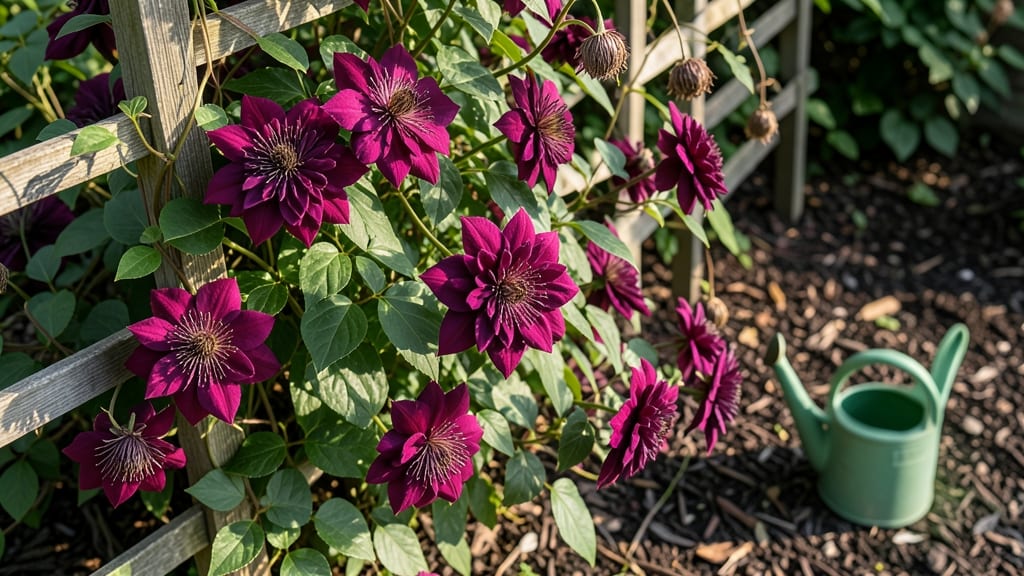
Double flowering clematis transforms any garden into a vertical masterpiece with layers of velvety blooms that last from spring through fall. 🌸 I’ve wrestled with their finicky nature—too much shade, and they sulk; too little water, and they wilt—but once you master their quirks, they reward you with bold, repeat blooms that turn heads (and jealous neighbors).
The key difference from single-flowering varieties? Their heavier blooms need stronger support and smarter pruning to avoid flopping under their own weight.
Start with the right spot: full sun to partial shade (at least 6 hours of sunlight) and well-draining soil with organic matter mixed in. These climbers crave moisture but hate soggy roots, so amend heavy clay with compost and consider a soaker hose for consistent hydration.
A sturdy trellis or arbor is non-negotiable—think metal or thick wooden lattice that won’t bend as the vines bulk up with blooms. And here’s the secret: mulch heavily to protect roots from temperature swings, which double-flowering types hate.
Pruning is where most gardeners stumble. Skip the guesswork: wait until late winter (after the first hard frost) to cut back last year’s growth to 12–18 inches above the ground. This encourages stronger, bushier growth and more flowers.
For established plants, a second light prune in early summer keeps them tidy and promotes another flush of blooms. The payoff? Nonstop color from late spring to frost, with clusters so dense they look like they’ve been airbrushed onto the vine.
Watch for mildew—the Achilles’ heel of double-flowering varieties—and circulate air with proper spacing (3–5 feet between plants). A weekly foliar spray of neem oil or baking soda mix keeps powdery mildew at bay.
With these adjustments, your clematis won’t just survive—it’ll thrive year after year, becoming the showstopper of your garden. Ready to dive into the details?
📚 In This Guide
- What you need
- Instructions
- Tips and common mistakes
- Wrapping up and next steps
What you need
- ● Double flowering clematis plant: Choose a healthy, disease-free variety (e.g., 'Niobe,' 'Jackmanii,' or 'The President'). Opt for bare-root or potted plants from a reputable nursery.
- ● Well-draining soil: Aim for a mix of 60% garden soil, 30% compost or well-rotted manure, and 10% grit or perlite to improve aeration.
- ● Support structure: A 5-6 ft tall trellis, obelisk, or sturdy wire frame (diameter: 4-6 inches) to guide vines upward.
- ● Organic mulch: 2-3 inches of bark chips or straw to retain moisture and suppress weeds.
- ● Fertilizer: A balanced, slow-release fertilizer (10-10-10) or bone meal for phosphorus to encourage blooms.
- ● Garden trowel or spade for planting.
- ● Pruning shears (sterilized with rubbing alcohol).
- ● Measuring tape or ruler (for spacing and pruning accuracy).
- ● Garden gloves (to protect hands from thorns).
- ● Watering can or hose with a gentle spray nozzle (avoid overhead watering).
- ● Slow-release moisture granules (e.g., polyacrylamide crystals) for drought-prone areas.
- ● Epsom salt (magnesium sulfate) (1 tbsp per gallon of water) for green, vibrant foliage.
- ● Clematis-specific fungicide (e.g., copper-based spray) to prevent powdery mildew.
- ● Decorative ties or soft plant clips to secure vines to supports without damaging stems.
How to cultivate double flowering clematis: pruning and care essentials
Here’s the method I’ve perfected over years of growing these stunning vines—where most gardeners fail at pruning.
🌱 Step 1: Select the Right Variety and Planting Site
Double flowering clematis thrive in partial shade to full sun, but avoid harsh afternoon rays that scorch blooms. Choose a location with at least 6 hours of morning sun—this prevents leaf burn while maximizing flower production. The key is moist, well-draining soil enriched with organic matter; amend heavy clay with 2-3 inches of compost before planting.
Plant deep—bury ⅔ of the root crown below soil level. This encourages strong root development and prevents crown rot. Water deeply after planting to settle the soil, then mulch with 2-3 inches of organic mulch to retain moisture and suppress weeds. Here’s the thing—double bloomers need consistent moisture, especially during bud formation. Let the top 1-2 inches of soil dry between waterings once established, but never let roots dry out completely.
☀️ Step 2: Feed for Maximum Blooms and Longevity
Double flowering clematis are heavy feeders—they demand balanced fertilization to produce their extravagant blooms. In early spring, apply a slow-release 10-10-10 fertilizer around the base, then repeat in late spring as new growth appears. The secret? Phosphorus (the middle number) is critical for flower production, so avoid high-nitrogen fertilizers that promote leafy growth at the expense of blooms.
I also top-dress with composted manure or worm castings in early fall to replenish nutrients. This ensures roots have energy stored for next year’s growth. Over-fertilizing in late summer can stimulate tender new growth that won’t survive winter—wait until after the first hard frost to apply any final feedings. Watch for yellowing leaves (a sign of over-fertilization) and adjust immediately by flushing the soil with water.
✂️ Step 3: Master the 3 Pruning Secrets for Double Bloomers
This is where most gardeners stumble—double flowering clematis have specific pruning needs that differ from single-blooming varieties. First, identify your plant’s group: Most double bloomers are Group 3 (late bloomers), which flower on both old and new wood. The first secret? Prune in early spring (just as new shoots emerge) to remove dead, weak, or crossing stems. Cut back last year’s growth by ⅓ to ½ to encourage bushier growth and more blooms.
The second secret is timing: Never prune in fall—you’ll remove next year’s flower buds. The third secret? Shape for airflow: Double bloomers benefit from open-centered pruning, so avoid heavy shearing. Instead, make clean cuts just above an outward-facing bud to maintain an airy structure. Here’s what I do: I step back after pruning and imagine sunlight filtering through—if it looks too dense, I make a few more cuts. Leggy stems? Prune back to strong lateral branches to redirect energy.
🌿 Step 4: Support and Protect for Year-Round Success
Double flowering clematis need strong support to handle their weight and improve airflow. Install a 5-6 foot trellis or arbor at planting, using flexible ties (like garden twine) to guide vines upward. Avoid wire or rigid supports that can damage stems as they thicken. Train the main stems vertically first, then let side shoots cascade naturally—this creates a balanced, flower-filled display rather than a top-heavy mess.
Winter protection is critical, especially in colder climates. Once the ground freezes, pile 4-6 inches of mulch around the base and wrap the trellis with burlap to shield from wind. In zones with below 0°F temperatures, consider covering the entire plant with frost cloth. The goal is to protect the crown while allowing airflow to prevent rot. In spring, remove supports gradually—wait until new growth appears before fully uncovering the plant.
Tips & tricks for double flowering clematis success
Here's what I've learned after years of growing these stunning climbers—where most gardeners stumble.
Soil Preparation Strategy: Before planting, mix 2-3 inches of compost into the top 12 inches of soil to create a nutrient-rich zone where roots will thrive. I've found that adding a handful of bone meal (optional) at planting time gives an extra phosphorus boost for those early blooms—just follow the package directions. The key is creating that perfect balance of moisture and aeration right from the start.
Pruning Tool Precision: Use sharp, clean pruners when cutting back your clematis in early spring. Dull blades crush stems and create wounds that invite disease. I always sterilize my tools with rubbing alcohol between cuts to prevent spreading any hidden pathogens. For the ⅓ to ½ cut-back on last year's growth, make your cuts at a 45-degree angle just above an outward-facing bud—this encourages better growth patterns and more flowers.
Winter Protection Hack: In zones with below 0°F temperatures, I've found that wrapping the trellis with burlap creates a microclimate that protects the crown while still allowing some airflow. The secret is to leave the top open—this prevents moisture buildup that can cause rot. For extra insulation, I add a layer of straw mulch over the burlap, creating a cozy blanket that keeps roots warm through harsh winters.
Fertilizer Timing: The 10-10-10 fertilizer application in early spring is non-negotiable, but timing matters just as much as the product. I apply it when I see the first green shoots emerging—this gives the plant a growth boost just as it needs it. The late spring application should happen after the first flush of flowers appears, giving the plant energy for the next bloom cycle. Remember, phosphorus is your friend here—it's what makes those double blooms possible.
Pro Tips for Double Flowering Clematis
- Here's what I've learned after years of growing these stunning climbers—where most gardeners stumble.
- Soil Preparation Strategy: Before planting, mix 2-3 inches of compost into the top 12 inches of soil to create a nutrient-rich zone where roots will thrive.
- Pruning Tool Precision: Use sharp, clean pruners when cutting back your clematis in early spring.
Frequently asked questions
Got questions about double flowering clematis?
Here are answers to the most common ones—from pruning puzzles to blooming tips!
What makes double flowering clematis different from regular clematis?
Double flowering clematis produce two sets of petals per bloom (instead of one), creating lush, layered flowers that look like mini roses or peonies. They’re prized for their extra volume and texture, making them standout stars in gardens. However, they often bloom later in the season (summer to fall) and may need strategic pruning to encourage repeat flowers.
When is the best time to plant double flowering clematis?
The ideal planting window is early spring or early fall (4–6 weeks before the first frost). Avoid planting in mid-summer heat, as the roots can dry out. If you must plant in summer, water deeply 2–3 times per week and mulch to retain moisture. Pro tip: Soak the roots in water for 1–2 hours before planting to reduce transplant shock!
How do I prune double flowering clematis to get more blooms?
Double flowering clematis fall into Group 3 pruning (late summer/fall bloomers). Cut back 1/3 of the oldest stems to the ground in early spring, then lightly trim back the remaining stems by 1–2 feet after the first flush of blooms. Avoid heavy pruning in late summer—this can reduce next year’s flowers. See the full pruning guide for step-by-step tips!
What are the most common pests or diseases for double flowering clematis?
Watch for clematis wilt (a fungal disease causing yellowing leaves), aphids (sap-sucking pests), and slugs (which chew leaves). Prevent wilt by ensuring good air circulation and avoiding overhead watering. For aphids, spray with neem oil or introduce ladybugs. Slugs? Use copper tape around the base or beer traps!
Can I grow double flowering clematis in containers? Yes—but with a twist!
Choose a large pot (at least 15–20 gallons) with drainage holes and use a well-draining potting mix (like 60% soil, 30% compost, 10% perlite). Key tip: Add a trellis or obelisk for support—they need vertical space to climb! Water containers daily in summer and fertilize monthly with a balanced 10-10-10 formula during growing season.
Bonus: Why aren’t my double flowering clematis blooming?
Common culprits include over-pruning (cutting back too late or too hard), poor sunlight (they need 6+ hours of sun), or nutrient deficiencies. Check your pruning group, ensure they’re in full sun to partial shade, and feed with phosphorus-rich fertilizer (like 5-10-5) in early spring. If they’re still struggling, transplant to a sunnier spot!
Wrapping up and next steps
Double flowering clematis isn’t just a plant—it’s a year-round masterpiece that rewards patience with breathtaking blooms and lush greenery. By mastering its three pruning secrets, choosing the right support, and giving it the ideal growing conditions, you’ll transform your garden into a vibrant showstopper. 🌸
Ready to dive in? Start by picking one variety that excites you—whether it’s the bold ‘Nelly Moser’ or the delicate ‘Jackmanii’—and sketch a simple pruning plan before your first cut. Your future self (and your neighbors!) will thank you.