
Flowers
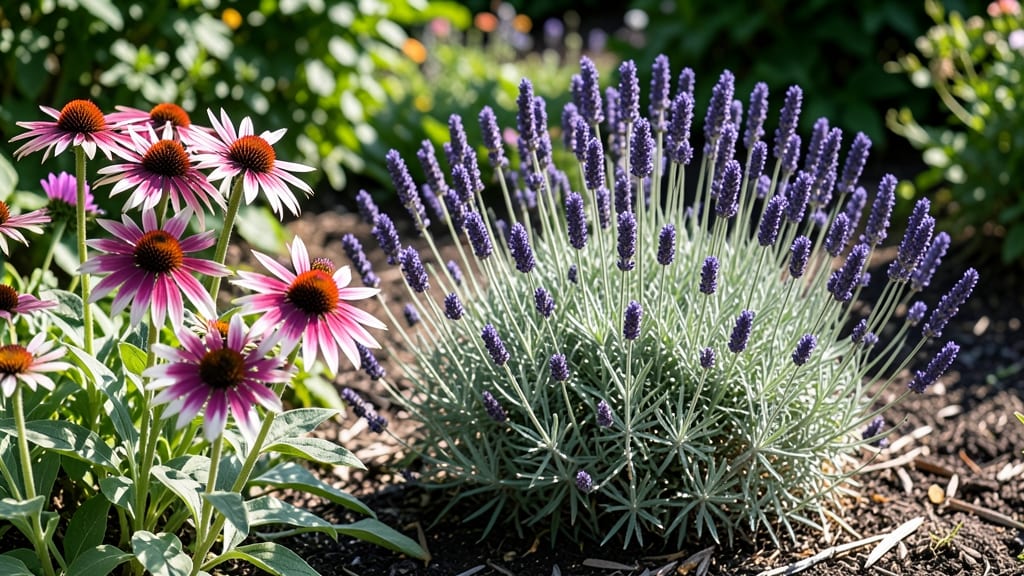
Lavender and coneflower create a garden duo that’s impossible to resist—silvery-blue spikes meet bold, daisy-like blooms in a pollinator magnet that works in any design. 🌿 The secret lies in their heights: lavender’s airy mounds (18-24 inches) pair perfectly with coneflower’s towering stems (2-4 feet), creating natural layers that catch the eye and butterflies alike.
I’ve used this combo in everything from drought-resistant borders to cottage-style beds, and it never fails to deliver year-round interest.
The best part? They thrive on the same conditions—full sun, well-draining soil, and minimal fuss. Plant lavender in the front for its fragrant foliage, then tuck coneflowers behind to let their deep pink, purple, or white blooms shine.
Add a few ornamental grasses or sedum for texture, and you’ve got a low-maintenance garden that hums with life from early summer through frost. Even my black thumb keeps these two alive with almost no effort.
What you’ll end up with is a garden that smells like a Provence summer while feeding bees, butterflies, and hummingbirds all season. The lavender’s silvery scent mingles with coneflowers’ honey-like fragrance, creating an intoxicating mix that lingers in the air.
Plus, the color contrast—soft lavender against coneflowers’ fiery centers—makes every bouquet look like a painter’s palette. Ready to transform a corner of your yard into this dreamy duo?
This pairing works in modern planters, rustic borders, or even as a standalone pollinator patch. For extra drama, add salvia or Russian sage nearby—they share the same care requirements and extend the blooming season.
The key is spacing: give coneflowers 18-24 inches apart, and lavender 12-18 inches, so they don’t crowd each other’s growth habits. Let’s make your garden a haven for both beauty and buzzing wings.
📚 In This Guide
- What you need
- Instructions
- Tips and common mistakes
- Wrapping up and next steps
What you need
- ● Lavender plants: 3–5 mature plants (e.g., Lavandula angustifolia or Lavandula x intermedia for height contrast). Choose USDA Hardiness Zones 5–9 varieties.
- ● Coneflower plants: 3–5 Echinacea purpurea (purple coneflower) or Echinacea pallida (pale coneflower) per 4–6 sq ft of space. Opt for dwarf varieties (12–18" tall) for balance.
- ● Well-draining soil: 1–2 bags of garden loam or compost (mix 50/50 with existing soil). Lavender hates soggy roots!
- ● Organic mulch: 2–3 inches of gravel or coarse sand (for lavender) + wood chips or straw (for coneflower).
- ● Slow-release fertilizer: 1 lb of 5-10-10 or balanced organic fertilizer (e.g., fish emulsion).
- ● Watering can or hose: With a gentle spray nozzle (lavender roots are shallow!).
- ● Garden gloves & trowel: For planting and soil prep.
- ● Pruners: Bypass pruners for shaping lavender (sterilize with rubbing alcohol!).
- ○ Stakes or trellis: Optional for tall coneflower varieties (e.g., Echinacea paradoxa).
- ● Drip irrigation kit: Automates watering (lavender needs 1 inch/week; coneflower tolerates drought).
- ● Companion plants: Add salvia or yarrow for extra pollinator appeal!
- ● Decorative stones: Create borders or pathways (e.g., pebbles or slate tiles).
How to create a stunning lavender and coneflower pollinator garden
This pairing brings bold color, fragrance, and pollinator power to your yard—here's how to make it thrive.
🌱 Step 1: Choose the Perfect Planting Spots
Lavender thrives in full sun and well-drained soil, while coneflowers tolerate slightly more shade but still need at least 6 hours of sunlight daily. I always test my soil first—lavender hates soggy roots, so amend heavy clay with 2-3 inches of coarse sand or gravel before planting. For coneflowers, a slightly richer mix works, but don't overdo it—they're tough and adaptable.
Here's the thing—lavender grows 2-3 feet tall while coneflowers reach 3-4 feet, so I plant lavender in the back row and coneflowers in front. This creates that gorgeous height contrast while keeping both plants visible. Space lavender 18-24 inches apart and coneflowers 12-18 inches apart—crowding leads to weak stems and fewer blooms.
☀️ Step 2: Plant with Proper Spacing and Sunlight Balance
Dig holes twice as wide as each plant's root ball but only as deep as the root ball itself. Lavender roots spread wide, so I loosen the soil around the edges of the hole to encourage outward growth. For coneflowers, I add a handful of bone meal to the planting hole—this gives them a phosphorus boost for stronger roots.
Water deeply right after planting, then wait until the soil feels dry 1-2 inches down before watering again. I know it seems counterintuitive, but lavender especially hates wet feet. You'll see new growth within 3-4 weeks—that's your signal everything's working. If leaves yellow, that's a sign of overwatering, not underwatering.
💧 Step 3: Maintain with Minimal Care
Once established, lavender needs very little water—about once every 2 weeks in dry climates, or only when the soil feels completely dry. Coneflowers are more forgiving and can handle weekly watering during hot spells. I always water at the base, never overhead—this prevents fungal diseases that love damp foliage.
Deadhead spent coneflower blooms to encourage more flowers, but leave lavender stems intact until late winter. The dried lavender flowers add winter interest, and the stems provide structure for your garden. Fertilizer? Skip it—lavender hates rich soil, and coneflowers do just fine with a light application of 5-10-10 fertilizer in early spring.
🌿 Step 4: Protect and Encourage Pollinators
This is where the magic happens—both plants are pollinator powerhouses. Lavender's fragrance attracts bees and butterflies from sunrise to sunset, while coneflowers provide late-season nectar when other flowers fade. I've seen monarchs, bumblebees, and hummingbirds all visiting the same patch within minutes.
To make your garden even more inviting, add a small water source nearby—a shallow dish with pebbles works perfectly. Watch for aphids on coneflowers and spider mites on lavender, but don't stress—both plants are tough. A strong spray of water usually clears them up without chemicals. You'll know your garden's successful when you see bees buzzing between plants all summer long.
Tips & tricks for perfect lavender and coneflower pairings
Here's what nobody tells you about making this fragrant duo truly shine in your garden.
Sunlight Strategy: While both plants need sunlight, lavender demands the full 6 hours of direct sun daily—no compromises. I've seen lavender turn woolly and sad when planted in partial shade, even if coneflowers seem fine. Place your lavender where it gets morning sun and afternoon light, while coneflowers can handle a bit more afternoon shade if needed. The height difference (lavender's 2-3 feet vs coneflowers' 3-4 feet) makes this easy to arrange naturally.
Soil Science: The 2-3 inches of coarse sand or gravel you add for lavender isn't just for drainage—it creates air pockets that prevent root rot. For coneflowers, that handful of bone meal in the planting hole gives them a phosphorus boost that translates to stronger stems and more blooms. I always mix a little extra bone meal into the backfill soil for both plants, especially in poor-quality soil. This small investment pays off in healthier plants that need less care.
Watering Wisdom: That first deep watering after planting is crucial, but the real test comes when you wait until the soil feels dry 1-2 inches down. I use a screwdriver to check—when it comes out clean, it's time to water. Lavender's yellow leaves are a classic overwatering signal, while coneflowers might wilt slightly before showing stress. The 3-4 week mark for new growth is your green light that everything's working perfectly. At that point, you can start adjusting your watering schedule based on what you observe.
Pollinator Power-Up: The water dish with pebbles isn't just decorative—it's a lifesaver for pollinators on hot days. I've watched bees literally collapse from dehydration near my garden when I forgot to add water. Place it where both plants can access it easily, and add a few flat stones for perching. The contrast between lavender's sunrise-to-sunset fragrance and coneflowers' late-season nectar creates a pollinator buffet that keeps visitors coming back all season long.
Pro Tips for Lavender And Coneflower
- Here's what nobody tells you about making this fragrant duo truly shine in your garden.
- Sunlight Strategy: While both plants need sunlight, lavender demands the full 6 hours of direct sun daily—no compromises.
- Soil Science: The 2-3 inches of coarse sand or gravel you add for lavender isn't just for drainage—it creates air pockets that prevent root rot.
Frequently asked questions
Got questions about pairing lavender and coneflower? You’re not alone! Here are some of the most common queries—and their answers—to help you create a thriving, pollinator-friendly garden.
Can lavender and coneflower grow together in the same garden bed?
Lavender thrives in well-drained soil with full sun, while coneflowers tolerate slightly richer soil and can handle a bit more shade. Plant them 18–24 inches apart to balance their needs—lavender’s drought tolerance complements coneflower’s resilience. Just avoid overcrowding to prevent fungal issues.
When is the best time to plant lavender and coneflower together?
Spring (after the last frost) or early fall are ideal. Lavender establishes roots quickly, so planting in spring gives it a head start. Coneflowers, being hardy perennials, adapt well to both seasons. Avoid planting in summer’s heat or winter’s frost—both can stress young plants.
Will this pairing attract more bees and butterflies than planting them separately?
Yes! Lavender’s fragrant blooms draw bees and beneficial insects, while coneflowers’ flat tops are magnets for butterflies and pollinators. Together, they create a dynamic ecosystem that supports pollinators year-round. Plus, the height contrast makes your garden a buzzing hotspot!
How do I prevent pests from damaging either plant?
Lavender can fend off pests like aphids with its strong scent, while coneflowers rarely face serious issues. Still, watch for spider mites (dry conditions) or powdery mildew (humid weather). Improve airflow, water at the base, and mulch lightly to keep problems at bay.
What are some low-maintenance alternatives if I can’t grow lavender?
Try pairing coneflowers with Russian sage (drought-tolerant, purple blooms) or salvia (fragrant, bee-friendly). Both offer height contrast and thrive in similar conditions. For a softer look, black-eyed Susans or bee balm work well too!
Wrapping up and next steps
Incorporating lavender and coneflower into your garden isn’t just about beauty—it’s a power move for pollinators and visual appeal! 🌸 These dynamic duo plants offer fragrant charm, striking height contrast, and year-round benefits for bees, butterflies, and birds.
Whether you’re a seasoned gardener or just starting, this pairing proves that even small spaces can make a big impact.
Ready to transform your outdoor space? Start by sketching your garden layout, then grab those seeds or seedlings—your future pollinator paradise awaits! 🌱 Browse our plant care guides for step-by-step inspiration.