Flowers
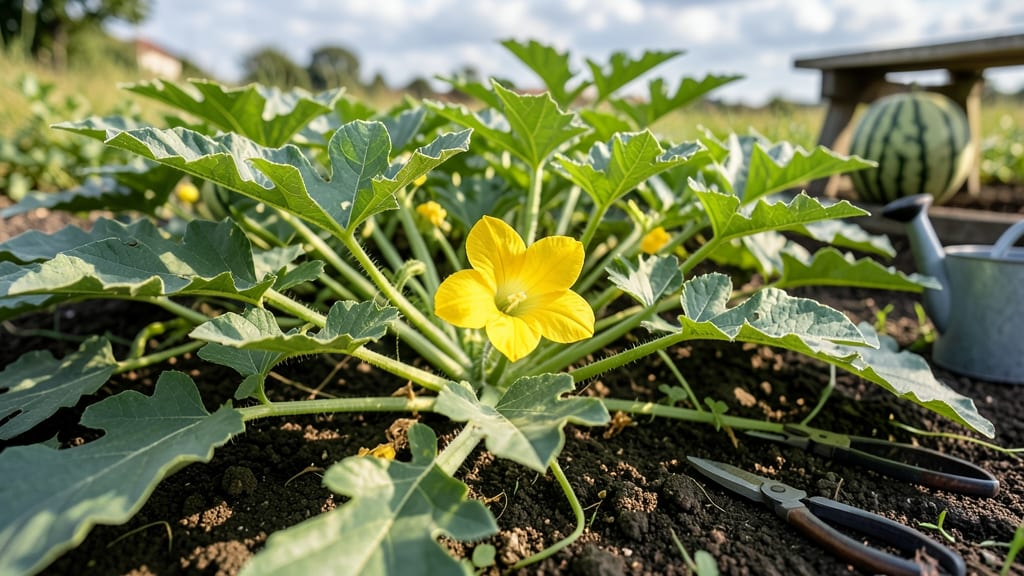
Those bold striped male watermelon flowers are the unsung heroes of your harvest—without them, your fruit never sets. 🌱 I learned the hard way that ignoring these delicate blooms means fewer vines, fewer fruits, and a lot of wasted energy.
The key is recognizing them early and giving them the right conditions to do their job.
Male flowers arrive first, their slender stems and striped petals making them easy to spot compared to the tiny fruit bumps on female blooms. They’re the plant’s way of getting pollen out there before the females are ready to receive it.
In containers, they need consistent water and a little extra warmth to keep producing—skimp on either, and you’ll see fewer blooms over time.
By the time your vines are heavy with fruit, you’ll notice the difference: plants with plenty of male flowers pollinate faster, set more fruit, and produce sweeter melons. The secret is balance—too many males and you waste energy; too few and your harvest suffers.
Hand-pollination in greenhouses can help when bees aren’t around, but even outdoors, these striped blooms are your first line of defense for a bountiful season.
Whether you’re growing in pots or the ground, this guide covers how to spot, support, and maximize those male flowers for the biggest, juiciest watermelons possible. Let’s get those vines working for you!
📚 In This Guide
- What you need
- Instructions
- Tips and common mistakes
- Wrapping up and next steps
What you need
- ● Watermelon seeds (male flower-pollinated varieties like Crimson Sweet or Sugar Baby—check seed packets for specifics). Quantity: 3-5 seeds per container (or 1 seed per hill in garden beds).
- ● Containers or garden bed: Containers: 5-gallon pots or larger (minimum 12-inch diameter for one plant; 18+ inches for vining varieties). Material: Fabric grow bags, plastic, or terracotta (ensure drainage holes!).
- ● Garden bed: Full sun (6+ hours/day), well-draining soil with pH 6.0–7.0.
- ● High-quality potting mix (sterilized, well-draining, and rich in organic matter like miracle-gro potting mix or fox farm ocean forest). Quantity: Enough to fill containers to 1–2 inches from the rim.
- ● Slow-release fertilizer (e.g., osmocote smart-3 or jobe’s tomatoes & vegetables) for nutrients. Quantity: Follow package instructions (typically 1–2 tbsp per container).
- ● Organic mulch (e.g., straw or shredded leaves) to retain moisture. Quantity: 2–3 inches once seedlings sprout.
- ● Garden trowel or small shovel for transplanting.
- ● Watering can or hose with gentle spray nozzle (avoid soaking seeds/seedlings).
- ● Hand pruners or scissors (for trimming vines or deadheading spent flowers).
- ○ Trellis or tomato cage (optional but highly recommended for container-growing vining varieties to save space). Height: 5–6 feet.
- ● Plant supports (e.g., twine or soft ties) if using a trellis.
- ○ Gloves (optional, for handling prickly vines or soil).
- ● Sunlight access: Confirm your location gets full sun (6+ hours/day)—watermelon flowers thrive in warmth!
- ● Patience! Watermelons take 70–90 days to flower and fruit.
- ● 🌡️ Warmth is key: Start seeds indoors 2–3 weeks before last frost (or use a heat mat if sowing early). Soil should be 70°F+ for germination.
- ● ✨ Boost pollination: If growing in containers, hand-pollinate flowers with a small paintbrush to transfer pollen from male to female blooms (male flowers have long stems; female flowers have tiny watermelons at their base).
- ● 💧 Water wisely: Keep soil consistently moist (not soggy) during flowering/fruiting. Use drip irrigation to avoid wetting leaves (reduces disease risk).
Step-by-step guide to cultivating male watermelon flowers in containers
Growing these striking striped blooms is simpler than you'd think—here's how to coax them into vibrant life.
🌱 Step 1: Select and Prepare Your Watermelon Variety
Choose a compact, container-friendly watermelon variety like 'Sugar Baby' or 'Tiny Tim'—these produce the bold male flowers without requiring massive vines. I always opt for certified organic seeds to avoid hidden pesticides that might stress the plants later. Start seeds indoors 6-8 weeks before your last frost date, using sterile seed-starting mix in 3-inch pots to prevent damping-off disease.
Sow seeds ½ inch deep and keep the soil consistently moist at 75-85°F until germination. Here's the thing—male flowers appear 3-4 weeks after female flowers, so patience is key. Watch for the first true leaves to appear before transplanting, as this signals the seedling has enough energy to handle container life.
☀️ Step 2: Position for Maximum Sun and Airflow
Male watermelon flowers thrive in full sun (6-8+ hours daily)—place your containers on a south-facing patio or balcony where they'll get unfiltered light. I use 5-gallon fabric grow bags because they allow roots to breathe while preventing soil compaction. Fill with well-draining potting mix mixed with 20% perlite to mimic loose garden soil.
Space plants 18-24 inches apart—crowding stresses vines and reduces flower production. Here's where it gets fun: male flowers grow on long, slender stems that trail dramatically. Train vines along a trellis or let them cascade naturally, but keep them at least 6 inches away from walls to prevent rot from trapped moisture.
💧 Step 3: Water and Feed for Vibrant Blooms
Water deeply every 2-3 days until the top 2 inches of soil feel dry—watermelons hate soggy roots but need consistent moisture. I use a soaker hose to water at the base, avoiding wetting leaves, which prevents powdery mildew. Fertilize with balanced 10-10-10 when flowers first appear, then switch to low-nitrogen 5-10-10 to encourage blooming over foliage growth.
Male flowers are the showstoppers—striped, yellow, and abundant—but they won't appear if plants are stressed. Watch for new growth spurts after feeding; that's your cue to increase water slightly. Real talk: Overwatering here leads to blossom-end rot, so let the soil dry slightly between waterings after the first fruit sets.
✂️ Step 4: Prune and Maintain for Continuous Blooms
Prune yellowed leaves and weak stems regularly to redirect energy to flower production. I pinch off the first few male flowers that appear—this might sound counterintuitive, but it forces the plant to produce larger, more striking blooms later. Remove any female flowers (small, round, with tiny fruits) if you're growing purely for ornamental blooms, as they drain energy.
Deadhead spent male flowers every 3-4 days to encourage new blooms. You'll notice a surge in production within a week—that's your plant responding to the pruning. Here's the moment that matters: When vines start trailing more than 12 inches beyond the container, consider trimming back by ⅓ to prevent nutrient depletion.
Tips & tricks for growing stunning male watermelon flowers
Here's what I learned after growing these showstopper blooms for years—simple tricks that make all the difference.
Seed Starting Secret: The 6-8 week indoor start is non-negotiable for container plants. I use a heat mat set to 75-85°F to speed germination—seeds sprout in just 5-7 days instead of the usual 10-14. Just be patient with the 3-4 week wait for male flowers to appear after females, even though it feels like forever!
Sunlight Strategy: Those 6-8+ hours of full sun are critical for vibrant stripes. I've found that morning sun (6am-12pm) plus afternoon shade (1pm-5pm) works best in hot climates—it prevents leaf scorch while still giving enough light for blooms. Move containers to sunnier spots as the season progresses.
Container Upgrade: The 5-gallon fabric grow bags make all the difference—they prevent root circling and allow proper drainage. I add 20% perlite to the potting mix to create air pockets, which helps prevent the dreaded blossom-end rot. Pro tip: Elevate containers with pot feet to improve airflow around the base.
Pruning Payoff: That 3-4 day deadheading schedule really works—you'll see new buds within days! I also trim vines back by ⅓ when they exceed 12 inches beyond the container. This might seem harsh, but it forces the plant to put all its energy into producing those dramatic striped blooms instead of endless vines.
Pro Tips for Male Watermelon Flower
- Here's what I learned after growing these showstopper blooms for years—simple tricks that make all the difference.
- Seed Starting Secret: The 6-8 week indoor start is non-negotiable for container plants.
- Sunlight Strategy: Those 6-8+ hours of full sun are critical for vibrant stripes.
Frequently asked questions
Got questions about those striking male watermelon flowers? You’re not alone! Whether you’re a first-time gardener or a seasoned grower, these blooms can spark curiosity. Below, we tackle the most common questions—from identification to troubleshooting—to help you nurture those bold striped flowers like a pro.
How do I tell a male watermelon flower apart from a female?
Male watermelon flowers are easy to spot—they have a long, slender stem with no swelling at the base, and their petals are often slightly larger. Female flowers, on the other hand, have a tiny watermelon-shaped ovary (the "bump") behind the blossom. Pro tip: Male flowers appear first and are critical for pollination!
When is the best time to harvest male watermelon flowers for pollination?
Harvest male flowers early in the morning when they’re fully open but still fresh. Use clean scissors to snip the stem just above a leaf node. For container gardens, hand-pollinate by gently brushing stamens onto female flowers. Timing is key: Do this before 10 AM to ensure pollen viability.
Why aren’t my male watermelon flowers opening?
Several factors can prevent blooms from opening: heat stress (above 90°F), lack of sunlight, or over-fertilizing with nitrogen. Try moving pots to a sunnier spot, reduce watering slightly, and switch to a low-nitrogen, high-phosphorus fertilizer (like 5-10-10). If humidity is low, mist leaves lightly in the evening.
Can I grow watermelons without male flowers?
Technically, yes—but it’s not recommended for fruiting. Male flowers carry pollen needed to fertilize female flowers (which develop into melons). While some varieties can self-pollinate, hand-pollination boosts yields. If you’re growing for flowers (not fruit), male blooms are perfect for cut arrangements!
Where can I buy male watermelon flowers for pollination?
You can’t buy just male flowers, but you can purchase watermelon plants (like ‘Sugar Baby’ or ‘Black Diamond’) from nurseries or online seed suppliers (e.g., Burpee or Baker Creek). For container growers, start seeds indoors 3–4 weeks before the last frost.
Wrapping up and next steps
Growing male watermelon flowers with their striking bold stripes isn’t just rewarding—it’s a celebration of nature’s vibrant beauty! Whether you’re nurturing them in containers or expanding your garden, these blooms bring a splash of color and a promise of juicy harvests. 🌱
Ready to take the next step? Start small—pick a sunny spot, gather your supplies, and watch your garden transform. Share your progress with fellow plant enthusiasts or experiment with pollination techniques to boost your watermelon yield. Happy gardening! 🌸