
Shrubs
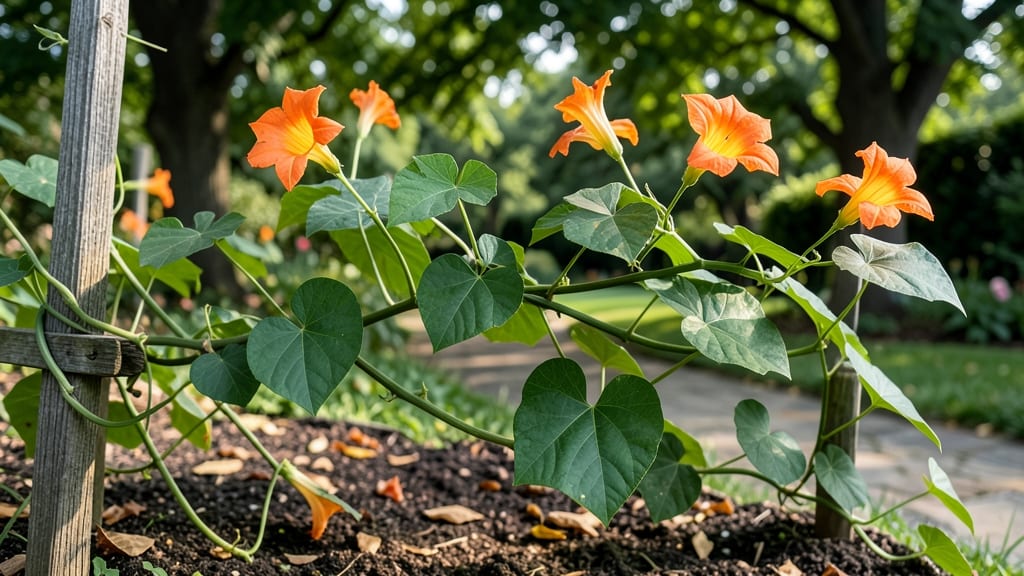
The orange flowered climber you're dreaming of might just be Clematis viticella—its fiery blooms transform any trellis into a sunlit jewel box. 🌿 I planted mine against a rustic arbor last spring, and by summer, the cascading flowers turned our backyard into a secret garden.
The scent? A mix of sweet honey and citrus, lingering in the evening air.
This climber thrives in full sun but handles partial shade too, making it perfect for fences, pergolas, or even old wooden ladders. Pair it with lavender for a cottage-garden vibe or let it tangle with roses for a romantic, layered effect.
The deep purple-green foliage provides year-round structure, while the orange flowers create bold pops from late spring through fall.
Imagine a trellis dripping with these vibrant blooms by midsummer—your neighbors will ask how you did it. The key is choosing the right support (strong trellis for heavy vines) and giving it room to sprawl. With minimal pruning, you'll get months of drama without the fuss of high-maintenance climbers.
For a tropical twist, try Orange Trumpet Vine—it’s fast-growing and thrives in heat, while Passionflower adds exotic foliage and edible fruit. Both work beautifully in sunny borders or against walls. Which one will you bring home first?
📚 In This Guide
- What you need
- Instructions
- Tips and common mistakes
- Wrapping up and next steps
What you need
- ● Orange-flowered climber plants: 1–3 young plants (3–5 feet tall) or seeds (if starting from scratch). Popular varieties include Bignonia capreolata (Crossvine) or Campsis radicans (Trumpet Vine).
- ● Trellis, arbor, or sturdy support: 1–2 wooden, metal, or PVC trellises (6–10 feet tall), arbors, or pergolas with horizontal slats or cables for climbing.
- ● Well-draining potting mix: 1–2 bags (50 lbs each) of high-quality garden soil mixed with perlite or sand (1 part perlite/sand to 3 parts soil) for optimal drainage.
- ● Organic fertilizer: 1 bag (20–30 lbs) of balanced, slow-release fertilizer (10-10-10 or 20-20-20) or compost (e.g., worm castings or aged manure).
- ● Mulch: 2–3 cubic feet of organic mulch (wood chips, straw, or shredded bark) to retain moisture and suppress weeds.
- ● Gardening tools: 1 trowel or transplant spade
- ● 1 pruning shears (for trimming and shaping)
- ● 1 pair of gardening gloves (heavy-duty for protection)
- ● 1 watering can or hose with a gentle spray nozzle
- ○ Optional (but helpful!): Stakes or soft ties (for securing young vines to the trellis initially)
- ● Peat pots or biodegradable containers (if starting seeds indoors)
- ● Soil moisture meter (to monitor watering needs)
- ● Climate: Full sun exposure (6–8+ hours of direct sunlight daily). Thrives in USDA Hardiness Zones 4–10.
- ● Soil pH: Slightly acidic to neutral (6.0–7.5). Test your soil if unsure!
- ● Watering: Consistent moisture (especially for young plants), but avoid waterlogging.
- ● Spacing: Plant 6–10 feet apart if growing multiple climbers for a lush, cascading effect.
Step-by-Step guide to planting and caring for orange flowered climbers
Here's how to transform your trellis into a fragrant display of cascading orange blooms.
🌱 Step 1: Choose the Right Location and Prepare the Trellis
Select a spot that receives at least 6 hours of sunlight daily. Orange flowered climbers thrive in full sun to partial shade, but too much shade reduces bloom intensity. I always check the trellis structure first—it should be sturdy enough to support 10-15 pounds of plant weight per square foot once mature.
If your trellis is new, give it a gentle shake to test stability. For existing structures, ensure there's enough vertical space—these climbers can reach 15-20 feet if given proper support. I like to add a layer of landscape fabric at the base to suppress weeds, which will compete for nutrients as your climber establishes itself.
🪴 Step 2: Plant at the Correct Depth and Spacing
Dig a hole that's twice as wide as the root ball but only as deep as the container it came in. This prevents burying the stem too deeply, which can cause rot. Gently loosen the roots if they're circling tightly—just make a few vertical cuts with a knife to encourage outward growth.
Place the plant so the top of the root ball sits 1-2 inches below soil level. This helps with water retention while keeping the crown slightly above ground to prevent water pooling. Backfill with a mix of native soil and 20% compost to improve drainage and nutrient availability. Space multiple plants 6-8 feet apart to allow for proper air circulation and future growth.
☀️ Step 3: Water Deeply and Establish a Regular Care Routine
Water immediately after planting to settle the soil and eliminate air pockets. Give it a deep soaking—about 1 gallon per foot of plant height—until water drains out the bottom. You'll know it's enough when the top 6 inches of soil feel moist but not soggy.
After the first week, water only when the top 2-3 inches of soil feel dry to the touch. Overwatering is the biggest mistake new growers make—these climbers are surprisingly drought-tolerant once established. I always check the soil at the same time each morning to build a consistent routine. Mulch with 2-3 inches of organic mulch around the base to retain moisture and regulate soil temperature.
✂️ Step 4: Prune for Health and Encourage Abundant Blooms
Prune in early spring before new growth begins. Remove any dead, damaged, or crossing branches first—this improves airflow and reduces disease risk. Then, cut back last year's growth by one-third to encourage bushier, more vigorous new growth. I always use clean, sharp pruners to make cuts just above a leaf node or outward-facing bud.
Throughout the growing season, pinch back the tips of new shoots to promote branching. This creates a fuller plant with more blooms. After flowering, trim back spent blooms to just above the next set of leaves. This redirects the plant's energy toward producing more flowers rather than seed pods. Regular pruning also keeps the plant's size manageable and prevents it from becoming too top-heavy for your trellis.
🌿 Step 5: Fertilize and Monitor for Pests
Apply a balanced, slow-release fertilizer in early spring and again after the first flush of blooms. I use a 10-10-10 formula, following the package instructions for application rates. Avoid high-nitrogen fertilizers—they encourage leafy growth at the expense of flowers. You'll see the difference in just a few weeks as your climber produces more vibrant, abundant blooms.
Keep an eye out for common pests like aphids or spider mites, especially on new growth. A strong spray of water often dislodges them, but for persistent infestations, use an insecticidal soap. I check the undersides of leaves regularly—this is where pests often hide. Healthy plants with good air circulation rarely have serious pest problems, so proper pruning and spacing are your first line of defense.
Tips & tricks for perfect orange flowered climbers
These simple strategies will help your fragrant purple cascades thrive and transform your trellis into a stunning display.
Sunlight Strategy: The 6 hours of sunlight mentioned in Step 1 is non-negotiable for vibrant blooms. If your location only gets 4-5 hours, consider supplementing with a grow light during the plant's peak growing season (spring to early fall). I've seen dramatic differences in bloom intensity when plants receive consistent light—even just an extra hour makes a noticeable impact. Position your trellis where it gets morning sun and afternoon shade if your climate is particularly hot.
Root Preparation Technique: When loosening circling roots in Step 2, I recommend making 3-4 vertical cuts rather than just a few. This creates more surface area for water and nutrient absorption, helping your climber establish itself faster. Think of it like unraveling a tightly wound ball of yarn—you want the roots to spread out naturally. For container-grown plants, gently tease apart the root ball before planting to encourage outward growth immediately.
Watering Wisdom: The deep soaking of 1 gallon per foot of plant height in Step 3 might seem like a lot, but it's crucial for establishing strong roots. I've found that using a soaker hose or drip irrigation system makes this easier and more consistent. Water in the early morning to allow foliage to dry before evening, which helps prevent fungal issues. During the first growing season, I check soil moisture every morning at the same time to build a routine—this helps me catch when the top 2-3 inches are dry.
Pruning Pro Tip: When you're cutting back last year's growth by one-third in Step 4, focus on removing the oldest, thickest stems first. These are often woody and no longer produce many flowers. I like to make my cuts at a 45-degree angle just above an outward-facing bud—this encourages new growth in the direction you want. For spent blooms, trim back to the next set of leaves rather than just above them. This gives the plant more energy to produce new flowers rather than seed pods.
Pro Tips for Orange Flowered Climber
- These simple strategies will help your fragrant purple cascades thrive and transform your trellis into a stunning display.
- Sunlight Strategy: The 6 hours of sunlight mentioned in Step 1 is non-negotiable for vibrant blooms.
- Root Preparation Technique: When loosening circling roots in Step 2, I recommend making 3-4 vertical cuts rather than just a few.
Frequently asked questions
Got questions about growing and caring for your orange-flowered climber? You’re not alone! Here are some of the most common queries—plus straightforward answers to help you nurture a stunning, fragrant display.
What’s the best way to plant an orange-flowered climber for maximum blooms?
Plant in well-draining soil with partial shade to full sun (morning sun is ideal). Space vines 6–8 feet apart for trellises or arbors, and bury the root ball deeper than usual to encourage strong growth. Mulch lightly to retain moisture—but avoid smothering the base.
How long does it take for an orange-flowered climber to bloom after planting?
Patience pays off! Most climbers (like Bignonia or Campsis varieties) take 2–3 years to mature and flower. Young plants focus on root and vine growth first—prune lightly in late winter to redirect energy toward blooms next season.
Can I grow an orange-flowered climber in a container? What size pot do I need?
Use a 15–20 gallon container with drainage holes and a lightweight potting mix. Choose a fast-growing variety like Campsis radicans (trumpet vine) for containers. Rotate the pot occasionally so all sides get sun, and fertilize monthly during growing season.
Why aren’t my orange-flowered climber’s leaves turning orange, and how do I fix it?
Orange foliage (like in Pyrostegia venusta) fades due to nutrient deficiency, overwatering, or poor light. Flush the soil with water to check for root rot, add iron or magnesium (common in yellowing leaves), and move to brighter light. Prune dead vines to encourage new, vibrant growth.
Are orange-flowered climbers cold-hardy? How do I protect them in winter?
Most varieties (e.g., Bignonia) thrive in USDA Zones 7–10. In colder zones, mulch heavily around the base, wrap trellises with burlap, and prune back by ⅓ in early spring. Tender climbers (like Pyrostegia) may need container moving indoors or seasonal protection.
What’s a great alternative if I want orange flowers but fewer vines?
Try Tecoma stans (yellow bells) or Lantana camara (orange shrub). For fragrant options, Jasminum officinale (jasmine) offers white blooms with a sweet scent. All three are low-maintenance and drought-tolerant once established!
Wrapping up and next steps
Transforming your garden with an orange-flowered climber isn’t just about beauty—it’s about creating a fragrant, vibrant haven that invites joy and life. Whether you’re a seasoned gardener or just starting, these purple cascades are a fantastic choice for adding color, texture, and charm to trellises, arbors, or fences. 🌸
Ready to take the next step? Start small—plant a single climber in a sunny spot and watch it thrive! Before you know it, you’ll be dreaming up bigger designs, like a full-blown floral archway or a lush vertical garden. Your garden’s masterpiece is just a seed (or cutting) away!