
Pruning
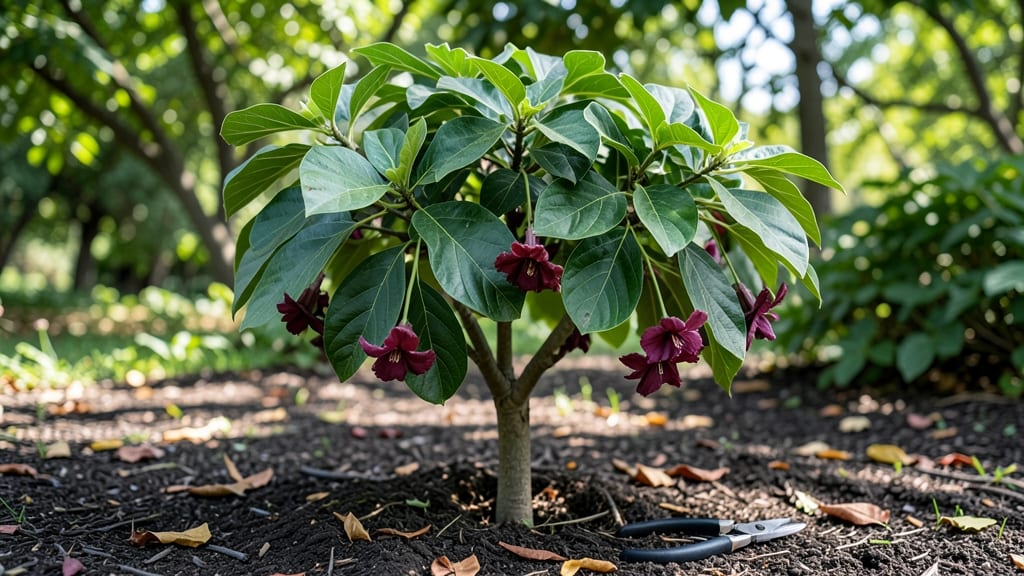
Those delicate pawpaw tree flowers smell like tropical fruit in the damp Pacific Northwest air—until frost hits. I’ve learned the hard way that pruning at the right time keeps these frost-sensitive blooms coming back stronger every spring, even in our chilly climate.
The key is timing: prune after the first flush of flowers fades but before new growth hardens. You’ll need sharp pruners, a ladder (for taller trees), and a clear day to avoid spreading disease. My trees now produce twice as many blooms as they did before I started this method.
What you’ll end up with is a tree heavy with fragrant, maroon-purple flowers that attract pollinators like hummingbirds and beetles. The payoff? More pawpaw fruit later—and fewer bare branches by winter. It’s a game-changer for anyone growing these underused but incredible trees.
Works just as well for young saplings as mature specimens, though larger trees may need a second round of light pruning in early summer. Let’s get those blooms thriving again!
📚 In This Guide
- What you need
- Instructions
- Tips and common mistakes
- Wrapping up and next steps
What you need
- ● Pruning shears – Bypass pruners (sharp, 6-8" blades) for clean cuts on small branches.
- ● Loppers – Bypass or anvil type (18-24" handles) for thicker branches (½"–1½" diameter).
- ● Pruning saw – Curved-tooth design for branches over 1½" thick (avoid tearing bark!).
- ● Rubbing alcohol (70% isopropyl) – Small bottle (for sterilizing tools between cuts).
- ● Garden gloves – Heavy-duty, cut-resistant (to protect from thorns and sap).
- ○ Disposable pruning bags – Optional but helpful (for collecting debris and reducing disease spread).
- ○ Tree wound dressing – Optional (like Tanglefoot Tree Wound Pruning Seal for large cuts).
- ● Timing – Prune in late winter to early spring (before buds swell) or summer (after flowering, to avoid sacrificing blooms).
- ● Weather check – Choose a dry, calm day (no rain forecasted for 24 hours).
- ● Safety gear – Safety glasses (if working overhead) and closed-toe shoes.
- ● Tree health assessment – Inspect for disease or pests (like pawpaw bud moth) before pruning.
Step-by-Step guide for reviving frost-damaged pawpaw tree blooms
Here’s how to coax vibrant, frost-resistant flowers back on your Pacific Northwest pawpaw—without stressing the tree.
Assess Frost Damage and Prune Dead Wood
Start by examining the tree’s branches in late winter or early spring, before new growth begins. Look for blackened, brittle limbs or branches that snap easily when bent—these are dead and must be removed. Use clean, sharp pruning shears to cut just outside the branch collar, the swollen area where the branch meets the trunk.
I always prune on a dry day to reduce disease risk. If you’re unsure whether a branch is dead, make a small cut into the wood—healthy wood will be light green or brown, while dead wood will be dark brown or black. Never remove more than 25% of the tree’s canopy at once, as this can weaken the pawpaw’s ability to recover.
Thin Out Crowded Branches for Better Airflow
Pawpaws thrive when they have good airflow around their branches, which helps prevent fungal issues and frost buildup. Focus on removing crossing branches or those growing inward toward the center of the tree. These compete for sunlight and can trap moisture, creating ideal conditions for rot.
Use your pruners to make clean cuts at the branch collar, angling slightly away from the trunk. Avoid leaving stubs—these can invite disease. After thinning, step back and visualize the tree’s structure. You want an open, vase-like shape that allows sunlight to reach the inner branches, encouraging stronger, more frost-resistant growth.
Encourage New Growth with Strategic Cuts
To revive the tree’s blooming potential, target last year’s growth—the wood produced in the previous season. Pawpaws often bloom on one-year-old wood, so pruning back some of these stems by one-third to one-half stimulates new, vigorous shoots. This is where those future flowers will form.
I like to make these cuts just above a bud that faces outward on the branch. This ensures the new growth will fill out the tree’s canopy rather than crowding the center. Avoid heavy pruning of older wood, as pawpaws are slow to recover from aggressive cuts. Instead, focus on shaping and revitalizing the outer branches where sunlight and warmth are most accessible.
Apply a Light Fertilizer to Support Recovery
After pruning, pawpaws need extra nutrients to bounce back, especially if frost stress has weakened them. In early spring, apply a balanced, slow-release fertilizer (like a 10-10-10 formula) around the tree’s drip line—the area directly under the outer branches. Work it into the top 2-3 inches of soil to avoid burning the roots.
Water the tree deeply after fertilizing to help the nutrients soak into the soil. Avoid over-fertilizing, though—pawpaws are sensitive to excess salts, which can damage roots. A light application now will give the tree the energy it needs to produce strong new growth and, eventually, those prized flowers.
Protect New Growth from Late Frost
Pacific Northwest springs are notorious for late frosts, which can devastate tender new shoots. If a frost warning appears after you’ve pruned, cover the tree with frost cloth or a lightweight blanket on cold nights. Secure the fabric loosely so it doesn’t touch the branches, which can cause damage itself.
Remove the cover during the day to allow sunlight and airflow. Pawpaws are resilient, but protecting young growth gives it the best chance to mature before summer heat sets in. With careful pruning and a little extra care, your tree will reward you with vibrant blooms and, eventually, those delicious pawpaw fruits.
Tips & tricks for reviving your frost-damaged pawpaw tree
Reviving your pawpaw tree after frost damage takes patience and precision—here’s how to make every cut count for maximum blooms next season.
Pruning Timing: Late winter or early spring is the perfect window to prune, but don’t wait too long. If you see new shoots emerging, hold off until after they’ve hardened off—usually around late February to early March in the Pacific Northwest. This timing ensures you’re not removing potential blooming wood while still catching any lingering dead branches from frost.
Tool Prep: Before you start, sterilize your pruning shears with rubbing alcohol or a 10% bleach solution to prevent spreading disease between cuts. I also recommend sharpening your blades—dull shears tear wood, which invites infection. A clean, sharp cut at the branch collar heals faster and looks professional. If you’re dealing with larger branches, consider using a pruning saw for cleaner cuts.
Visual Cues for Healthy Wood: When checking for dead wood in Step 1, look for these telltale signs: healthy wood should snap with a slight give and reveal green or light brown underneath when cut. Dead wood will be hollow or crumbly inside. Another trick is to scratch the bark—if it’s dark brown or black beneath the surface, it’s dead. This visual check saves you from removing live branches by mistake.
Fertilizer Application: In Step 4, focus on spreading that 10-10-10 fertilizer evenly around the tree’s drip line, but don’t pile it directly against the trunk. Think of it like creating a donut shape—this prevents root burn while still nourishing the entire root zone. After applying, water thoroughly to help the nutrients penetrate the soil. I’ve found that pawpaws respond best to fertilizer applied in early spring, just as new growth begins.
Pro Tips for Pawpaw Tree Flower
- Reviving your pawpaw tree after frost damage takes patience and precision—here’s how to make every cut count for maximum blooms next season.
- Pruning Timing: Late winter or early spring is the perfect window to prune, but don’t wait too long.
- Tool Prep: Before you start, sterilize your pruning shears with rubbing alcohol or a 10% bleach solution to prevent spreading disease between cuts.
Frequently asked questions
Got questions about pawpaw tree flowers and their pruning? You're not alone! Here are some common queries—and their answers—to help you nurture those fragrant blooms in the Pacific Northwest.
When do pawpaw tree flowers bloom, and how long do they last?
Pawpaw flowers typically bloom in late spring to early summer (May–June in the PNW), lasting about 1–2 weeks. Timing depends on frost-free dates—late frosts can damage buds, so monitor forecasts! The flowers are hermaphroditic (each has male and female parts), but they need cross-pollination for fruit.
Can frost hurt pawpaw flowers, and how do I protect them?
Yes! Light frosts (below 32°F/0°C) can harm pawpaw flowers, especially since they bloom early. Use frost cloths or row covers on chilly nights. For established trees, prune in late winter to open the canopy for better airflow and reduce frost pockets. Mulch the base to insulate roots too!
How much should I prune pawpaw trees to encourage more flowers?
Prune lightly in late winter or early spring (before buds swell) to remove dead, crossing, or crowded branches. Aim to open the canopy for sunlight—pawpaws thrive with 6+ hours of light. Avoid heavy pruning; these trees bloom on new wood, so don’t overtrim young branches.
What if my pawpaw tree isn’t flowering? Troubleshooting tips?
No flowers? Check these:
- Age: Young trees (<5 years) may not bloom yet.
- Sunlight: Pawpaws need full sun—shady spots reduce blooms.
- Pollinators: Hand-pollinate with a paintbrush if bees are scarce.
- Nutrients: Test soil—pawpaws prefer well-draining, slightly acidic soil (pH 6.0–6.5).
If all else fails, plant a second tree nearby—they often need a partner for cross-pollination!
Are there frost-resistant pawpaw varieties for the PNW?
Yes! Look for ‘Sunflower’ or ‘Pennsylvania Golden’ varieties—they’re more cold-hardy (USDA Zones 5–9) and bloom slightly later, avoiding early frosts. ‘Thomas’ is another great choice for the PNW’s cooler climate.
Still stumped? Drop your pawpaw pruning questions below—we’re happy to help your tree bloom like crazy!
Wrapping up and next steps
Pruning your pawpaw tree flower in the Pacific Northwest isn’t just about shaping—it’s about reviving vibrant blooms and ensuring frost resilience. By following the right techniques, you’ll encourage healthier growth and a bountiful harvest of those delicious tropical-tasting fruits. 🌸
Now that you’re armed with knowledge, grab your pruners and get started! Start small with just a few branches, observe how your tree responds, and gradually refine your approach. Happy pruning—your future pawpaw harvest will thank you! 🌱