
Container Gardens
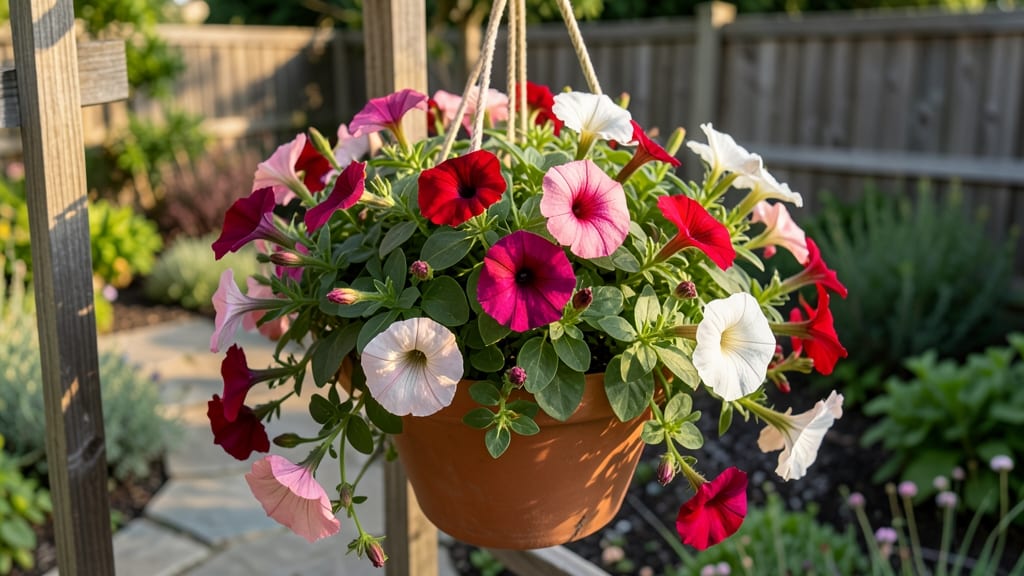
Nothing transforms a dull porch or patio like a petunia flower hanging basket bursting with cascading blooms that seem to defy gravity. 🌸 I remember the first time I hung one—my balcony went from ordinary to showstopper overnight, with petunias spilling over the edges like a waterfall of color.
The key isn't just picking pretty flowers, but creating a thriving ecosystem where roots breathe, water drains, and sunlight reaches every leaf.
Start with a 14-inch basket and moisture-retentive liner—this keeps roots happy without waterlogging. Mix in lightweight potting soil (add perlite for drainage) and choose petunias with trailing habits like 'Wave' or 'Supertunia'.
Pair them with calibrachoa for extra volume or lobelia for delicate blue accents. The trick is spacing: pack plants densely so they fill gaps quickly, then let them spill over the sides naturally.
By mid-summer, you'll have a lush, spillover effect that draws eyes upward—petunias in pink, purple, and white create a dreamy curtain effect. Water from the bottom daily (hang baskets over a saucer) and fertilize weekly with balanced liquid feed.
Deadhead spent blooms to encourage nonstop flowering. The best part? These baskets thrive in partial shade too, making them perfect for covered porches or east-facing spots.
Pro tip: Rotate baskets weekly so all sides get even sun. For winter, bring them indoors near a bright window or store dormant plants. The secret to all-season success is consistent care—once you master it, your space will look like a floral masterpiece year-round.
Ready to create your own hanging garden oasis?
📚 In This Guide
- What you need
- Instructions
- Tips and common mistakes
- Wrapping up and next steps
What you need
- ● Hanging basket: 12–18 inches in diameter (preferably with drainage holes). Pro tip: Choose one with a sturdy hook for secure hanging!
- ● Petunia plants: 6–12 healthy, blooming petunias (mix colors for a stunning effect!). Opt for spreading varieties like 'Wave' or 'Supertunia' for maximum cascade.
- ● Potting mix: 1–2 gallons of well-draining, peat-based or coconut coir mix (avoid garden soil—it compacts!).
- ● Slow-release fertilizer: 1–2 tbsp (or follow label instructions) to nourish roots for weeks.
- ● Watering can or hose: With a gentle spray nozzle for even moisture.
- ● Scissors or pruners: For trimming dead blooms or overgrown stems.
- ○ Moss or liner (optional but recommended): Sphagnum moss or coconut fiber to retain moisture and prevent root burn.
- ● Liquid fertilizer: For a mid-season boost (dilute to half-strength).
- ● Decorative accents: Mini figurines, solar lights, or colorful liners for a polished look.
- ● Plant ties or clips: To secure petunias if they’re still young and leggy.
- ● Mulch (like bark chips): To keep roots cool and conserve water.
Step-by-Step guide to creating stunning petunia flower hanging baskets
Here's how to craft baskets that burst with cascading petunias all season long.
🪴 Step 1: Choose and Prepare Your Hanging Baskets
Select 4 lightweight hanging baskets with at least 10-inch diameters—larger ones hold more petunias and soil. I prefer plastic-lined baskets because they retain moisture better than coconut fiber, which can dry out too quickly in hot sun. Poke additional drainage holes in the bottom if yours don't have enough; petunias won't tolerate soggy roots.
Line the basket with sphagnum moss cut to fit the bottom. This prevents soil from washing out while still allowing water to drain. Secure it with a few plastic-coated staples—no need for fancy setups here. The moss will break down slightly over time, enriching the soil naturally.
🌱 Step 2: Layer Moisture-Retaining Materials
Fill the basket one-third full with coconut coir or peat moss—this lightweight material holds water while allowing roots to breathe. Wet it thoroughly until it feels like a squeeze toy (it should hold its shape but not drip). I like to mix in a handful of perlite here to prevent compaction, which petunias hate.
Add a slow-release fertilizer pellet (about the size of a golf ball) to each basket. These pellets dissolve over 8-12 weeks, feeding your petunias steadily without the risk of burning roots. Press them gently into the coir layer so they don’t float to the surface when watered.
💧 Step 3: Plant Petunias for Maximum Impact
Remove 4-6 petunia plants from their nursery pots, gently tease apart the roots if they're crowded, and place them evenly around the basket's edge. Petunias thrive when their roots spread outward, so avoid clustering them in the center. The first 2-3 inches of stems should sit just above the coir layer—burying too deeply can rot stems, while leaving too much exposed slows root establishment.
Fill the basket halfway with high-quality potting mix, pressing lightly to eliminate air pockets. Water thoroughly until it drains from the bottom, then add a 1-inch layer of orchid bark or pine fines on top. This layer helps retain moisture while allowing airflow—critical for petunias, which rot easily in waterlogged conditions.
☀️ Step 4: Hang and Water for Immediate Thriving
Hang baskets in a location with at least 6 hours of direct sunlight daily—petunias won’t bloom without strong light. A south- or west-facing porch works best, but east-facing spots can work if you supplement with a grow light during cloudy stretches. The key is consistent light; petunias pout dramatically when deprived.
Water deeply every morning until water runs freely from the drainage holes. In hot weather, you may need to water twice daily—check by lifting the basket. If it feels lighter than expected, it’s time to water. Overhead watering can dislodge plants, so I use a gentle shower setting on my hose or a watering can with a rose attachment to soak evenly.
✂️ Step 5: Maintain Blooms and Prevent Common Pitfalls
Deadhead faded flowers weekly by pinching them off just above the next set of leaves. This encourages nonstop blooming and prevents seed pods from forming, which sap energy. I do this while watering—just a quick pinch as I pass by. Petunias are heavy feeders, so fertilize every 2 weeks with a balanced liquid fertilizer (like 10-10-10) diluted to half strength.
Watch for aphids or spider mites on the undersides of leaves—common pests that thrive in dry conditions. Spray with neem oil if you spot them, and repeat every 5-7 days for 2 weeks. If leaves start turning yellow, it’s usually overwatering (check drainage) or nutrient deficiency (time for more fertilizer). Adjust accordingly, and your petunias will reward you with months of vibrant color.
Tips & tricks for perfect petunia flower hanging baskets
Here's what nobody tells you about keeping those vibrant petunias thriving all season.
Basket Selection Insight: When choosing baskets in Step 1, prioritize ones with 12-inch diameters instead of the minimum 10-inch size if possible. The extra space allows for more soil volume, which helps maintain moisture during hot afternoons. I've found that larger baskets also give petunias more room to establish roots before they start cascading—critical for that lush, full look. The plastic lining mentioned in the instructions is a game-changer for water retention, especially in windy locations where evaporation happens faster.
Moisture Layer Technique: In Step 2, when mixing your one-third coconut coir/peat moss layer, add a handful of worm castings (optional but recommended) along with the perlite. Worm castings provide gentle, continuous nutrients that complement the slow-release fertilizer pellets. This extra boost helps petunias establish faster and bloom more prolifically. The "squeeze toy" test for moisture is perfect—you want it damp enough to hold its shape but not soaking wet, which can lead to root rot.
Planting Depth Secret: That 2-3 inch stem depth in Step 3 is non-negotiable for petunias. Any deeper and stems rot; any shallower and roots struggle to anchor. Here's my trick: Use a pencil to mark the depth on the stem before planting. This visual cue helps maintain consistency across all baskets. Also, when teasing apart crowded roots, be gentle—petunias have delicate root systems that can tear easily, which would set back their establishment.
Sunlight Strategy: For the 6 hours of direct sunlight requirement in Step 4, I recommend positioning baskets where they get morning sun and afternoon shade if you're in a very hot climate. The intense afternoon sun can scorch petunia leaves, especially during summer's peak. If you must place them in full sun all day, use a lightweight shade cloth (50% coverage) during the hottest hours. This simple adjustment can double your blooming season.
Pro Tips for Petunia Flower Hanging Basket
- Here's what nobody tells you about keeping those vibrant petunias thriving all season.
- Basket Selection Insight: When choosing baskets in Step 1, prioritize ones with 12-inch diameters instead of the minimum 10-inch size if possible.
- Moisture Layer Technique: In Step 2, when mixing your one-third coconut coir/peat moss layer, add a handful of worm castings (optional but recommended) along with the perlite.
Frequently asked questions
Got questions about creating stunning petunia flower hanging baskets? You’re not alone! Here are answers to the most common queries to help you grow a showstopping display with ease.
What’s the best time of year to plant petunias in hanging baskets?
Plant petunias in hanging baskets after the last frost when soil temperatures reach at least 55°F (13°C). For most climates, this means late spring (May-June). In warmer zones, you can start as early as March. Pro tip: Use heat mats if planting early to protect tender roots!
How often should I water my petunia hanging basket?
Water petunias daily during hot, dry weather—hanging baskets dry out fast! In cooler months, water every 2-3 days. Check soil moisture by sticking your finger 1 inch deep; if dry, water thoroughly. Morning watering prevents fungal issues. Drip irrigation or self-watering baskets save time!
Can I mix petunias with other flowers in a hanging basket?
Pair petunias with trailing plants like nasturtiums or calibrachoa for texture, or upright fillers like geraniums or sweet potato vine. Avoid heavy feeders like tomatoes—petunias need consistent moisture and nutrients!
Why are my petunia leaves turning yellow or brown?
Yellow leaves often signal overwatering (root rot) or nutrient deficiency (use a balanced 10-10-10 fertilizer). Brown edges? Underwatering or salt buildup from tap water. Check for pests (aphids, spider mites) too! Solution: Adjust watering, flush soil with rainwater, and treat pests with neem oil.
Do petunias survive winter in hanging baskets?
Petunias are annuals and won’t survive frost. In fall, cut back dead foliage, remove baskets, and store soil (or repurpose containers). In mild climates, overwinter baskets in a sheltered, dry spot and resume care in spring. Pro tip: Take cuttings in late summer to propagate new plants!
Wrapping up and next steps
Transforming your space with petunia flower hanging baskets is a rewarding way to bring vibrant color and life to any corner—whether it’s a balcony, patio, or windowsill! 🌸 These cascading beauties thrive with the right care, and now you’ve got all the tips to keep them blooming all season long.
From choosing the perfect spot to mastering watering and feeding, every step is designed to help your petunias shine.
Ready to dive in? Grab your basket, pick your favorite petunia varieties, and get planting! Your garden oasis awaits—start creating today! 🌿✨