
Pruning
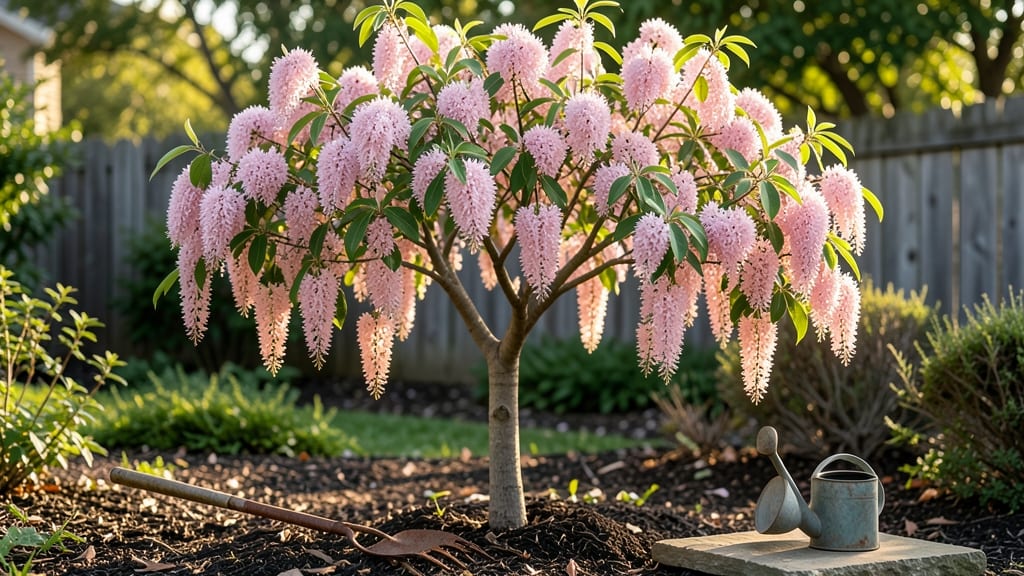
That cascading pink flower willow tree is the Pacific Northwest’s secret weapon for softening hard edges and adding romantic drama to any yard. 🌸 I planted mine near the patio last spring, and now it’s the first thing guests notice—its silvery bark and delicate pink catkins create a dreamy focal point that no other tree can match.
The real magic happens when you prune it right. Unlike fussy ornamentals, willows like this thrive with minimal effort—just shape it in late winter before buds swell, and you’ll get lush, arching branches that spill over trellises or garden walls.
Pair it with dwarf rhododendrons for year-round interest, or let it spill over a pond’s edge for a fairy-tale effect.
By summer, you’ll have a cloud of fragrant blossoms that hummingbirds adore, followed by feathery seed heads that add texture through winter. The best part? It handles our damp winters and hot summers without complaint—just give it morning sun and afternoon shade to keep it happy.
Whether you’re framing a doorway, creating a living privacy screen, or just adding whimsy to a small space, this tree delivers effortless elegance. Let’s talk placement and pruning tricks that keep it looking like a million bucks with almost no work.
📚 In This Guide
- What you need
- Instructions
- Tips and common mistakes
- Wrapping up and next steps
What you need
- ● Pruning shears: Bypass pruners (sharp, 6–8" blades) for cutting small branches (1/4"–3/4" diameter). Pro tip: 💡 Sanitize blades with rubbing alcohol before and after use to prevent disease spread!
- ● Loppers: Bypass or anvil type (20–24" handles) for medium branches (3/4"–2" diameter). Look for ratchet-style loppers for extra leverage.
- ● Pruning saw: Curved-tooth saw for thick branches (2"+ diameter). A folding pruning saw is ideal for tight spaces.
- ● Gloves: Heavy-duty, cut-resistant gloves (e.g., mechanics’ gloves) to protect hands from thorns and rough bark.
- ● Safety gear: Safety glasses or goggles (to shield eyes from debris)
- ● Long sleeves/pants (to prevent scratches and sunburn)
- ● Closed-toe shoes or sturdy boots (for stability on uneven ground)
- ● Disinfectant: 70% isopropyl alcohol or a pruning sealant (e.g., Tanglefoot Pruning Seal) to treat cuts and prevent infection.
- ● Trash bags or bucket: For collecting pruned branches (aim for 1–2 heavy-duty bags or a 5-gallon bucket with a lid).
- ○ Ladder (optional): Extension ladder (16–24 ft) with non-slip feet if your tree exceeds 10 ft tall. ⚠️ Always secure the ladder and have a spotter!
- ○ Marking twine or flags (optional): For tagging branches to prune (helpful for large or complex trees).
- ○ Hose or spray bottle (optional): To rinse tools and clean sap off hands post-pruning.
- ● Best time to prune: Late winter or early spring (before new growth sprouts) for Pacific Northwest frost resistance. Avoid pruning in fall.
- ● Weather check: Prune on a dry, calm day (no rain or wind forecast for 24 hours).
- ● Tree health: Inspect the tree for signs of disease (e.g., black spots, oozing sap, or wilting branches). Prune only healthy branches unless treating a specific issue.
- ● Local regulations: Check if your area requires permits for tree pruning (especially for large or heritage trees).
Step-by-step guide for pruning your pink flower willow tree
Here's the method I use to keep these stunning trees healthy and blooming in our chilly Pacific Northwest climate.
✂️ Step 1: Time Your Pruning for Late Winter or Early Spring
Prune your pink flower willow tree 4-6 weeks before your last frost date—typically between late February and early March in the PNW. This timing lets the tree heal before new growth begins, preventing frost damage to fresh cuts. I always check the forecast and avoid pruning if a cold snap is predicted within a week.
Look for bare branches and crossing limbs first—these are your priority. The tree's natural dormancy makes it easier to see structural issues without leaves obscuring the view. Use sharp pruners to make clean cuts at a 45-degree angle, just outside the branch collar where it meets the trunk.
🌿 Step 2: Remove Dead, Weak, or Crossing Branches First
Start by eliminating any dead wood—branches that snap easily when bent or have no green bark underneath. Next, remove branches that cross or rub against each other, as these create wounds where disease can enter. I like to work from the bottom up, clearing out any low-hanging branches that might interfere with lawn care or foot traffic.
For larger branches over 2 inches thick, use a pruning saw for clean cuts. Make your first cut about 6 inches out from the trunk on the underside of the branch, then cut down to remove it completely. This prevents tearing bark on the main trunk. Watch for suckers at the base—these compete with the main tree and should be cut immediately at ground level.
☀️ Step 3: Thin the Canopy to Improve Airflow and Light
Step back and visualize your tree's shape. Aim to open the center by removing 20-30% of the smallest branches to let sunlight reach the inner canopy. Start at the outer edges and work inward, removing branches that grow inward or downward. This creates a more balanced, open structure that resists wind damage—a critical factor in our storm-prone region.
Look for water sprouts (fast-growing vertical shoots) and remove them entirely. These sap-suckers drain energy from the tree. For each cut, aim to leave a branch stub no longer than ½ inch. Seal larger cuts over 4 inches thick with pruning sealant to prevent disease entry, though smaller cuts don't typically need sealing.
⏰ Step 4: Shape and Clean Up After Pruning
Now's the time to refine the tree's natural shape. Pink flower willows respond well to light shaping, so avoid aggressive cuts. For a more rounded look, trim the outer branches to encourage bushier growth. I like to leave some natural irregularity—willows have beautiful, flowing branches that shouldn't be forced into rigid symmetry.
After pruning, clean up all debris immediately to prevent fungal growth. Sterilize your tools with rubbing alcohol between cuts on the same tree. Water the base thoroughly if we've had a dry spell, but avoid overwatering—willows prefer moist but well-drained soil. You'll see fresh green growth within 4-6 weeks if the timing was right.
Tips & tricks for pruning your pink flower willow tree
Here's what I've learned from years of pruning these resilient PNW beauties—simple tricks that make all the difference.
The Timing Secret: If you're unsure about your frost date, aim for the first week of March as a safe bet for the PNW. The 4-6 week window before frost gives your tree just enough time to heal before spring growth begins. I've seen too many pruning jobs ruined by late-season frosts—better safe than sorry with these delicate cuts. Real talk: if you're in a colder microclimate, push back to early April.
Tool Prep Matters: Before you even touch the tree, sharpen your pruners and sterilize them with rubbing alcohol. Dull tools crush branches instead of making clean cuts, which invites disease. I keep a small bottle of alcohol in my tool belt and wipe between cuts on the same tree—it takes 10 seconds but prevents fungal spread. For larger branches, a pruning saw with a fine-toothed blade makes all the difference in preventing tear-out.
Structural Inspection: In Step 1, when you're identifying bare branches, look for what arborists call "co-dominant stems"—where two main branches grow too close together. These create weak points that split during storms. If you see this, prioritize removing one of the competing branches at its base. The tree's natural shape will guide you—willows grow with graceful curves, not rigid angles.
Canopy Thinning Hack: When you're removing 20-30% of the smallest branches in Step 3, focus on the ones growing straight up or inward. These are the real culprits that block sunlight from reaching the inner canopy. I like to step back every 10 minutes and squint—your eyes will naturally spot the branches that disrupt the tree's open structure. Think of it as creating a "window" through the center for light and air.
Pro Tips for Pink Flower Willow Tree
- Here's what I've learned from years of pruning these resilient PNW beauties—simple tricks that make all the difference.
- The Timing Secret: If you're unsure about your frost date, aim for the first week of March as a safe bet for the PNW.
- Tool Prep Matters: Before you even touch the tree, sharpen your pruners and sterilize them with rubbing alcohol.
Frequently asked questions
Got questions about your pink flower willow tree? You’re not alone! Whether you’re a first-time pruner or just curious about this stunning Pacific Northwest native, here are answers to the most common queries—from timing to troubleshooting.
When is the best time to prune a pink flower willow tree?
The ideal window is late winter to early spring (February–March), before new growth begins. This minimizes stress and encourages vibrant blooms. Avoid pruning in fall or winter, as cold weather can hinder healing. Pro tip: If you must prune outside this window, do it on a dry, mild day.
How cold-hardy is the pink flower willow tree?
This tree thrives in USDA Zones 4–9, making it perfect for the Pacific Northwest’s frosty winters! While young trees may need winter protection (like burlap wraps), mature willows handle down to -30°F (-34°C). Watch for: Frost cracks on bark—seal them with pruning paint if needed.
Can I prune a pink flower willow tree too much?
Yes! Over-pruning can stunt blooms or weaken the tree. Stick to removing no more than 25% of the canopy per year. Focus on dead, diseased, or crossing branches first. Pro tip: Thin out dense areas to improve airflow and reduce fungal risks.
What if my pink flower willow tree isn’t blooming?
Several factors could be at play: over-fertilizing (especially with nitrogen), pruning at the wrong time, or poor sunlight. Ensure it gets full sun (6+ hours/day) and prune after blooming. Try this: Lightly fertilize in early spring with a balanced 10-10-10 formula.
Are there alternatives to pink flower willow trees for cold climates?
If you love frost-resistant, flowering trees, consider:
- Pacific Dogwood (Cornus nuttallii) – Stunning blooms, Zone 5–8
- Oregon Grape (Mahonia aquifolium) – Evergreen, Zone 5–9
- Red Twig Dogwood (Cornus sericea) – Winter interest, Zone 2–7
Wrapping up and next steps
The pink flower willow tree is a stunning, frost-resistant gem that thrives in the Pacific Northwest—with the right pruning care! By mastering its unique needs, you’ll keep it healthy, vibrant, and blooming for years. Now’s your chance to step into your green thumb’s potential!
Ready to transform your yard? Grab your tools and schedule that first pruning session—spring or late winter is prime time! 🌸✂️ With patience and practice, your willow will reward you with breathtaking pink blossoms and lush foliage.