Pruning
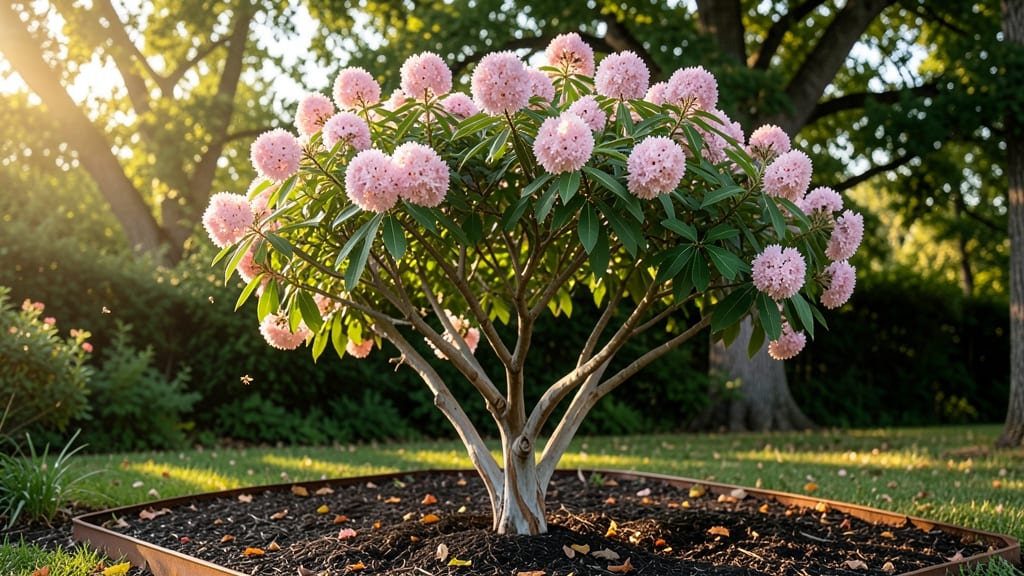
That pink fluffy flowering tree in your garden isn’t just eye candy—it’s a living sculpture that can bloom year-round with the right care. 🌸 I’ve watched my own Cercis canadensis (Eastern Redbud) transform from a bare-branched winter skeleton into a cloud of pink blossoms by early spring, all thanks to strategic pruning.
The secret isn’t complicated: timing, technique, and a little patience turn these trees into showstoppers that steal the spotlight without stealing your yard.
Three varieties steal the show: the delicate Magnolia stellata (Star Magnolia) with its star-shaped blooms, the bold Lagerstroemia (Crapemyrtle) that explodes with color from summer to fall, and the early-spring Cercis canadensis that paints your garden in soft pink.
Each thrives in full sun to partial shade, with well-drained soil—no fancy conditions required. Pair them with deep greens like hostas or silver foliage like lamb’s ear for a high-contrast, dreamy look that feels like a curated gallery.
With the right trims, you’ll extend their bloom time by weeks, sometimes months. Imagine your tree bursting with fresh pink flowers in late winter, then again in early summer, while neighbors’ gardens are still brown.
The key is light pruning in late winter to shape the tree and heavy pruning right after blooming to encourage new growth. It’s like giving your tree a spa day—less stress, more beauty.
Works in small urban yards, large landscapes, or as a dramatic focal point near your front door. The best part? These trees age gracefully, their trunks developing character while their flowers keep coming back. Ready to turn your garden into a pink paradise? Let’s get those shears sharpened.
📚 In This Guide
- What you need
- Instructions
- Tips and common mistakes
- Wrapping up and next steps
What you need
- ● Pruning shears: Sharp, bypass-style shears (for clean cuts) or anvil-style for thicker branches. Size: 6–8" blade.
- ● Loppers: For branches ½–2" in diameter. Quantity: 1 pair.
- ● Pruning saw: For branches 2"+ in diameter. Type: Curved-tooth saw for wood.
- ● Gloves: Heavy-duty, gardening-grade gloves (cut-resistant for safety).
- ● Disinfectant: 70% isopropyl alcohol or rubbing alcohol (1 small bottle).
- ○ Pruning sealant: Optional but helpful for large cuts (1 small tube).
- ● Ladder: Sturdy, extendable (height depends on tree size).
- ● Safety gear: Safety glasses and ear protection (if using a chainsaw for large branches).
- ● Marking twine/flags: For tagging branches to prune (1 roll).
- ● Trash bags: Heavy-duty for debris (2–3 bags).
- ● Notebook/pencil: To sketch pruning plan or notes.
- ● Know your tree: Confirm it’s a pink-flowering variety (e.g., Cercis canadensis ‘Alba’, Lagerstroemia, or Hibiscus syriacus).
- ● Best timing: Prune in late winter/early spring (before buds swell) or summer after blooming.
- ● Weather check: Choose a dry, overcast day to avoid stressing the tree.
- ● Tree health: Avoid pruning if the tree is stressed, diseased, or newly planted (<1 year).
Strategic pruning techniques to extend your pink flowering tree's bloom season
Here’s how to coax continuous blooms from your tree—without sacrificing its signature fluffy pink beauty.
🌿 Step 1: Identify the Right Pruning Window
Timing is everything with these trees. Prune right after the first flush of blooms fades—typically late spring—when you notice 70% of flowers wilting naturally. This ensures you’re removing spent blooms while preserving next year’s flower buds, which form on old wood.
I always wait until the tree has finished its primary bloom cycle. You’ll know it’s ready when new leaf growth appears alongside the fading flowers. Avoid pruning during dormancy or mid-bloom—the tree needs its energy to produce flowers, not recover from cuts.
✂️ Step 2: Remove Dead and Overcrowded Branches First
Start by cutting out any dead, diseased, or crossing branches—these compete with healthy growth. Use clean, sharp pruners to make 45-degree cuts just above a leaf node or outward-facing bud. This prevents stubs that invite rot and directs energy to stronger growth.
Look for branches growing inward or rubbing against others. These will eventually damage the tree’s structure. Remove no more than 25% of the tree’s canopy in one session—this prevents shock. If you see yellowing leaves or weak stems, prioritize those branches first.
☀️ Step 3: Thin the Canopy for Airflow and Light
Next, thin the outer canopy to let sunlight penetrate to the center. Focus on branches that block light from reaching the inner foliage—these areas often produce fewer blooms. Cut back selective branches by ⅓ to ½ their length, always making cuts just above a bud.
Here’s the trick: step back frequently to visualize the tree’s shape. You want an open, airy structure that allows light to reach all branches. Avoid heavy pruning on one side—this creates uneven growth. If the tree leans toward the sun, prune more on the sunlit side to balance it.
⏰ Step 4: Encourage New Growth with Light Trims
After removing the bulk of deadwood and thinning, give the tree a light shaping trim to maintain its natural form. Prune just enough to open up the center and reduce leaf density—this prevents fungal issues and encourages more blooms next season.
Watch for water sprouts (fast-growing, vertical shoots) and remove them entirely. These saplings drain energy from the tree. A well-pruned tree will show new green shoots within 4-6 weeks—this is your sign the pruning worked. If you see no new growth after 8 weeks, you may have pruned too aggressively.
💧 Step 5: Post-Pruning Care for Long-Term Blooms
Water deeply immediately after pruning to help the tree recover. The roots need moisture to support new growth, especially if you’ve removed a significant portion of the canopy. Apply 1-2 inches of water at the base, letting it soak in fully.
Fertilize lightly with a balanced, slow-release fertilizer (10-10-10) 4-6 weeks after pruning to support regrowth. Avoid heavy fertilizers—they encourage leafy growth over flowers. Monitor the tree for new buds forming by late summer—this confirms your pruning strategy is working.
Tips & tricks for perfect pink flowering tree pruning
Real talk: the difference between a tree that blooms sporadically and one that puts on a year-round floral show often comes down to these details. Here's what nobody tells you about keeping your pink flowering tree looking its best.
Timing is Your Secret Weapon: That late spring window isn't just about avoiding dormancy—it's about catching the tree when it's naturally transitioning from bloom to leaf production. I've learned this the hard way after seeing trees struggle when pruned too early. The key is waiting until you see that 70% of flowers have naturally wilted while new leaf growth is just beginning. This signals the tree is ready to redirect energy toward next season's blooms rather than recovering from cuts.
Pruning Angles Matter More Than You Think: Those 45-degree cuts aren't arbitrary—they're about directing growth patterns. When you cut just above an outward-facing bud, you're not just removing wood; you're shaping the tree's future. Think of it like guiding traffic: you want new growth moving outward and upward, not inward where it would create congestion. I've seen trees develop awkward growth patterns when pruned with straight cuts that don't follow this rule.
Watering Strategy After Pruning: The immediate 1-2 inches of water isn't just about hydration—it's about helping the tree seal its wounds. Pruning creates open entry points for pathogens, and proper watering helps the tree recover faster. I always water deeply right after pruning, then again 3-4 days later to ensure the roots have what they need to support new growth. This is especially critical if you removed more than 20% of the canopy.
Fertilizer Timing is Critical: That 4-6 week window for fertilizer isn't random—it's when the tree is ready to use nutrients for regrowth rather than just maintenance. I've made the mistake of fertilizing too soon after pruning, which can stress the tree when it's still recovering. The 10-10-10 balanced formula is key because it supports both root development and new shoot growth without favoring one over the other. Look for new buds forming by late summer as your confirmation that this timing worked.
Pro Tips for Pink Fluffy Flowering Tree
- Real talk: the difference between a tree that blooms sporadically and one that puts on a year-round floral show often comes down to these details.
- Timing is Your Secret Weapon: That late spring window isn't just about avoiding dormancy—it's about catching the tree when it's naturally transitioning from bloom to leaf production.
- Pruning Angles Matter More Than You Think: Those 45-degree cuts aren't arbitrary—they're about directing growth patterns.
Frequently asked questions
Got questions about keeping your pink fluffy flowering tree blooming beautifully? We’ve got answers! Whether you’re a newbie gardener or a seasoned pruner, these FAQs will help you maintain that dreamy, year-round floral display. Let’s dive in!
How often should I prune my pink fluffy flowering tree to encourage blooms?
Prune your tree 2-3 times a year: once in late winter or early spring (before new growth starts), again after the first flush of flowers (to shape and remove spent blooms), and lightly in summer if needed. Avoid heavy pruning in fall—it can stimulate tender growth vulnerable to cold. Think of it as a gentle haircut, not a buzz cut!
Can I prune my tree during its flowering season?
Yes, but strategically! Lightly trim dead or overcrowded branches after blooms fade to redirect energy to new growth. Avoid cutting back flowering stems too aggressively—this can reduce next season’s blossoms. If you must prune during bloom, focus on selective shaping rather than heavy cuts. Patience pays off with more pink fluff next year!
What if my tree isn’t blooming as much as it used to?
Try these fixes:
- Check sunlight: Most pink fluffy flowering trees thrive in full sun (6+ hours/day). Move it to a sunnier spot if needed.
- Fertilize: Use a balanced, bloom-boosting fertilizer in early spring and mid-summer.
- Prune properly: Over-pruning or cutting back flowering wood can reduce blooms. Stick to 1/3 or less of the tree’s growth per year.
- Water consistently: Drought stress = fewer flowers. Keep soil evenly moist but not soggy.
Are there alternatives to pink fluffy flowering trees with similar blooms?
If you love the romantic, fluffy look but want variety, consider:
- Crape Myrtle (Lagerstroemia): Drought-tolerant with pink, purple, or white pom-pom blooms.
- Japanese Tree Lilac (Syringa reticulata): Fragrant, soft pink flowers that resemble lilacs.
- Hydrangea (Hydrangea macrophylla): Offers big, fluffy clusters in pink, blue, or white.
- Forsythia (Forsythia × intermedia): Early spring golden-yellow blooms (great for contrast!).
How do I protect my tree in winter?
Most pink fluffy flowering trees are hardy to USDA zones 6-9, but young trees or tender varieties need extra care:
- Mulch: Apply 2-3 inches of mulch around the base (but not touching the trunk) to insulate roots.
- Water deeply before the first frost to hydrate roots for winter.
- Avoid pruning in late fall—wait until early spring to prevent frost damage.
- Wrap young trees: Use tree wrap or burlap to protect bark from sun scald (winter sun + cold = cracked bark).
Wrapping up and next steps
Transforming your pink fluffy flowering tree into a year-round blooming star is simpler than you think! With the right tools, timing, and techniques—like strategic trims and seasonal care—you can unlock its full potential. 🌸✂️
Now that you’re armed with knowledge, take action! Start by scheduling your next trim and observe how your tree responds. Over time, you’ll fine-tune your approach, creating a stunning, vibrant focal point for your garden. Happy pruning—your tree’s future blooms are waiting! 🌿💖