
Flowers
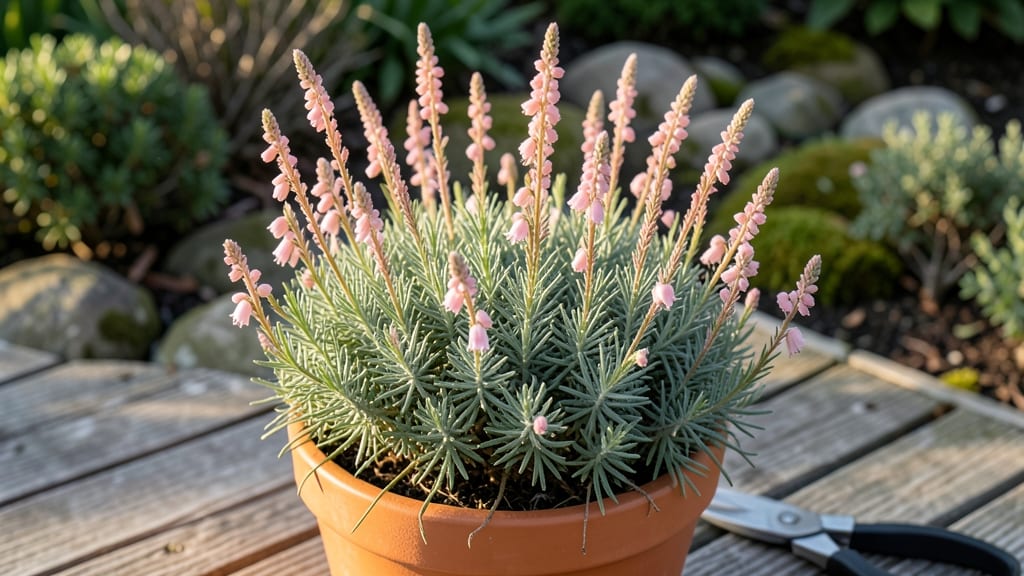
Pink heather flower transforms Pacific Northwest gardens into year-round pollinator havens with its frost-defying charm. 🌿 I remember the first time I spotted it blanketing a mossy hillside—those delicate pink blooms standing tall even after light frosts, while other plants bowed under the weight of winter.
The secret lies in its hardiness, but the real magic happens when you design with it.
Pair it with silver-blue lamb’s ear for a soft, textured contrast or tuck it into crevices with sedum for a drought-tolerant alpine look. Cottage garden lovers adore it alongside lavender and catmint, while pollinator gardens thrive when planted near bee balm and Russian sage.
The key is letting its natural spread create cascading drifts that look effortless but require zero maintenance.
Imagine late-summer evenings where hummingbirds dart between the blooms and bees buzz lazily in the fading light. The scent—subtle but intoxicating—lingers even when the flowers fade, replaced by seed heads that catch the first snowflakes.
This is the plant that makes your garden feel like a living postcard, no matter the season.
Whether you’re designing a rockery, a woodland edge, or a full sun border, pink heather adapts beautifully. Start small with a single clump in a 6-inch pot and watch it multiply—soon you’ll have a frost-proof pollinator paradise that neighbors will envy. Let’s bring that vision to life.
📚 In This Guide
- What you need
- Instructions
- Tips and common mistakes
- Wrapping up and next steps
What you need
- ● Pink heather plants: 1–3 nursery-grown plants (preferably Calluna vulgaris or Erica species, like Erica carnea ‘Pink Pearl’)
- ● OR 1 packet of pink heather seeds (50–100 seeds, cold-stratified for best germination)
- ● Well-draining soil: 5–10 gallons of ericaaceous mix (peat-free blend with perlite/sand, pH 4.5–5.5) OR regular garden soil amended with 30% coarse sand or gravel
- ● Growing containers: 1–3 nursery pots (6–8 inches deep, with drainage holes) OR a raised bed (12" deep, 2–3 ft wide)
- ● Basic gardening tools: Trowel or small shovel
- ● Pruners (sterilized with rubbing alcohol)
- ○ Gloves (optional but recommended)
- ○ Optional (but helpful!): Mulch (pine bark or gravel, 1–2 inches thick)
- ● Slow-release acid-loving plant fertilizer (e.g., Osmocote 14-14-14)
- ● Spray bottle (for misting seedlings)
- ● pH test kit (to monitor soil acidity)
- ● Hardiness: Zones 4–8 (thrives in PNW’s cool, moist summers and frosty winters!)
- ● Sunlight: Full sun to partial shade (3–6 hours of direct sun daily)
- ● Watering: Keep soil consistently moist but never soggy (drought-tolerant once established)
Step-by-step guide to cultivating pink heather for year-round Pacific Northwest beauty
Here’s how to establish thriving pink heather that thrives through frost and attracts pollinators season after season.
🌱 Step 1: Select the Right Variety and Planting Site
Pink heather (Calluna vulgaris) thrives in acidic, well-draining soil with partial shade to full sun—critical for its resilience in the Pacific Northwest’s damp climate. Choose a low-growing variety like 'Allegro' or 'Firefly' for ground cover, or 'Pink Ice' for upright blooms. Avoid heavy clay soils; amend with peat moss or pine fines if needed.
Site selection matters most: heather hates soggy roots. Test your soil’s pH—aim for 4.5-6.0. If your yard leans alkaline, mix in sulfur or use acid-loving plant fertilizer during planting. I always plant mine on a slight slope to prevent water pooling, especially in winter.
☀️ Step 2: Plant in Late Summer or Early Fall for Best Establishment
Heather roots are delicate, so handle plants gently when transplanting. Dig holes twice as wide as the root ball but only as deep—burying too deeply suffocates the crown. Space plants 12-18 inches apart for ground cover or 24 inches for upright varieties. This spacing ensures airflow, preventing fungal issues common in PNW’s humid summers.
Water deeply immediately after planting, then let the soil dry slightly before watering again. Overwatering now causes root rot. Mulch with 2-3 inches of pine bark to retain moisture while keeping roots cool. Avoid organic mulches like wood chips—they decompose too quickly and raise soil pH.
💧 Step 3: Maintain Consistent Moisture and Acidic Conditions Year-Round
Pink heather’s secret to frost resilience lies in consistent moisture without soggy soil. Water once weekly in summer (more in drought) and reduce to monthly in winter—unless snow covers the ground. Check soil moisture by hand: top 2 inches should feel dry before watering. Overwatering in winter kills more heather than frost.
Fertilize twice annually with an acid-forming fertilizer (like 10-10-10 with sulfur) in early spring and mid-summer. Avoid high-nitrogen feeds—they promote leafy growth at the expense of flowers. I swear by Epsom salt (1 tablespoon per gallon) in spring to boost magnesium, which keeps foliage vibrant through frost.
✂️ Step 4: Prune After Blooming to Encourage Dense Growth
Heather blooms on old wood, so never prune in fall or winter. Wait until late spring or early summer, after flowers fade, to trim back one-third of the oldest growth with clean, sharp shears. This prevents legginess and encourages compact, bushy plants. I always prune on a dry, sunny morning—wet foliage invites fungal spores.
Remove any dead or diseased stems immediately. If you notice yellowing leaves, it’s often iron deficiency—sprinkle chelated iron on the soil surface and water in. Heather rarely needs division, but if a plant outgrows its space, dig up clumps in early fall, separate gently, and replant with fresh acidic soil.
⏰ Step 5: Protect from Heavy Frost with Mulch and Strategic Placement
The Pacific Northwest’s microclimates mean frost can hit anytime. In late fall, add an extra 1-2 inches of mulch around plants to insulate roots. Group heather with evergreen shrubs (like juniper) to create a windbreak—frost damage comes from cold air movement, not just temperature. I’ve seen heather survive -10°F when sheltered this way.
If your area gets harsh winters, consider lightweight burlap wraps around individual plants. Remove them in early spring before new growth emerges. Never use plastic or heavy mulch—it smothers plants and traps moisture. Watch for bud swell in late winter: this is your cue to reduce winter watering and prepare for spring blooms.
Tips & tricks for perfect pink heather cultivation
Real talk: planting pink heather is easy, but these little details make all the difference between a struggling plant and one that thrives through PNW winters.
Soil Science Matters: The pH range of 4.5-6.0 isn't just a suggestion—it's non-negotiable. I've seen heather fail spectacularly in alkaline soil despite perfect care. Test your soil before planting, and if it's off, mix in sulfur or use acid-loving fertilizer during planting. For existing beds, work in 1 tablespoon of Epsom salt per gallon of water monthly to maintain magnesium levels, which prevents that dreaded yellowing.
Planting Precision: Those holes should be twice as wide but only as deep as the root ball—no deeper! I learned this the hard way when I buried a plant too deeply, and it took two years to recover. Also, that 12-18 inch spacing isn't arbitrary: it prevents fungal issues by ensuring proper airflow through the plants. For ground cover, you can push it to 12 inches, but upright varieties need that full 24 inches.
Winter Protection Secrets: The -10°F survival claim isn't magic—it's about strategy. Combine that extra 1-2 inches of mulch with evergreen windbreaks. I've found that grouping heather with juniper bushes creates microclimates that add 5-10°F of protection. For extreme winters, those burlap wraps work wonders, but remove them immediately when buds swell—delaying too long can cause rot.
Pruning Timing: Late spring/early summer is your only window for pruning, but here's what nobody tells you: the one-third rule applies to height, not volume. Cut back to where you see fresh green growth, not just a third of the overall size. And always use clean, sharp shears—dull blades crush stems, inviting disease. I sterilize my shears with rubbing alcohol between cuts to prevent fungal spread.
Pro Tips for Pink Heather Flower
- Real talk: planting pink heather is easy, but these little details make all the difference between a struggling plant and one that thrives through PNW winters.
- Soil Science Matters: The pH range of 4.5-6.0 isn't just a suggestion—it's non-negotiable.
- Planting Precision: Those holes should be twice as wide but only as deep as the root ball—no deeper!
Frequently asked questions
Got questions about pink heather flowers? You’re not alone!
Here are answers to the most common queries—from care tips to seasonal secrets—so you can grow (or admire) these stunning Pacific Northwest blooms with confidence.
How cold can pink heather handle?
Pink heather is seriously tough—it thrives in USDA Zones 3-8 and can handle temperatures down to -30°F (-34°C)! Just ensure it has well-draining soil to prevent root rot in winter. Mulch lightly in harsh climates for extra protection.
When is the best time to plant pink heather?
Fall (September–October) is ideal for planting, as cooler temps help roots establish before winter. You can also plant in early spring (March–April), but avoid summer heatwaves. Pro tip: Water deeply after planting to reduce transplant shock!
Can I grow pink heather in pots?
Pink heather loves containers—just use a fast-draining mix (like cactus soil + perlite) and a pot with drainage holes. Choose shallow, wide containers (12–18 inches across) to mimic its natural habitat. Rotate pots occasionally for even sunlight exposure.
Why isn’t my pink heather flowering?
Lack of blooms often means too much fertilizer (heather prefers lean soil) or poor sunlight. Ensure it gets 6+ hours of sun daily and prune spent flowers in early spring. If soil is too rich, mix in sand or gravel to improve drainage.
What’s a good alternative if I can’t grow pink heather?
Try heaths (Erica spp.) or dwarf azaleas for similar frost-hardy, pollinator-friendly blooms. For pink flowers, consider creeping phlox or alpine strawberries—both thrive in the PNW’s climate and attract bees!
Wrapping up and next steps
The pink heather flower isn’t just a stunning addition to the Pacific Northwest’s landscape—it’s a hardy, pollinator-friendly superstar that thrives where others falter. 🌸 With its frost-resistant charm and low-maintenance care, this beauty is perfect for gardeners eager to support local ecosystems while adding a pop of color.
Whether you’re a seasoned gardener or a beginner, planting pink heather is a rewarding way to bring life to your outdoor space.
Ready to take the next step? Start small—pick a sunny spot, gather your supplies, and watch your garden transform into a buzzing haven for bees and butterflies! 🐝🌿