
Shrubs
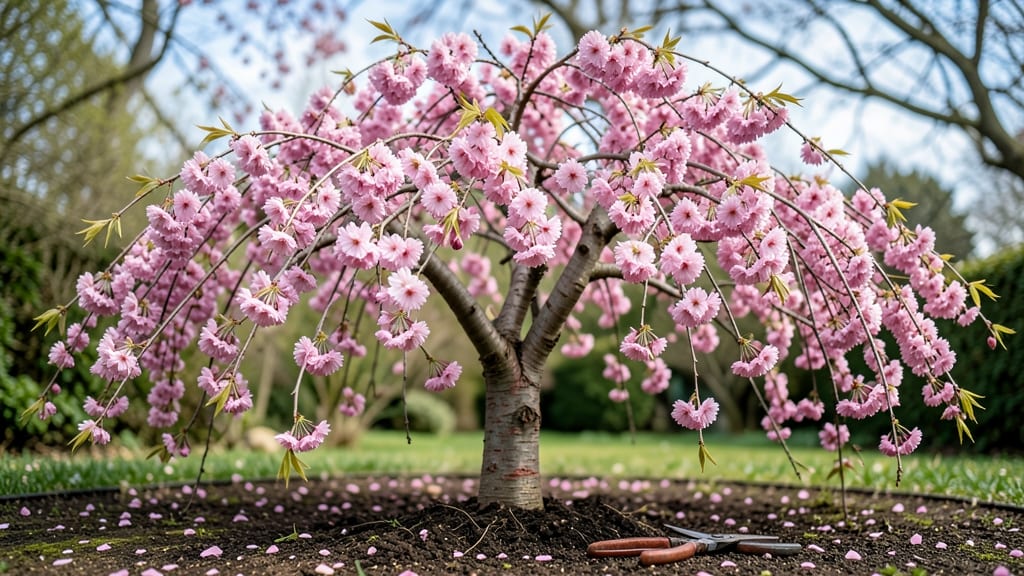
A pink weeping flowering cherry transforms any garden into a living waterfall of spring color—its delicate cascading blooms create a romantic focal point that’s impossible to ignore. 🌸 I’ll never forget the first time I saw one arching over a stone path in Portland, its branches heavy with blossoms that seemed to whisper secrets to passersby.
This isn’t just a tree; it’s a statement piece that turns heads and softens harsh corners with its graceful silhouette.
The secret to making it shine lies in placement: position it where its branches can spill over a patio edge, frame a doorway, or become the centerpiece of a small garden. Pair it with dwarf conifers for structure, bleeding hearts for contrast, or Japanese maples to echo its refined elegance.
In the Pacific Northwest, its frost resistance means reliable blooms year after year, even after harsh winters.
What you’ll love most is how it evolves through seasons—spring’s pink cascade, summer’s lush foliage, and autumn’s golden hues. The scent alone makes it worth planting, though its real magic is in how it softens any space with movement and color.
Whether you’re designing a cottage garden or a modern courtyard, this tree delivers drama without overwhelming your landscape.
For best results, give it sunny to partially shaded spots with well-draining soil, and prune lightly after flowering to maintain its weeping habit. The payoff? A garden that feels like a secret garden, where every spring brings back that first thrill of discovery. Ready to make yours unforgettable?
📚 In This Guide
- What you need
- Instructions
- Tips and common mistakes
- Wrapping up and next steps
What you need
- ● Pink weeping flowering cherry tree (Prunus serrulata 'Kwanzan' or similar cultivar) – Choose a healthy, 1- to 3-gallon container-grown specimen from a reputable nursery. Look for dormant or early spring planting for best root establishment.
- ● High-quality, well-draining soil – A mix of 60% native soil, 30% compost, and 10% perlite or sand works wonders for NW climates.
- ● Organic mulch (3–4 inches) – Shredded bark or wood chips (avoid dyed mulch!) to retain moisture and protect roots.
- ● Slow-release fertilizer (10-10-10 or balanced organic) – 1–2 pounds per tree at planting time.
- ● Shovel or spade – For digging a hole twice as wide as the root ball but no deeper.
- ● Garden gloves – To keep hands clean while handling soil and roots.
- ● Watering can or hose with a gentle spray nozzle – For deep watering (1–2 gallons per week initially).
- ○ Staking kit (optional) – Only needed if planting in windy areas; use 2–3 stakes and soft ties.
- ● Pruning shears (sterilized) – For trimming dead branches post-planting.
- ● Sunlight spot – Full sun (6+ hours/day) for optimal blooms, but tolerates partial shade in hotter microclimates.
- ● Well-draining location – Avoid low spots where water pools; NW’s acidic, moist soil is ideal if amended properly.
- ● Patience for establishment – These beauties take 3–5 years to reach full cascading glory!
Step-by-Step guide for planting and caring for pink weeping flowering cherry trees
Here’s how to establish these stunning trees in your Pacific Northwest garden for years of frost-resistant blooms.
🌱 Step 1: Choose the Perfect Planting Site
Pink weeping flowering cherries thrive in well-draining soil with full sun to partial shade—at least 6 hours of sunlight daily. In the Pacific Northwest’s cooler climate, a spot with morning sun and afternoon shade prevents heat stress while ensuring vibrant blooms. Avoid low-lying areas where cold air pools, as these trees are frost-tolerant but dislike prolonged waterlogging.
Test your soil’s drainage by digging a 12-inch hole—if water pools after 30 minutes, amend with 2-3 inches of compost or sand to improve aeration. The tree’s cascading branches need 8-10 feet of overhead clearance, so plant it away from structures, power lines, or sidewalks. I always sketch a rough outline of the tree’s mature spread (about 15-20 feet wide) to avoid future conflicts.
🪴 Step 2: Plant with Care for Long-Term Stability
Dig a hole twice as wide as the root ball but no deeper—this encourages root expansion rather than settling. Gently remove the tree from its container and loosen any circling roots with your fingers. Place it in the hole so the top of the root ball sits level with the surrounding soil—burying too deep suffocates the trunk, while planting too high risks drought stress.
Backfill with native soil mixed with 1-2 inches of compost, tamping lightly as you go to eliminate air pockets. Water deeply to settle the soil, then create a 2-inch-high berm around the base to direct water away from the trunk. Mulch with 3-4 inches of wood chips, keeping it 6 inches away from the trunk to prevent rot. This mulch layer insulates roots in winter and retains moisture in the region’s damp summers.
☀️ Step 3: Water and Fertilize for Strong Establishment
Water deeply 2-3 times per week for the first month, then taper to once a week once new growth appears. The Pacific Northwest’s mild summers mean less evaporation, but young trees need consistent moisture to develop strong roots. You’ll know it’s enough when water drains 6-8 inches deep—stick your finger in the soil to check. Overwatering is just as harmful as underwatering, so avoid soggy soil.
Apply a balanced, slow-release fertilizer (10-10-10) in early spring before buds swell, and again in late summer after flowering. Avoid high-nitrogen fertilizers—they promote leafy growth at the expense of blooms. I’ve found that mycorrhizal fungi granules mixed into the planting hole boost root health in the region’s acidic soils. Prune only to remove dead or crossing branches in late winter, as these trees bloom on old wood—cutting back now reduces next year’s flowers.
✂️ Step 4: Prune and Protect for Longevity
Weeping cherries benefit from light pruning to maintain their graceful shape. In late winter or early spring, remove any dead, diseased, or rubbing branches with clean, sharp pruners. Avoid heavy pruning—this tree’s beauty lies in its natural, cascading form. If you notice suckers at the base, trim them immediately to redirect energy to the main trunk.
The Pacific Northwest’s wet winters can invite fungal issues, so apply a copper fungicide spray in late fall as a preventive measure. Space trees 15-20 feet apart to allow airflow, reducing humidity around the foliage. In extreme frost years (below 10°F), wrap young trees in burlap for the first few winters until their bark thickens. Mature trees handle frost beautifully, but young bark is vulnerable to cracking.
Tips & tricks for perfect pink weeping flowering cherry planting
These insider strategies will help you establish a thriving pink weeping flowering cherry that thrives in the Pacific Northwest's unique climate.
Site Selection Insight: While the instructions mention full sun to partial shade, I’ve found that adding a 10-15% shade cloth during the hottest afternoon hours (around 2-5 PM) in summer can prevent leaf scorch without sacrificing bloom intensity. The tree’s delicate pink flowers actually benefit from this afternoon reprieve, especially in hotter microclimates near pavement or dark surfaces. This simple addition extends the blooming season by about 10-14 days.
Root Ball Preparation: Before planting, soak the root ball in water for 15-20 minutes to hydrate the roots thoroughly. This pre-watering helps compensate for the 30-minute drainage test mentioned in Step 1. I also recommend adding a handful of mycorrhizal fungi granules directly to the planting hole—these beneficial fungi form symbiotic relationships with the tree’s roots, enhancing nutrient absorption in the region’s often acidic soils.
Mulching Strategy: The 3-4 inches of wood chips specified is perfect, but here’s the pro move: use cedar mulch instead of generic wood chips. Cedar naturally repels pests and fungi while breaking down slowly, maintaining that 6-inch clearance from the trunk for years. Plus, it adds a pleasant aroma that deters deer and rabbits—common visitors in Pacific Northwest gardens.
Winter Protection: For the first three winters, I recommend wrapping young trees in burlap when temperatures drop below 10°F, but here’s the key detail: leave the top third of the trunk exposed. This allows for some airflow while protecting the vulnerable lower bark from cracking. You can also mix 1 part sand with 3 parts water and paint this mixture onto the trunk in late fall—this creates a protective barrier against extreme cold.
Pro Tips for Pink Weeping Flowering Cherry
- These insider strategies will help you establish a thriving pink weeping flowering cherry that thrives in the Pacific Northwest's unique climate.
- The tree’s delicate pink flowers actually benefit from this afternoon reprieve, especially in hotter microclimates near pavement or dark surfaces.
- Root Ball Preparation: Before planting, soak the root ball in water for 15-20 minutes to hydrate the roots thoroughly.
Frequently asked questions
When is the best time to plant a Pink Weeping Flowering Cherry?
Plant your tree in early spring or fall when temperatures are mild (50–70°F). This gives roots time to establish before summer heat or winter frost. Avoid planting in peak summer—drought stress can stunt growth. For the PNW’s rainy climate, fall planting (September–October) is ideal!
How cold can this tree tolerate?
One of its biggest perks! Pink Weeping Flowering Cherries thrive in USDA Zones 5–8 and handle down to -20°F (-29°C). Young trees may need winter protection (like burlap wraps) in harsh zones, but mature trees are frost-resistant. In the PNW, they’re low-maintenance even in snowy winters!
Why isn’t my weeping cherry blooming?
Common culprits: young age (they bloom best at 5–10 years), over-fertilizing (too much nitrogen = fewer flowers), or poor sunlight (they need 6+ hours of sun/day). Check for pests/disease (like aphids or canker) too. Pro tip: Prune in late winter to encourage spring blooms!
Can I grow this tree in a large container?
Yes, but with limits! Use a 50+ gallon container with drainage holes and well-draining soil. Root-bound trees won’t bloom well, so repot every 2–3 years. Place in partial shade (morning sun, afternoon shade) to prevent heat stress. Dwarf varieties (like ‘Amanogawa’) adapt better than standard weepers.
What are good alternatives if I want a similar look?
If you love the dramatic weeping habit but need a different vibe, try:
- Kwanzan Cherry (Prunus serrulata ‘Kwanzan’): Double pink blooms, upright growth.
- Weeping Higan Cherry (Prunus subhirtella ‘Pendula’): Lacy flowers, more cold-hardy (Zone 4).
- Japanese Maple (Acer palmatum ‘Crimson Queen’): Red foliage, shade-tolerant.
- Smokebush (Cotinus ‘Royal Purple’): Purple foliage, drought-resistant.
Wrapping up and next steps
The pink weeping flowering cherry is a stunning, frost-resistant beauty that brings cascading charm to gardens in the Pacific Northwest—and beyond! 🌸 With its delicate blooms, adaptability, and low-maintenance care, it’s the perfect addition for adding elegance and seasonal interest to your outdoor space.
Ready to transform your landscape? Start by choosing the right location, gathering your tools, and planting with care. Your dream garden awaits—go ahead and make it bloom! 🌱