
Container Gardens
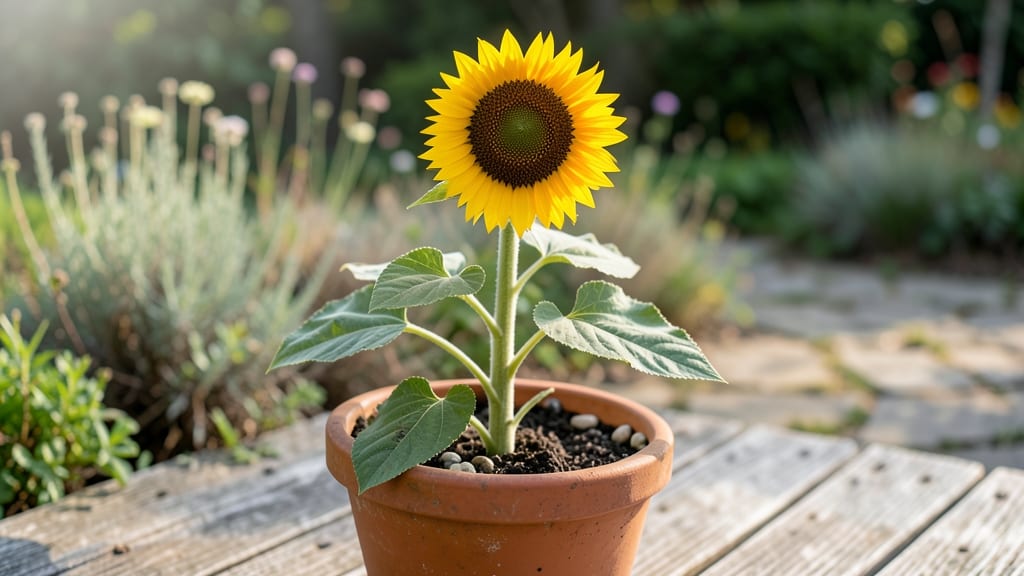
Mastering the potted sunflower plant care basics guarantees those show-stopping blooms and sky-high stems you’ve been dreaming of.
I’ve grown sunflowers in containers for years, and the difference between a scraggly stem and a showstopper comes down to three things: the right pot, consistent watering, and a little extra love when they’re young.
The first time I saw a sunflower in a pot reach my shoulder by midsummer, I knew I’d cracked the code.
Start with a 5-gallon container or larger for most varieties—sunflowers drink up water, and shallow pots lead to floppy stems. Drainage holes are non-negotiable, and a mix of potting soil with compost gives them the nutrients they crave without getting soggy.
Water when the top inch of soil feels dry, but don’t let them sit in saucers of standing water—that’s how roots rot. A balanced fertilizer every 4-6 weeks keeps them growing strong, but skip the heavy nitrogen once buds form or you’ll get leaves instead of blooms.
Leggy sunflowers? They’re begging for more light—move them to the sunniest spot you have, even if it means rotating pots weekly. Yellowing leaves usually mean overwatering or poor drainage, so check those holes again.
With the right care, you’ll end up with sunflowers that reach 6-8 feet tall and turn heads all season. The best part? You can bring them indoors before frost and replant them next year—no seeds needed.
Winter care is simple: move pots to a sheltered spot or wrap them in burlap if temperatures dip below 20°F. Most sunflowers are annuals, but if you love yours, save the seeds and start fresh in spring.
The key is watching them grow—there’s nothing like seeing that first bud unfurl after weeks of watching the stem climb.
📚 In This Guide
- What you need
- Instructions
- Tips and common mistakes
- Wrapping up and next steps
What you need
- ● Potted sunflower plant: Choose a healthy seedling or young plant (3–6 inches tall) from a nursery. Opt for dwarf varieties (3–5 feet tall) for containers, like 'Teddy Bear' or 'Moulin Rouge'.
- ● Container: A pot at least 12–18 inches deep and wide (bigger for taller varieties). Ensure it has drainage holes to prevent root rot.
- ● High-quality potting mix: Use a well-draining, nutrient-rich mix (avoid garden soil). A blend with perlite or compost works best.
- ○ Sunflower seeds (optional): If starting from seed, pick heirloom or dwarf varieties suited for containers.
- ● Watering can or hose with a gentle spray nozzle: Sunflowers need consistent moisture but hate soggy roots.
- ● Balanced fertilizer (10-10-10 or 5-10-10): Use a slow-release granular fertilizer or liquid feed every 2–4 weeks during the growing season.
- ○ Stakes or plant supports (optional but recommended): For taller varieties, use bamboo stakes or tomato cages (3–6 feet tall) to prevent toppling.
- ● Mulch: A 1-inch layer of straw or shredded bark to retain moisture and suppress weeds.
- ● Epsom salt: A tablespoon dissolved in water monthly for extra magnesium (boosts flower production!).
- ● Plant saucer or tray: To catch excess water and keep your space tidy.
- ● Grow lights (indoor setups): If growing sunflowers inside, provide 12–14 hours of light daily with a full-spectrum bulb.
- ● Pruning shears: For trimming dead leaves or shaping the plant as it grows.
How to keep your potted sunflowers thriving all season
Sunflowers in pots need special attention to stay sturdy and bloom boldly. Here's how to give them the support they crave.
🌱 Step 1: Choose the Right Container and Soil Mix
Start with a container that's at least 18 inches deep and 12 inches wide for each plant—sunflowers need room to develop strong root systems. I use a heavy ceramic pot with drainage holes to prevent tipping and waterlogging. The soil should be a light, airy mix of 50% potting soil and 50% perlite or vermiculite to improve drainage and prevent compaction.
Fill the pot two-thirds full with your mix, then tap the container gently on the table to settle the soil. This ensures roots won't struggle to push through dense pockets. Sunflowers hate soggy roots, so never use garden soil—it compacts too easily and holds too much moisture.
☀️ Step 2: Position for Maximum Sunlight and Stability
Sunflowers need 6-8 hours of direct sunlight daily, so place your pots in the sunniest spot possible. A south-facing window or balcony works best, but if you're growing indoors, supplement with a grow light placed 12-18 inches away for 14 hours daily. Without enough light, stems grow weak and leggy, and blooms won't develop properly.
Here's the thing—sunflowers are top-heavy. To prevent tipping, bury a 5-gallon bucket or brick halfway into the soil at planting. This acts as a hidden anchor, keeping your towering plants upright as they grow. If you notice the pot leaning, adjust the weight immediately before the stem bends.
💧 Step 3: Water Deeply and Consistently
Water your potted sunflowers when the top 2 inches of soil feel dry to the touch. Stick your finger in the soil—if it's dry past your first knuckle, it's time to water. Pour water slowly until it drains freely from the bottom holes, then empty the saucer to prevent root rot. Overwatering is the fastest way to kill a sunflower—yellowing leaves or wilting despite moist soil are red flags.
Mulch the soil surface with 1-2 inches of straw or shredded leaves to retain moisture and regulate temperature. This simple step cuts down on watering frequency by 30% while keeping roots cool. Just avoid piling mulch against the stem—leave a 1-inch gap to prevent rot.
✂️ Step 4: Support and Prune for Strong Growth
Sunflowers need support as they grow taller. Install a 6-foot bamboo stake or metal cage at planting and tie the main stem loosely with soft plant ties every 12 inches of growth. This prevents wind damage and keeps stems straight. If you skip this, strong breezes will snap your blooms before they open.
Remove any side shoots that form below the main flower head—they drain energy from the primary bloom. Pinch off these small shoots with your fingers or clean pruners. You'll see the main stem thicken and the flower bud grow larger within days. Deadhead spent blooms by cutting the stem back to the nearest leaf to encourage a second round of flowers.
🌿 Step 5: Fertilize and Monitor for Pests
Feed your sunflowers every 4-6 weeks with a balanced liquid fertilizer (10-10-10 or similar) diluted to half-strength. Over-fertilizing leads to lush foliage but weak stems that can't support heavy blooms. Mix the fertilizer into water and apply it directly to the soil, avoiding the leaves to prevent burns.
Check the undersides of leaves weekly for aphids or spider mites—these pests love sunflowers. Spray infested areas with a soapy water solution (1 tablespoon mild dish soap per gallon of water) or introduce ladybugs for natural control. A healthy sunflower will shake off minor pests within a week, but heavy infestations can stunt growth.
Tips & tricks for thriving potted sunflowers
These practical pointers will help your sunflowers grow tall and strong—no matter where you're growing them.
Container Weight Matters: If you're using lightweight pots, add a second 5-gallon bucket or two bricks to the base before planting. This extra weight prevents tipping as the plant grows, especially during windy days. I've seen sunflowers topple from pots that seemed stable at planting but became top-heavy as the blooms developed.
Light Supplement Strategy: For indoor growers, position your grow light just above the plant's height—adjust every few days as the stem grows. This ensures consistent light exposure without burning the leaves. If you notice leaves stretching toward the light (called etiolation), you're not providing enough coverage. The 6-8 hours of sunlight rule applies to grow lights too—just measure the time the light is actually on, not the timer setting.
Watering Technique: When checking soil moisture, use your finger to feel deeper than just the top 2 inches. Sunflowers have deep roots that need consistent moisture down to 4-6 inches. If you're unsure, stick your finger in all the way to your second knuckle—this gives you a better sense of the root zone's moisture level. Remember, sunflowers hate soggy roots but also can't tolerate dry spells.
Pruning Timing: The best time to remove side shoots is in the morning when the plant is fully hydrated. This makes the shoots easier to pinch off cleanly. I also recommend sterilizing your pruners with rubbing alcohol between cuts to prevent spreading any potential diseases between stems. This small step can make a big difference in keeping your sunflower healthy throughout its growth cycle.
Pro Tips for Potted Sunflower Plant Care
- These practical pointers will help your sunflowers grow tall and strong—no matter where you're growing them.
- Container Weight Matters: If you're using lightweight pots, add a second 5-gallon bucket or two bricks to the base before planting.
- Light Supplement Strategy: For indoor growers, position your grow light just above the plant's height—adjust every few days as the stem grows.
Frequently asked questions
Got questions about keeping your potted sunflowers happy and blooming? Here are some of the most common concerns—and their easy fixes!
How often should I water my potted sunflower?
Water your sunflower deeply when the top 1–2 inches of soil feel dry. Since containers dry out faster, check daily in hot weather—overwatering can drown roots! Use well-draining soil and a pot with drainage holes to prevent soggy soil.
When will my potted sunflower bloom?
Most potted sunflowers bloom 6–10 weeks after planting, depending on the variety. Dwarf types (like ‘Teddy Bear’) may bloom faster (4–6 weeks), while giant varieties need more time. Pro tip: Pinch back the top bud when the plant is 12–18 inches tall to encourage bushier growth and more blooms!
Why aren’t my sunflower leaves turning yellow?
Yellow leaves often signal overwatering or nutrient deficiency. Let the soil dry slightly between waterings, and fertilize every 2–3 weeks with a balanced liquid fertilizer (like 10-10-10). Check: Brown edges = underwatering; mushy stems = too much water.
Can I grow sunflowers in small pots?
Sunflowers need space to thrive—aim for pots at least 12–18 inches wide and deep. Dwarf varieties (like ‘Moulin Rouge’) can handle 10-inch pots, but larger types (like ‘Russian Giant’) need bigger containers. Alternative: Use fabric grow bags for better airflow!
How do I keep pests off my potted sunflower?
Sunflowers attract aphids, spider mites, and earwigs. Spray leaves with neem oil or insecticidal soap weekly for prevention. Quick fix: Blast pests off with water, and remove heavily infested leaves. Yellow sticky traps can also catch flying pests!
Wrapping up and next steps
Caring for a potted sunflower is all about patience, consistency, and a little love—just like nurturing any other plant! With the right balance of sunlight, well-draining soil, and occasional attention to pests or pruning, your sunflower will reward you with stunning, towering blooms that brighten up any space. 🌻
Now that you’re armed with all the tips, it’s time to roll up your sleeves and watch your sunflower thrive. Ready to take the next step? Grab your pot, pick your favorite variety, and start growing! Your garden (and future sunflower admirers) will thank you!