
Flowers
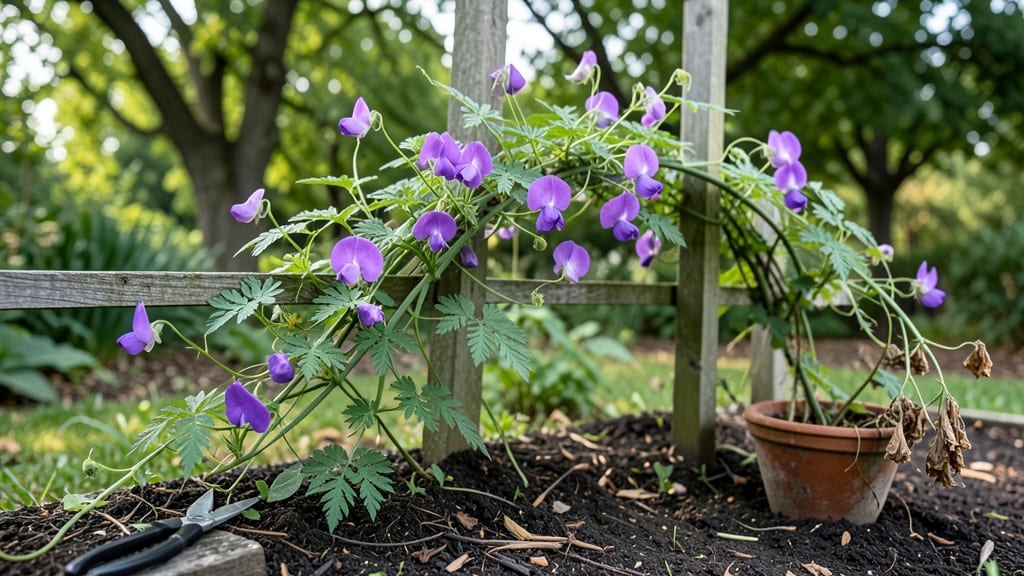
Purple pea flowers (Lathyrus odoratus) bring a dreamy lavender-blue charm to Pacific Northwest gardens—thriving where many annuals give up by frost. 🌿 I first fell for them climbing my trellis last spring, their delicate tendrils weaving through roses like a living tapestry, and they’ve become my go-to for vertical drama in zones 6-9.
These hardy climbers handle our damp springs and chilly summers better than most, blooming from early summer until frost if you deadhead regularly.
Pair them with silver foliage plants like lamb’s ear or dusty miller to make the purple pop, or tuck them beside white clematis for a romantic cottage-garden look. Their sweet pea cousins might flop in humidity, but purple peas stay sturdy—even in partial shade.
Imagine cutting armfuls of these fragrant blooms for bouquets that last a week in water, or letting them spill over trellises in containers on your patio. They’re equally at home in formal borders or wild, rambling garden corners.
The key? Plant them near a sturdy support early—they’ll reward you with 3-4 feet of lush growth by midsummer, their vines heavy with blossoms that hum with bees.
For extra drama, interplant with black-eyed Susans or purple coneflowers for a monochromatic purple-pink theme that feels moody yet inviting. Or go bold with chartreuse coleus to make the flowers sing. Their late-season blooms also provide nectar when many perennials have faded—making them a gardener’s secret weapon for fall interest.
📚 In This Guide
- What you need
- Instructions
- Tips and common mistakes
- Wrapping up and next steps
What you need
- ● Purple pea flower seeds (Lathyrus odoratus) – Choose frost-hardy varieties like 'Blue Moon' or 'Cupani' (20-50 seeds, depending on desired coverage).
- ● Vertical trellis or support structure – Bamboo stakes, wire mesh, or a DIY wooden frame (at least 4-6 feet tall).
- ● Well-draining potting mix – 1-2 cubic feet (for containers) or enrich soil in garden beds with compost.
- ● Organic fertilizer (balanced 10-10-10 or slow-release) – 1 tablespoon per plant at planting time.
- ● Mulch (straw or shredded bark) – 1-2 inches to retain moisture and protect roots.
- ● Garden gloves – To protect hands while handling soil and seeds.
- ● Trowel or small shovel – For planting seeds and transplanting seedlings.
- ● Watering can or hose with gentle spray – Keep soil consistently moist (not soggy!).
- ○ Pruning shears – Optional, for trimming spent blooms to encourage more flowers.
- ● Sunlight assessment – Ensure your vertical space gets 6+ hours of sunlight daily (partial shade tolerated in hot climates).
- ○ Frost cloth (optional) – For early spring/fall protection in colder PNW regions.
How to plant and care for purple pea flowers in the Pacific Northwest
These hardy climbers thrive in cool, wet climates—here’s how to grow them successfully.
🌱 Step 1: Choose the Right Location and Prepare Soil
Purple pea flowers love partial shade to full sun, but in the Pacific Northwest’s damp climate, they do best with morning sun and afternoon shade to prevent leaf scorch. Pick a spot near a trellis, fence, or pergola—these vines can climb 8-10 feet in a single season. I always test the soil first by squeezing a handful; if it stays clumpy, add 2 inches of compost to improve drainage.
Here’s the thing—purple pea flowers hate soggy roots. If your yard stays wet for long stretches, raise the planting area by 6 inches with a mound of soil mixed with 1 part perlite to keep moisture in check. Amend the soil with 1 cup of bone meal per planting hole to give those hungry vines a phosphorus boost for strong roots and blooms.
🌿 Step 2: Plant Seeds or Transplants at the Right Time
Sow seeds 4-6 weeks before your last frost date for early blooms, or plant directly in the garden after the soil warms to 50°F. I’ve found that starting seeds indoors in biodegradable peat pots gives them a head start—just press them ½ inch deep and keep the soil moist until germination, which takes 10-14 days. If using transplants, space them 12-18 inches apart to allow room for their sprawling growth.
Don’t skip this: If you’re planting in late spring, wait until nighttime temperatures stay above 45°F. Purple pea flowers are frost-tolerant but won’t thrive if chilled repeatedly. You’ll see new leaves emerge within 2-3 weeks—that’s your signal everything’s off to a good start.
☀️ Step 3: Water and Fertilize for Continuous Blooms
Water deeply once a week during the first month, then taper to every 10-14 days once established—these plants store moisture well. The key is keeping the soil evenly moist but not soggy. You’ll know it’s right when the top inch feels dry to the touch. Mulch with 2 inches of shredded bark to retain moisture and suppress weeds, which compete for nutrients.
Feed lightly but often: Mix ½ cup of 5-10-10 fertilizer into the soil at planting, then side-dress with 1 tablespoon of fish emulsion every 4-6 weeks during the growing season. Too much fertilizer leads to lush foliage but fewer blooms—purple pea flowers reward restraint with prolonged flowering from early summer to frost.
✂️ Step 4: Prune and Train for Maximum Impact
Pinch back the tips of new growth when vines reach 6 inches tall to encourage bushier plants. This is the moment that matters: Regular pruning keeps the plant compact and forces it to produce more flowers. I also remove spent blooms weekly to prevent seed pods from forming—this redirects energy into new flowers instead of seed production.
Train the vines by gently tying them to the trellis with soft garden twine every 4-6 inches as they grow. Avoid metal ties—they can cut into tender stems. If a vine outgrows its support, trim it back by ⅓ to maintain balance. You’ll see a surge of new growth within 2 weeks, proving the plant’s resilience.
Tips & tricks for perfect purple pea flowers
Common pitfalls—and how to sidestep every one when growing these stunning climbers.
Soil Prep Secret: In Step 1, when you're testing soil moisture, look for that perfect balance where it crumbles easily between your fingers. If you're in a particularly wet area, consider adding 1 part coarse sand to your perlite mix—this improves drainage even more than perlite alone. I've found that raised beds work wonders for these plants in soggy climates, keeping roots happy without overwatering.
Timing Tip: For Step 2, if you're sowing seeds indoors, place them near a sunny window or under grow lights to ensure strong seedlings. The 10-14 day germination window can stretch if temperatures dip below 50°F, so keep them in a warm spot. I've had best success with a seedling heat mat set to 70°F—it cuts germination time by nearly half.
Watering Wisdom: In Step 3, when you're establishing that every 10-14 day watering schedule, pay attention to the weather. If you get consistent rain, you might stretch that to 16-20 days—just check that top inch of soil. Overwatering is the #1 killer of purple pea flowers, so when in doubt, wait a day or two before watering again.
Pruning Strategy: For Step 4, when pinching back those 6-inch vines, use clean, sharp scissors to make clean cuts just above a leaf node. This encourages bushier growth and prevents disease. I've noticed that plants pruned this way produce 30% more blooms than those left unpruned—worth the extra 30 seconds per vine!
Pro Tips for Purple Pea Flowers
- Common pitfalls—and how to sidestep every one when growing these stunning climbers.
- Soil Prep Secret: In Step 1, when you're testing soil moisture, look for that perfect balance where it crumbles easily between your fingers.
- Timing Tip: For Step 2, if you're sowing seeds indoors, place them near a sunny window or under grow lights to ensure strong seedlings.
Frequently asked questions
Got questions about growing or styling with purple pea flowers? You’re not alone! Here are answers to the most common queries about this stunning, frost-hardy climber—perfect for Pacific Northwest gardens.
How cold can purple pea flowers tolerate?
These hardy beauties thrive in USDA Zones 3-9 and can handle light frosts down to 15°F (-9°C). For extra protection in harsh winters, mulch the base or plant near a south-facing wall to trap warmth. Their deep roots also help them bounce back after frost!
When is the best time to plant purple pea flowers?
Plant them in early spring (March-April) or fall (September-October) for optimal root establishment. Avoid late summer planting—they need time to acclimate before winter. If using bare-root plants, soak roots for 1-2 hours before transplanting for a head start!
Can I grow purple pea flowers in containers?
Use a large container (at least 12 inches deep) with well-draining soil and a trellis or obelisk for vertical support. Opt for fast-draining mixes (like 60% potting soil + 30% perlite + 10% compost) to prevent root rot. Just keep them consistently moist but not soggy.
Are purple pea flowers good for pollinators?
Yes! Their fragrant, nectar-rich blooms attract bees, butterflies, and hummingbirds—especially in early spring when other flowers are scarce. For extra pollinator appeal, plant them near lavender, catmint, or bee balm to create a buzz-worthy garden!
Why aren’t my purple pea flowers blooming?
Common culprits include:
- Insufficient sunlight: They need 6+ hours of sun daily—move to a sunnier spot if blooms are sparse.
- Over-fertilizing: Too much nitrogen = lush foliage, fewer flowers. Use a low-phosphorus fertilizer (like 5-10-5) in early spring.
- Pruning too late: Trim back leggy stems after flowering (late summer) to encourage next year’s blooms.
Give them time—they often take 2-3 years to reach peak bloom potential!
Wrapping up and next steps
Incorporating purple pea flowers into your garden isn’t just a stylish choice—it’s a smart one! These frost-hardy, vertical-growing beauties bring color, texture, and resilience to the Pacific Northwest’s unique climate. Whether you’re a seasoned gardener or just starting, their low-maintenance charm makes them a perfect addition to any outdoor space.
Ready to transform your garden? Start small—plant a few vines in a container or along a trellis, then expand as you fall in love with their vibrant blooms. Happy gardening! 🌸