
Flowers
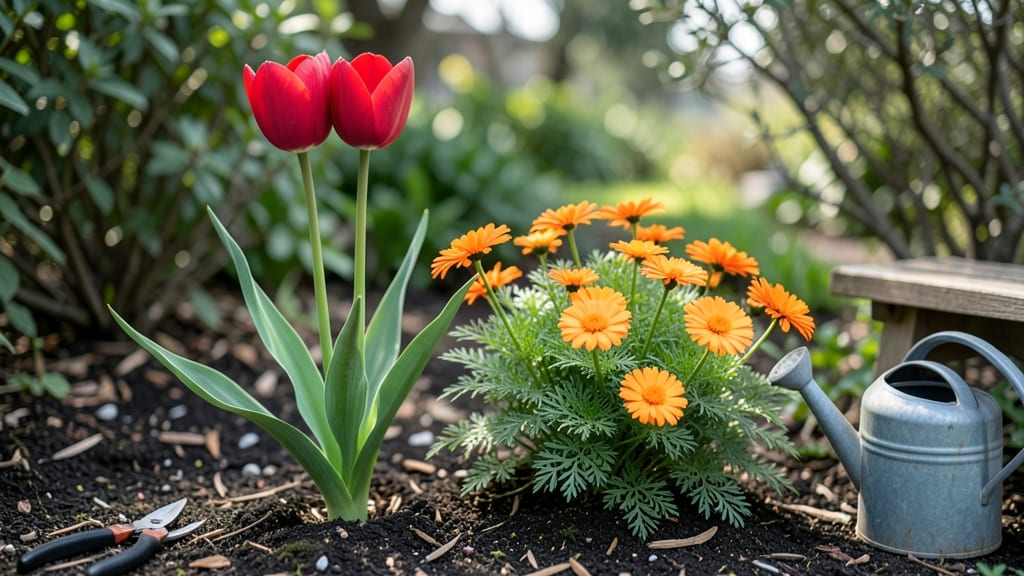
Red and orange flowers scream summer drama—but the right mix keeps that fire burning through every season. 🌺 I’ve designed gardens where these bold hues anchor the space, whether it’s a cottage-style border or a modern container display.
The secret isn’t just pairing them; it’s timing their blooms so the show never stops.
Start with canna lilies for tropical vibes (they bloom June through frost) and dahlias for late-summer grandeur, then layer in marigolds for early-season punch. Add orange foliage like Coleus or Copperleaf to deepen the warmth without extra flowers.
My go-to combo? A red salvia backdrop with orange zinnias in the front—they echo each other’s energy while keeping the eye moving.
You’ll end up with a garden that feels like a sunset in bloom: warm, lively, and impossible to ignore. The reds ground the space, while the oranges lift it—together, they create that "wow" factor that neighbors notice.
Want to extend the season? I’ll show you how to cheat winter with ever-blooming geraniums and helichrysum.
Works for small pots, large borders, or everything in between. The key is balance: too much red feels aggressive; too much orange loses impact. Let’s make your garden the talk of the block—literally.
📚 In This Guide
- What you need
- Instructions
- Tips and common mistakes
- Wrapping up and next steps
What you need
- ● Red and orange flowering plants: 1-2 Tulipa 'Queen of Night' (deep red tulips, 5-10 bulbs)
- ● 1 Calendula officinalis (pot marigold, 3-5 plants)
- ● 1 Tagetes erecta (African marigold, 3-5 plants)
- ● 1 Dahlia 'Café au Lait' (peachy-orange dahlia, 1-2 tubers)
- ● 1 Salvia 'Hot Lips' (red-orange hybrid, 3-5 plants)
- ● Garden soil: 1-2 bags of well-draining, nutrient-rich potting mix or garden soil (5-10 cubic feet, depending on space)
- ● Compost or organic fertilizer: 1 bag (10-20 lbs) for enriching soil
- ● Mulch: 1 bag (5 cubic feet) of shredded bark or straw to retain moisture
- ● Watering can or hose: With a gentle spray nozzle for delicate flowers
- ● Garden trowel or hand shovel (for planting bulbs and small plants)
- ● Pruning shears (for trimming dead blooms or shaping plants)
- ● Gloves (1 pair, garden-grade for protection)
- ● Measuring tape or ruler (to space plants 12-24 inches apart)
- ○ Plant labels (optional but helpful for tracking varieties)
- ● Decorative garden stakes or trellises (for climbing varieties like Ipomoea 'Scarlet Runner')
- ● Solar-powered garden lights (to highlight your vibrant blooms at night)
- ● Dried flower preservative (if you want to save some blooms for crafts)
- ● Color-coordinated pots or containers (for patio displays)
Step-by-Step guide to designing a striking red-and-orange flower display
Here's how to create a vibrant, high-impact garden scheme using fiery reds and warm oranges.
🌿 Step 1: Select Complementary Red and Orange Varieties
Choose plants that bloom in overlapping seasons for continuous color. For spring, pair tulips 'Apeldoorn' (deep red) with calendula 'Touch of Class Orange'—both thrive in cool weather. Summer calls for salvia 'Hot Lips' (orange-red) alongside marigolds 'Bonanza Orange'—both attract pollinators and repel pests. For fall, dahlias 'Café au Lait' (peachy-orange) with zinnias 'Benary's Giant Red' create bold contrast.
I always include at least one perennial like bee balm 'Jacob Cline' (red) to ensure year-after-year drama. The key is varying bloom times—plant early bloomers like columbines (red) alongside late-season sedum 'Autumn Joy' (coppery-orange) for seamless transitions. Check each plant's mature height to avoid overshadowing smaller varieties.
☀️ Step 2: Plan Sunlight and Spacing for Maximum Impact
Most red and orange flowers demand full sun (6+ hours daily)—place them where they'll receive unfiltered light. I group plants by sunlight needs: salvias, zinnias, and dahlias in the sunniest spots, while calendula and columbines tolerate partial shade. Space perennials 18-24 inches apart and annuals 12-18 inches apart—crowding weakens stems and invites disease.
Here's the trick: layer heights for visual depth. Start with 36-inch dahlias at the back, then 24-inch bee balm in the middle, and 12-inch marigolds in front. This creates a dynamic "waterfall" effect that draws the eye. For containers, use 5-gallon pots for larger varieties and 1-gallon pots for smaller ones, ensuring drainage holes are present.
💧 Step 3: Amend Soil and Water for Vibrant Blooms
Red and orange flowers perform best in well-draining, slightly acidic soil (pH 6.0-6.5). Mix 2 cubic feet of compost into the top 12 inches of soil before planting. For heavy clay, add 1 part perlite to 3 parts native soil to improve aeration. I also sprinkle 1 tablespoon of bone meal at planting time for phosphorus—this boosts root development and flower production.
Water deeply 2-3 times per week during the first 4 weeks to establish roots, then taper to once weekly once established. The goal is 1 inch of water per week—check by placing a rain gauge or tuna can in the bed. Mulch with 2 inches of shredded bark to retain moisture and suppress weeds. Overwatering causes blossom drop, so always let the top 2 inches of soil dry between waterings.
✂️ Step 4: Prune and Deadhead for Prolonged Blooms
Pinch back new growth on annuals like zinnias and marigolds when they reach 6 inches tall—this encourages bushier, fuller plants. For perennials like bee balm and salvia, cut back one-third of the foliage in early spring to promote fresh growth. I use clean, sharp pruners and sterilize them with rubbing alcohol between cuts to prevent disease spread.
Deadhead spent blooms weekly—this redirects energy from seed production to new flowers. For dahlias, remove entire stems down to the first set of healthy leaves after blooms fade. The rule is: never leave brown, wilted flowers on the plant. This simple habit extends the blooming season by 4-6 weeks and keeps your display looking fresh.
🌱 Step 5: Extend the Season with Strategic Planting
For year-round drama, stagger plantings by 4-6 weeks. Start with early spring varieties like columbines and calendula, then add summer annuals (zinnias, salvias) in late May, and fall perennials (sedum, dahlias) in early August. I also overwinter tender perennials like canna lilies by digging up tubers, storing them in dry peat moss at 50°F, and replanting in spring.
Use seasonal fillers to bridge gaps: pansies (red-orange mixes) in winter, impatiens in late summer, and ornamental kale (deep red) in fall. The secret is color coordination—pair true reds (like zinnias) with warm oranges (like marigolds) for maximum contrast. With this approach, your garden will burst with bold hues from March through November.
Tips & tricks for perfect red-and-orange flower displays
Creating a bold red-and-orange garden isn't just about planting—it's about strategic choices that make the colors pop year-round.
Seasonal Layering: The key to continuous color lies in staggered planting. In Step 5, when you're planning your seasonal transitions, consider adding ornamental grasses like 'Karl Foerster' feathertop grass (coppery-orange) as a winter filler—its architectural form contrasts beautifully with spring's columbines and calendula. I've found that planting pansies in late fall (4-6 weeks before first frost) creates a seamless bridge between summer zinnias and winter interest.
Lighting for Nighttime Drama: For maximum impact after dark, incorporate LED garden lights in warm tones (2700K-3000K) near your dahlias and bee balm. These varieties reflect light beautifully, making them glow against the night sky. Install lights on timers set for dusk-to-dawn to highlight your display without electricity waste. I use solar-powered stake lights for a low-maintenance solution that works particularly well with marigolds and salvias.
Soil pH Precision: While the instructions mention slightly acidic soil (pH 6.0-6.5), I've discovered that zinnias and marigolds actually thrive at pH 6.0-7.0. Test your soil before amending—you can adjust pH by adding elemental sulfur to lower it or lime to raise it. For containers, use a pre-mixed potting soil with added mycorrhizal fungi to boost root health and flower production. This small adjustment prevents the blossom drop mentioned in Step 3.
Pest Prevention: The marigolds 'Bonanza Orange' you're planting in Step 1 are natural pest deterrents, but I recommend adding basil plants at the base of your zinnias and dahlias for extra protection. The strong scent repels aphids and whiteflies while attracting beneficial insects. Another trick: Sprinkle crushed eggshells around the base of plants to deter slugs—this works particularly well with calendula and columbines which are more vulnerable to these pests.
Pro Tips for Red And Orange Flowers
- Creating a bold red-and-orange garden isn't just about planting—it's about strategic choices that make the colors pop year-round.
- Seasonal Layering: The key to continuous color lies in staggered planting.
- Lighting for Nighttime Drama: For maximum impact after dark, incorporate LED garden lights in warm tones (2700K-3000K) near your dahlias and bee balm.
Frequently asked questions
Got questions about adding fiery red and orange flowers to your garden? You’re not alone! Here are some of the most common queries—and their answers—to help you plan with confidence.
What’s the best time to plant red and orange flowers for year-round color?
For spring bloomers like tulips or daffodils, plant bulbs in fall (September–November) in cooler climates. Summer favorites (e.g., zinnias, marigolds) thrive when sown in early spring (March–April) or directly after frost. Perennials like bee balm or black-eyed Susans can go in spring or fall—just ensure soil temps are above 40°F (4°C).
How do I keep red and orange flowers blooming all season long?
Deadhead spent blooms regularly to encourage new growth. Feed with a balanced fertilizer (10-10-10) every 4–6 weeks, and mulch to retain moisture. For perennials, divide clumps every 3–4 years to prevent overcrowding. Sun-loving varieties (like salvias) need 6+ hours of sunlight daily, while shade-tolerant picks (e.g., coleus) thrive in partial light.
Are red and orange flowers high-maintenance? What’s the easiest option?
Not at all! Annuals like marigolds or geraniums are ultra-low-maintenance—just water and enjoy. For perennials, daylilies or sedum are drought-tolerant and return year after year. Succulent-like kalanchoe (with orange blooms) needs almost no water once established. Pro tip: Group plants with similar water needs to simplify care!
Do red and orange flowers attract pollinators? Which ones are best?
Bright reds and oranges
are like neon signs for bees, butterflies, and hummingbirds. Top picks:
- Bee balm (hummingbird magnet)
- Zinnias (bee buffet)
- Marigolds (deters pests and draws pollinators)
- Salvias (hummingbird favorite)
What if my red and orange flowers aren’t thriving? Troubleshooting tips!
Yellow leaves? Overwatering or nutrient deficiency—check soil moisture and fertilize. Brown edges often mean underwatering or low humidity (try mulching). No blooms? It could be too much shade (move to sunnier spot) or lack of fertilizer (use a bloom booster). Pests? Spray with neem oil or introduce ladybugs for aphids. Pro tip: Rotate crops yearly to prevent soil-borne diseases!
Wrapping up and next steps
From fiery red blooms to vibrant orange hues, these dynamic flowers bring drama, warmth, and effortless charm to any garden—no matter the season! 🌸 Whether you’re a seasoned gardener or just starting, pairing these bold colors creates a stunning visual impact that’s hard to resist.
Now that you’re armed with the perfect combos, care tips, and design tricks, it’s time to roll up your sleeves and get planting!
Next steps:
- Sketch a quick garden layout—mix heights and textures for depth!
- Start with low-maintenance picks like Marigolds or Salvias for instant gratification.
- Tag a friend and share your boldest flower duo—let’s inspire each other! 🌺✨