Flowers
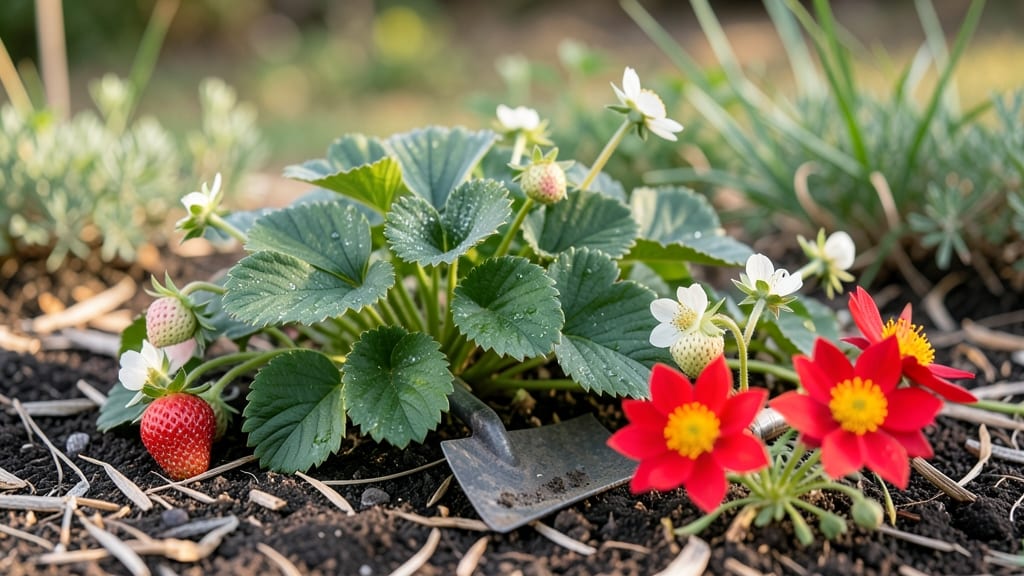
Strawberries with red flowers aren’t just tasty—they’re the star of my garden borders, stealing attention with their bold blooms before the fruit even ripens. 🌸 These varieties turn edible gardening into a visual feast, with glossy leaves and clusters of vibrant red blossoms that hummingbirds can’t resist.
The best part? They produce sweet berries while doubling as living decorations.
Think of them as the perfect marriage between function and beauty. You’ll find them thriving in both sunny flower beds and container gardens, where their trailing habit spills over edges like a natural waterfall.
Pair them with lavender for contrast or nasturtiums for a pop of color—both plants love the same growing conditions and help deter pests.
By midsummer, your garden will be alive with red blossoms, followed by juicy berries that ripen in waves. The foliage stays lush all season, making these strawberries a low-maintenance yet high-impact addition. Whether you’re dressing up a patio or filling a raised bed, they’ll be the talk of the neighborhood.
They’re equally at home in full sun or partial shade, making them versatile for almost any spot. Just remember: the more you pick, the more they produce. Start with a few plants and watch your garden transform into a sweet, edible masterpiece.
📚 In This Guide
- What you need
- Instructions
- Tips and common mistakes
- Wrapping up and next steps
What you need
- ● Strawberry plants with red flowers: Choose Fragaria × ananassa varieties like 'Seascape' or 'Albion' (known for their vibrant blooms). Buy 6-10 bare-root plants or 3-5 potted plants for a small garden.
- ● Well-draining soil: Mix 50% garden soil with 50% compost (or use pre-mixed potting soil for containers). Aim for a pH of 5.5-6.8.
- ● Organic mulch: 2-3 inches of straw or pine needles to retain moisture and suppress weeds.
- ● Balanced fertilizer: A 10-10-10 or 5-10-5 NPK ratio (use sparingly—½ teaspoon per plant at planting time).
- ● Garden trowel or shovel (for planting and soil prep).
- ● Gloves (to protect hands from thorns and soil).
- ● Watering can or hose with a gentle spray nozzle (avoid overwatering!).
- ● Pruners or scissors (for trimming runners and dead leaves).
- ○ Containers (optional): 5-7 gallon pots with drainage holes if growing in pots (use 1 plant per container).
- ○ Drip irrigation or soaker hose (optional): For consistent moisture, especially in hot climates.
- ● Sunlight: 6-10 hours of full sun daily (partial shade in hot climates).
- ● Space: 12-18 inches apart in rows (24 inches between rows) for in-ground planting.
- ● Patience: Strawberries take 4-6 weeks to establish and 60-90 days to fruit after planting.
How to grow strawberries with vibrant red flowers
Here's how to coax those stunning red blooms and juicy berries from your plants.
🌱 Step 1: Choose the Right Variety and Planting Site
Select a June-bearing or everbearing variety like 'Chandler' or 'Albion' for reliable red flowers and fruit. These thrive in full sun—at least 6-8 hours daily—with well-draining soil. I always test my soil first; strawberries hate soggy roots. Amend heavy clay with 2-3 inches of compost to improve drainage.
If your garden soil is poor, mix in 1 part peat moss to 3 parts garden soil in a raised bed. The key is loose, fertile soil that warms up quickly in spring. Plant in early spring or late summer for best results. You'll see the first red flower buds forming in late spring, signaling healthy growth.
🪴 Step 2: Plant and Mulch for Year-Round Success
Set plants 12-18 inches apart in rows 3 feet apart to allow airflow and easy harvesting. Dig holes just deep enough to cover the roots but leave the crown (where leaves meet roots) above soil level. Planting too deep smothers the crown and causes rot.
Spread 2-3 inches of straw mulch (not plastic) around each plant immediately after planting. This keeps soil moist, suppresses weeds, and protects berries from dirt. Refresh the mulch in late winter—just before red flower buds swell—to insulate roots during cold snaps. You'll notice fewer pests and healthier foliage with this simple step.
☀️ Step 3: Feed and Water for Continuous Blooms
Fertilize lightly in early spring with 10-10-10 at a rate of 1 pound per 100 square feet. Too much nitrogen makes plants leafy but flowerless. I always side-dress with compost in mid-summer to support the next flush of red blooms. Water deeply once a week during dry spells, aiming for 1 inch of water at the soil surface.
Watch for red flower buds forming on new growth—these appear after the first harvest. If buds drop off, your plants may need more phosphorus (the middle number in fertilizer). A quick soil test confirms what's missing. Consistent moisture prevents blossom-end rot, which turns flowers brown and mushy.
✂️ Step 4: Prune and Extend the Season
After harvest, trim old leaves to 6 inches above the crown to redirect energy to new growth. This encourages fall and spring blooms on everbearing varieties. Remove any weak or diseased runners immediately—they drain resources from your flowering plants.
In late summer, spread 2-3 inches of fresh straw mulch again. This protects roots from freezing and keeps soil warm for late-season blooms. You'll see red flowers forming even in fall if you maintain this routine. Just don't prune after mid-summer—new growth won't harden off before winter.
⏰ Step 5: Overwinter for Next Year's Blooms
Leave mulch in place through winter to insulate roots. In early spring, remove old mulch and replace it with fresh 2-3 inches of straw. This prevents fungal diseases from overwintering in damp mulch. Strawberries are surprisingly cold-hardy, but consistent winter care ensures earlier and more abundant red flowers the following year.
Watch for new red flower buds in late winter—this is your signal to start light fertilizing. A quick check for pest damage (like slugs eating new growth) lets you act early. With this routine, you'll enjoy year-round blooms and berries that match the vibrant flowers.
Tips & tricks for growing vibrant strawberry plants
Real talk: Strawberry plants that produce stunning red flowers and juicy berries require a few key tricks to thrive year-round. These simple adjustments make all the difference between a decent harvest and a garden full of vibrant blooms.
Variety Matters: While the instructions mention June-bearing and everbearing varieties, here's what nobody tells you—'Chandler' produces particularly deep red flowers, while 'Albion' is more disease-resistant. For container gardening, look for 'Tristar' which produces red flowers and white-tipped leaves for extra visual interest. The right variety means fewer struggles with pests and more reliable blooms.
Soil Prep Secret: The instructions mention testing soil and amending with compost, but here's my game-changer: Mix in 1 cup of bone meal (optional) when planting to boost phosphorus for flower development. This isn't in the core ingredients because it's optional, but it creates those vibrant red blooms you're after. If you skip this, your flowers might be pale rather than the deep red you want.
Mulching Strategy: Straw mulch is perfect, but here's the technique that changed everything for me: After planting, spread a thin layer of coffee grounds (about 1/4 inch) under the straw mulch. The acidity helps prevent fungal diseases while the nitrogen feeds your plants. This is completely optional but makes a noticeable difference in plant health and flower vibrancy.
Watering Wisdom: The instructions say to water once a week, but here's the thing: In hot climates, you might need to water twice weekly, especially during bloom time. The key is to water deeply at the base of the plant—never overhead—to prevent fungal issues that can turn those beautiful red flowers brown and mushy. A drip irrigation system solves this perfectly if you're serious about year-round blooms.
Pro Tips for Strawberries With Red Flowers
- Real talk: Strawberry plants that produce stunning red flowers and juicy berries require a few key tricks to thrive year-round.
- Variety Matters: While the instructions mention June-bearing and everbearing varieties, here's what nobody tells you—'Chandler' produces particularly deep red flowers, while 'Albion' is more disease-resistant.
- Soil Prep Secret: The instructions mention testing soil and amending with compost, but here's my game-changer: Mix in 1 cup of bone meal (optional) when planting to boost phosphorus for flower development.
Frequently asked questions
Got questions about growing strawberries with red flowers? You’re not alone! Here are answers to the most common curiosities—from planting to troubleshooting—so you can enjoy lush, berry-bearing blooms all year.
Are strawberries with red flowers the same as regular strawberries?
Yes! The red flowers are part of the same plant—just a natural variation. These strawberries (often called Alpine strawberries or wild strawberries) produce tiny, vibrant red blooms before the berries ripen. The flowers are edible (though tart) and add a whimsical touch to your garden.
How long does it take for strawberries to flower and fruit?
With proper care, strawberries with red flowers can bloom in as little as 6–8 weeks after planting (in warm climates) or the following spring (in cooler zones). Everbearing varieties may produce two harvests per year, while June-bearing types fruit once annually. Patience pays off—first flowers often mean berries soon after!
Can I grow these strawberries in containers or pots?
Container-growing is ideal for small spaces or urban gardens. Use a 5–7 gallon pot with drainage holes, well-draining soil, and full sun (6+ hours daily). Just ensure pots are mobile—strawberries need winter protection in cold climates. Pro tip: Add a trellis for trailing varieties to save space!
Why aren’t my strawberry flowers turning into berries?
Missing berries? Check these fixes:
- Pollination: Hand-pollinate with a soft brush if bees are scarce.
- Temperature: Strawberries need 50–85°F to set fruit.
- Overcrowding: Thin plants to 12–18 inches apart for airflow.
- Fertilizer: Too much nitrogen = leaves, not berries. Use a balanced 10-10-10 instead.
Can I eat the red flowers, or are they just for looks?
Yes, they’re edible and delicious! The flowers add a tart, slightly sweet flavor to salads, desserts, or garnishes. Just rinse them gently to remove pesticides. Bonus: They’re rich in antioxidants and vitamin C. Pair them with honey or yogurt for a fancy touch!
Wrapping up and next steps
Growing strawberries with red flowers isn’t just about adding beauty to your garden—it’s about enjoying a delicious, year-round harvest that’s as rewarding as it is stunning! 🌸 From choosing the right varieties to mastering care techniques, you now have all the tools to cultivate these vibrant plants with confidence.
Whether you’re a seasoned gardener or just starting, the key is patience and a little love.
Ready to take the next step? Start small—plant a few strawberry patches this season and watch your garden transform into a lush, fruiting paradise. Share your progress with fellow plant enthusiasts, and don’t forget to tag us in your blooming snapshots! Happy gardening! 🌱✨