
Trees
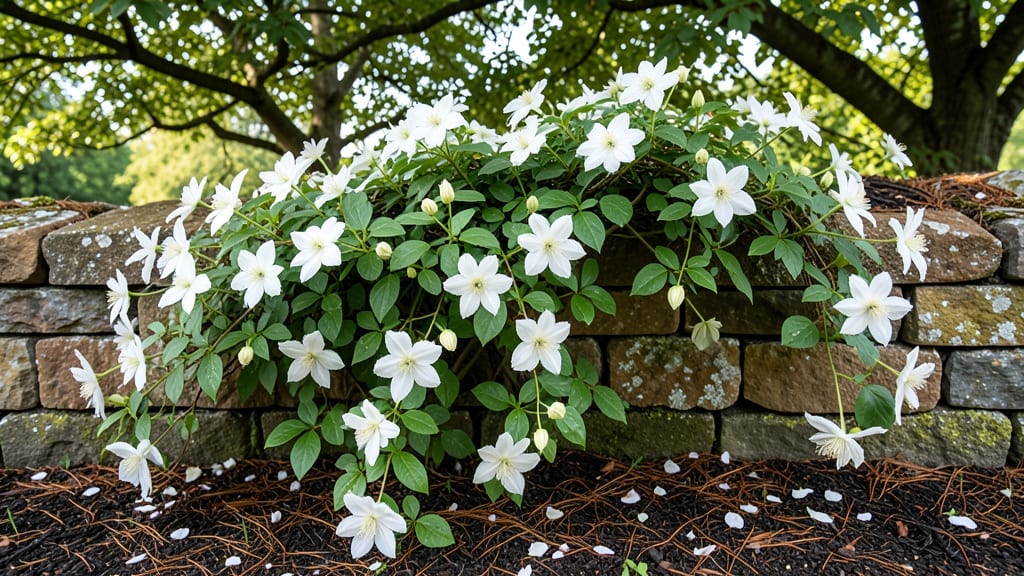
Transforming your Pacific Northwest garden with delicate white clematis blooms feels like inviting quiet elegance into your outdoor space. 🌿 These frost-resistant climbers thrive where others falter, their small white flowers creating a dreamy, ethereal canopy that pairs perfectly with evergreens and early bloomers like hellebores.
The secret to showcasing them lies in placement—train them along arbors, up trellises near entryways, or through cottage-style borders where their cascading habit softens hard lines. My favorite design trick? Pairing them with deep purple foliage plants like heucheras to make those white blooms pop against rich backgrounds.
What you’ll love most is how they bloom twice a year—once in late spring and again in early fall—giving your garden a fresh, romantic look without demanding constant attention.
The fragrance is subtle but intoxicating on warm evenings, and their ability to handle our region’s damp winters makes them a true standout.
For minimalist gardens, let them climb a single vertical structure to create a striking focal point, while cottage-style plots benefit from weaving them through mixed borders.
The key is giving them room to stretch their vines while keeping the base shaded to protect tender stems—simple adjustments that make all the difference.
📚 In This Guide
- What you need
- Instructions
- Tips and common mistakes
- Wrapping up and next steps
What you need
- ● Clematis plant: Choose a small white-flowered variety like Clematis montana or Clematis armandii (ensure it’s hardy to USDA Zones 5-9).
- ● Well-draining soil: Mix 1 part garden soil with 1 part compost and 1 part perlite or coarse sand (improves drainage and prevents root rot).
- ● Support structure: A trellis, arbor, or sturdy fence (at least 6-10 feet tall for climbing varieties).
- ● Mulch: 3-4 inches of organic mulch (e.g., wood chips or straw) to insulate roots.
- ● Fertilizer: A balanced, slow-release fertilizer (10-10-10) or organic options like fish emulsion or compost tea.
- ● Garden gloves (to protect hands from thorns).
- ● Trowel or spade (for planting and soil prep).
- ● Pruners or shears (sharp, clean tools for trimming).
- ● Watering can or hose (with a gentle spray nozzle).
- ● Measuring tape or ruler (to track plant growth).
- ● Frost cloth or row covers (for extra protection during late frosts).
- ● Epsom salt (occasional foliar spray for magnesium boost).
- ● Slow-release stakes (to support young, top-heavy plants).
- ● Plant markers (to label varieties if testing multiple types).
Step-by-step guide to planting and caring for small white flowered clematis
Here's how I've successfully grown these Pacific Northwest favorites—hardy, elegant, and perfect for trellises.
🪴 Step 1: Choose the Right Location and Prepare the Soil
Clematis thrives in well-draining, slightly acidic soil with a pH between 6.0 and 7.0. In the Pacific Northwest’s damp climate, avoid planting in heavy, compacted soil—amend with 2-3 inches of compost mixed into the top 12 inches of soil. I dig a hole twice as wide as the root ball but only as deep—clematis roots need room to spread horizontally.
Select a spot with morning sun and afternoon shade—this prevents leaf scorch while keeping flowers vibrant. If your yard only offers full sun, choose a location where vines can climb a north-facing trellis or arbor. Mulch heavily with 3-4 inches of organic mulch (like wood chips) to insulate roots during winter freezes.
🌱 Step 2: Plant at the Correct Depth and Stake for Support
Place the clematis so the bud union (the swollen bump on the stem) sits 2-3 inches below soil level. This protects tender growth from frost heave in winter. Gently loosen the roots if they’re circling and spread them outward in the hole. Fill with soil, pressing lightly to remove air pockets, but don’t pack it down—roots need air too.
Install a 5-6 foot trellis or arbor at planting time. Use flexible garden ties to loosely secure the main stems to the support. Clematis vines grow aggressively—12-18 inches per season—so avoid tight bindings that restrict growth. Water deeply after planting to settle the soil, then let it dry slightly before watering again.
☀️ Step 3: Water and Fertilize for Strong First-Year Growth
Keep the soil evenly moist but not soggy for the first 6-8 weeks—this encourages deep root establishment. In the Pacific Northwest’s rainy climate, you’ll likely need to water only during dry spells (when top 2 inches of soil feel dry). Overwatering leads to root rot, especially in heavy soil. A drip irrigation system set to 1-2 gallons per week works best.
Feed with a balanced fertilizer (10-10-10) at half-strength when new growth appears in spring. Avoid high-nitrogen fertilizers—they promote leafy growth at the expense of flowers. I also top-dress with 1 cup of compost around the base in early summer to boost soil fertility naturally.
✂️ Step 4: Prune for Winter Hardiness and Spring Blooms
In late winter (February or early March), prune dead or weak stems back to healthy buds. Small-flowered clematis (like ‘Jackmanii’ or ‘Nelly Moser’) bloom on old and new wood, so avoid heavy pruning. Simply trim 1-2 inches above a strong bud to shape the plant. If you’re unsure which stems are dead, wait until late spring when new growth appears.
After flowering, remove spent blooms but leave the seed heads until they turn brown—this provides winter interest and food for birds. In fall, cut back only the dead or damaged growth, leaving the rest to protect the crown from freezing temperatures. Pacific Northwest winters are mild, but a 3-4 inch layer of mulch adds extra insulation.
Tips & tricks for perfect small white flowered clematis
These little details make all the difference when growing your Pacific Northwest clematis—trust me, I've seen the difference they make over years of trial and error.
Soil Prep Secret: When amending your soil with the 2-3 inches of compost, mix in a handful of perlite or coarse sand too—this improves drainage even more in our damp climate. I've seen clematis roots struggle with compacted soil, so take the extra 10 minutes to loosen it up properly. The roots will thank you with better growth and more blooms.
Bud Union Placement: That 2-3 inch depth for the bud union isn't just about frost protection—it's also about creating the right environment for new growth. If you plant too shallow, the crown may dry out. Too deep, and new shoots won't emerge properly. I like to make a small mound of soil first, then place the plant on top before filling in around it.
Watering Wisdom: The 6-8 week moist-but-not-soggy period is crucial for root establishment. Here's my trick: stick your finger in the soil—if it feels like a damp sponge (not dripping), you're good. In our rainy climate, I often have to hold back from watering too much. A drip irrigation system set to 1-2 gallons per week actually helps prevent overwatering by giving you precise control.
Pruning Precision: When trimming those 1-2 inches above strong buds, look for buds that face outward on the stem. These will produce more vigorous growth and better flower display. I always prune in late winter when the plant is still dormant—this gives it plenty of time to recover before spring growth begins.
Pro Tips for Small White Flowered Clematis
- These little details make all the difference when growing your Pacific Northwest clematis—trust me, I've seen the difference they make over years of trial and error.
- Soil Prep Secret: When amending your soil with the 2-3 inches of compost, mix in a handful of perlite or coarse sand too—this improves drainage even more in our damp climate.
- Bud Union Placement: That 2-3 inch depth for the bud union isn't just about frost protection—it's also about creating the right environment for new growth.
Frequently asked questions
Got questions about growing and caring for small white-flowered clematis in the Pacific Northwest? You’re in the right place! Here are answers to the most common queries from gardeners—whether you’re a beginner or a seasoned pro looking to troubleshoot.
What’s the best time to plant small white clematis in the PNW?
Plant your clematis in early spring or early fall (March–April or September–October) when soil is workable but not frozen. This gives roots time to establish before winter. Avoid planting in summer heat—it stresses young plants. Pro tip: If planting in fall, mulch heavily to protect roots from early frosts!
How cold-hardy are these clematis varieties, and do they need winter protection?
Most small white-flowered clematis (like Clematis montana or Clematis armandii) thrive in USDA Zones 5–9, handling temps down to -20°F (-29°C). However, young plants or those in exposed areas may need mulch (3–4 inches) or burlap wraps in harsh winters. Established vines usually bounce back with minimal help!
What’s the ideal trellis or support for small white clematis?
These climbers love vertical support—opt for a 5–6 foot tall trellis, arbor, or sturdy fence. Avoid flimsy wires; clematis can get heavy with blooms! For Clematis montana, a fan-shaped trellis mimics its natural growth habit. Bonus: Train vines upward in spring to encourage more flowers!
Why aren’t my small white clematis blooming this year?
Common culprits: over-pruning (cut back only in late winter), poor sunlight (they need 6+ hours of sun), or nutrient deficiency. Check for yellow leaves (nitrogen deficiency) or stunted growth (phosphorus/potassium). Feed with a balanced fertilizer in early spring and after flowering. Troubleshoot: If blooms appear but drop fast, it might be too hot—water deeply during heatwaves!
Are there any low-maintenance alternatives to small white clematis for PNW gardens?
Yes! Try these frost-resistant, low-fuss climbers:
- Honeysuckle (Lonicera spp.): Fragrant, drought-tolerant, and attracts pollinators.
- Star Jasmine (Trachelospermum jasminoides): Evergreen, fragrant white blooms, and thrives in shade.
- Climbing Roses (Rosa spp.): ‘New Dawn’ or ‘Blanc Double de Coubert’ are PNW-friendly and repeat-blooming.
- Virginia Creeper (Parthenocissus quinquefolia): Fast-growing, no flowers but stunning fall color.
All handle PNW winters with minimal fuss!
Wrapping up and next steps
Incorporating a small white-flowered clematis into your Pacific Northwest garden is a game-changer—its hardy nature, stunning blooms, and low-maintenance charm make it a standout choice. Whether you’re a seasoned gardener or just starting, this resilient climber brings effortless beauty to trellises, arbors, or fences.
Ready to elevate your outdoor space? Start by selecting your variety, prepping the soil, and giving it the perfect spot to thrive—then sit back and enjoy the show! 🌿✨