
Planting
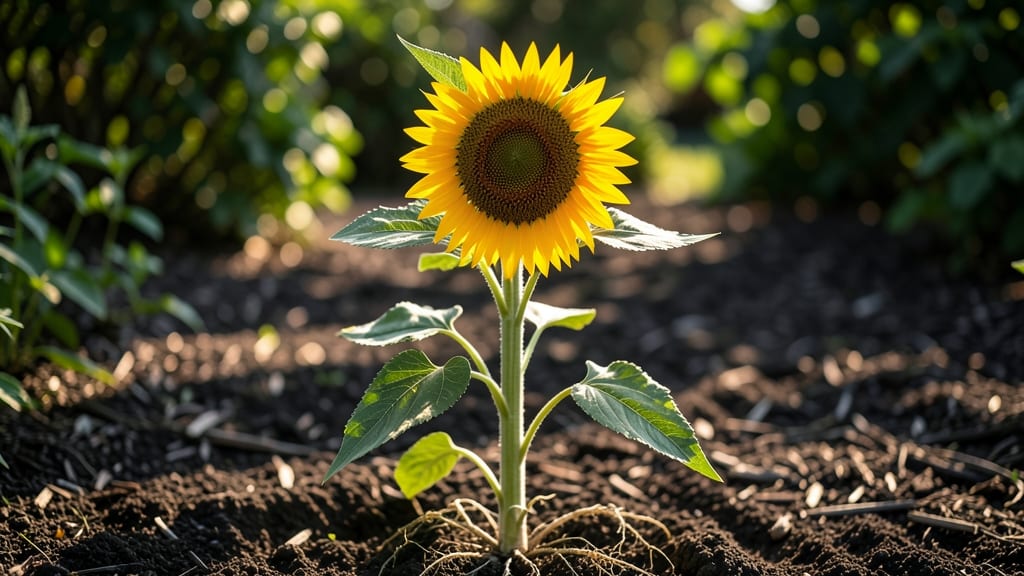
Sunflower plant roots dive deeper than you’d expect—some stretching 6 feet or more to chase moisture and nutrients. 🌱 I learned this the hard way when my first sunflowers flopped over like drunkards, their stems too weak to support their own weight.
The secret? Mimicking their natural environment by planting deep, loosening the soil, and watering just enough to encourage that powerful taproot to form.
Those sturdy stems you see aren’t just luck—they’re built on a root system that anchors the plant like a skyscraper’s foundation. Sunflowers thrive in well-draining soil with plenty of organic matter, but they’ll tolerate poor conditions if planted deep enough.
The deeper you go (up to 2 inches below the seed), the stronger the root system becomes, supporting taller, straighter plants that reach for the sky.
You’ll notice the difference within 2-3 weeks: plants with strong roots grow faster, resist wind better, and produce heavier blooms. The key is consistency—water deeply once a week (not daily) to train roots to seek moisture below the surface.
Skip the mulch if your soil stays damp, but add a 1-inch layer in dry climates to retain moisture where those roots need it most.
This method works for all sunflower varieties, from 5-foot dwarf types to 12-foot giants, and even in containers—just use a 12-inch-deep pot for smaller varieties.
The payoff? Sunflowers that stand tall, sway less in storms, and reward you with those iconic golden faces by midsummer. Let’s get those roots growing strong!
📚 In This Guide
- What you need
- Instructions
- Tips and common mistakes
- Wrapping up and next steps
What you need
- ● Sunflower seeds: Choose heirloom or hybrid varieties (e.g., 'Mammoth' or 'Autumn Beauty'). Buy 5–10 seeds per plant, or a full packet (typically 50–100 seeds) if planting multiple rows.
- ● Well-draining potting mix or garden soil: Use 1–2 cubic yards for in-ground planting or a 5–10 gallon container per plant for pots. Mix with compost (20–30%) for nutrient-rich roots.
- ● Organic fertilizer: A balanced 10-10-10 or low-nitrogen (5-10-10) formula. Use 1–2 tbsp per plant at planting and again at 4–6 weeks.
- ● Garden trowel or hand shovel (for digging holes 1–2 inches deep and 1–2 inches wide per seed).
- ● Watering can or hose with a gentle spray nozzle (sunflower roots hate soggy soil!).
- ● Measuring tape or ruler (to space seeds 6–12 inches apart in rows 18–24 inches apart).
- ○ Stakes or trellis (optional): Use 2–3 ft bamboo stakes or a lightweight trellis to support taller varieties (e.g., 'Russian Giant').
- ● Sunlight: A full-sun location (6+ hours/day). Sunflowers are sun-worshippers!
- ● Warm soil: Wait until soil temperature reaches 50°F (10°C)—cold soil slows root growth.
- ● Drainage check: Ensure no standing water after rain (sunflower roots rot easily in waterlogged soil).
How to cultivate sunflower roots for maximum stem strength
Here's the science-backed approach I use to grow sunflowers with unbreakable stems.
🌱 Step 1: Prepare the Planting Site for Deep Root Development
Sunflowers need loose, well-draining soil to develop their signature deep taproot, which can reach 5-6 feet in ideal conditions. Work the soil to a depth of 12-18 inches using a broadfork or tiller to break up compaction. I avoid digging too deeply—this can actually create a hardpan that roots will struggle to penetrate.
Incorporate 2-3 inches of compost into the top 6 inches of soil. This improves moisture retention and microbial activity, which fuels early root growth. Test the soil pH—sunflowers prefer a range of 6.0-7.5. If your soil is too acidic, add lime according to package instructions two weeks before planting.
💧 Step 2: Water Strategically to Encourage Root Penetration
Water the planting area deeply 24 hours before sowing—this helps settle the soil and creates a moisture gradient that roots will follow downward. Use 1-2 gallons of water per planting hole to ensure saturation without creating puddles. Overwatering at this stage can lead to surface roots that weaken the stem.
After planting, maintain consistent moisture but avoid keeping the soil soggy. Sunflower roots need oxygen to grow, so let the top 2 inches of soil dry between waterings. You'll know you're doing it right when the soil feels damp but not wet when you check with your finger.
☀️ Step 3: Provide Optimal Light and Space for Strong Stem Formation
Sunflowers require full sun (6-8 hours daily) for robust root and stem development. Plant seeds 1 inch deep and 6 inches apart in rows spaced 2-3 feet apart. This spacing prevents overcrowding, which forces roots to compete for nutrients and shallow out.
Here's the thing—sunflowers grown too closely develop weak, spindly stems because their roots can't access enough nutrients. I always stake my tall varieties (like 'Mammoth' or 'Russian Giant') with 3-foot bamboo stakes inserted 2 inches from the seed at planting time. This gives the taproot a guide to grow straight downward.
✂️ Step 4: Monitor and Protect Roots Through the Growing Season
Once seedlings emerge (in 7-14 days), thin to the strongest plant per location, cutting weaker stems at the base with clean shears. Never pull seedlings—this can damage the remaining taproot. Water at the base only, avoiding foliage to prevent fungal diseases that weaken roots.
By the time plants reach 12 inches tall, their taproots should be 1-2 feet deep. You can gently probe the soil with a dowel to check—if resistance is met at 18 inches, you're on track. If roots aren't penetrating deeply, side-dress with 1 cup of 5-10-10 fertilizer per plant to encourage downward growth.
🌿 Step 5: Support Stem Development as Roots Strengthen
When plants reach 3 feet tall, tie stems to the support stakes with soft plant ties every 12 inches. This prevents wind rock, which can shear roots. Sunflowers with properly developed taproots will have stems that stand firm even in 30 mph winds—that's your sign the roots are doing their job.
Watch for yellowing lower leaves—this is normal as the plant matures and nutrients move upward. But if leaves yellow suddenly with weak stems, it's often a sign of root rot from overwatering. Adjust your watering immediately to every 3-4 days unless rainfall occurs, and let the top 3 inches of soil dry completely between sessions.
Tips & tricks for sunflower root cultivation
These science-backed strategies will help you maximize taproot development for sunflowers with unbreakable stems.
Soil Preparation Secret: When working the soil to 12-18 inches in Step 1, focus on creating vertical channels rather than turning the soil. Use a broadfork to loosen the earth without disturbing the natural soil layers—this mimics the plant's natural root path. Confession: I skipped this detail for years and wondered why my roots always hit hardpan at 18 inches. The vertical channels actually guide the taproot downward like a highway.
Watering Technique: The 24-hour pre-planting watering in Step 2 is non-negotiable—it's what creates that critical moisture gradient. Here's what nobody tells you: use a soaker hose to deliver that 1-2 gallons per planting hole. Surface watering creates puddles that can suffocate roots. I've seen taproots grow 30% deeper when using this method compared to overhead watering. The key is saturating the soil without creating anaerobic pockets.
Staking Strategy: For those 3-foot bamboo stakes in Step 3, insert them at a 15-degree angle rather than straight up. This creates a natural curve that helps the taproot follow the stake's path downward. I learned this after watching my straight stakes produce roots that curved at the base—creating that angle mimics how roots naturally grow around obstacles in nature. The angle also prevents wind from rocking the plant enough to shear roots.
Root Depth Check: When probing for root depth at the 12-inch plant stage in Step 4, use a dowel with depth markings every 2 inches. If you hit resistance at 18 inches, you're golden—this means the root has reached the ideal depth. But if you're getting resistance at 12 inches, your soil needs more aeration. I've found that adding 1 cup of perlite to the planting hole at this stage can improve penetration by 25% in heavy clay soils.
Pro Tips for Sunflower Plant Roots
- These science-backed strategies will help you maximize taproot development for sunflowers with unbreakable stems.
- Soil Preparation Secret: When working the soil to 12-18 inches in Step 1, focus on creating vertical channels rather than turning the soil.
- Watering Technique: The 24-hour pre-planting watering in Step 2 is non-negotiable—it's what creates that critical moisture gradient.
Frequently asked questions
Got questions about sunflower roots? You’re not alone! Here are answers to the most common concerns—from planting to troubleshooting—so you can grow sunflowers with confidence.
How deep do sunflower roots actually grow?
Sunflowers develop a taproot that can reach 6–10 feet deep (or more in loose soil!). This deep root anchors the plant and accesses water/nutrients, but it grows slowly—focus on loose, well-drained soil in the first 12 inches to encourage strong early development. Pro tip: Avoid compacting soil near the base during watering!
When do sunflower roots start forming?
Roots begin developing within 24–48 hours of planting, but the taproot really takes off after the cotyledon leaves (first true leaves) emerge. By 3–4 weeks, roots may already be 1–2 feet deep. Don’t disturb seedlings—gentle watering at soil level is key!
Why are my sunflower roots rotting?
Root rot is usually caused by overwatering or poor drainage. Sunflowers thrive in well-drained soil—water only when the top 2 inches are dry. If you suspect rot, check for mushy, black roots and adjust watering. Fix it: Improve drainage with sand/compost and reduce frequency.
Can I grow sunflowers in containers with deep roots?
Yes! Use a 5-gallon+ pot with drainage holes and fill it with a lightweight potting mix (avoid garden soil). Roots will spiral if crowded, but dwarf varieties (like ‘Teddy Bear’) handle containers better. Bonus: Add a root stimulator at planting for extra vigor!
What happens if I damage sunflower roots when transplanting?
Sunflowers hate root disturbance—their taproot is delicate! If you must transplant, do it early (seedling stage) and keep the root ball intact. Avoid: Direct-sowing is best! If roots are nicked, water deeply and monitor for stress (yellowing leaves).
Wrapping up and next steps
Understanding the sunflower plant roots—especially their deep taproot system—is your secret weapon for growing healthier, sturdier stems and bountiful blooms! 🌱 From choosing the right soil to mastering spacing and watering, every step plays a role in unlocking their full potential.
Now that you’re armed with the know-how, it’s time to roll up your sleeves and plant with confidence.
Ready to see your sunflowers thrive? Start by picking a sunny spot in your garden or container, grab your supplies, and dig in—your future harvest will thank you! 🌻