Flowers
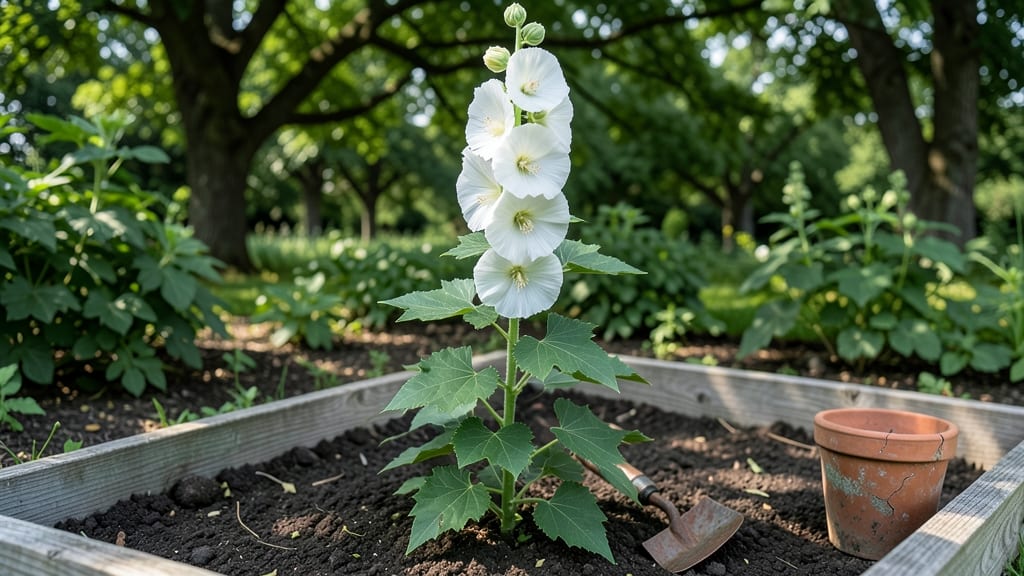
White hollyhock flowers turn your cottage garden into a storybook scene with their towering, velvety blooms. 🌿 I remember the first time I planted them—the way they stretched toward the sky like fairy-tale sentinels, their petals unfurling in soft, cloud-like layers.
These aren’t just flowers; they’re vertical accents that add height, texture, and a touch of old-world romance to any garden corner.
The secret to their magic lies in their placement and companions. Pair them with lavender for a fragrant contrast or let them stand alone as a dramatic backdrop for roses and peonies.
They thrive in full sun and well-drained soil, blooming from early summer through fall, giving you months of effortless elegance. Even in small gardens, their towering presence creates a sense of grandeur.
Imagine a border where these white spires frame a rustic bench or a pathway, their petals catching the light at dawn and dusk. They’re low-maintenance yet high-impact, perfect for gardeners who want drama without the fuss. With just a few plants, you’ll transform ordinary spaces into something truly special.
Whether you’re designing a full cottage garden or adding a single statement plant, white hollyhocks bring a timeless charm that’s hard to resist. They’re the kind of flowers that make neighbors pause and say, “How did you do that?” Let’s make your garden the talk of the neighborhood.
📚 In This Guide
- What you need
- Instructions
- Tips and common mistakes
- Wrapping up and next steps
What you need
- ● White hollyhock seeds (Alcea rosea) – 1 packet (50-100 seeds) or 3-5 plants for a full display.
- ● Well-draining potting soil – 1 bag (12-18 qt) (mix with perlite or sand for loose texture).
- ● Garden bed or large containers – Minimum 18" deep (hollyhocks need room to grow!).
- ● Organic compost – 1 small bag (5-10 lbs) for nutrient-rich soil.
- ○ Slow-release fertilizer (optional but recommended) – 10-20-10 NPK ratio for blooms.
- ● Garden trowel or transplanter (for digging holes).
- ● Watering can or hose with nozzle (gentle watering prevents seed washout).
- ● Pruning shears (for deadheading or shaping).
- ● Gloves (to protect hands from thorns on mature plants).
- ○ Stakes or trellis (optional, but highly recommended—hollyhocks can grow 5-6 ft tall!).
- ● Floral wire & tape (for cutting arrangements).
- ● Peat moss or mulch (to retain moisture and suppress weeds).
- ○ Natural dyes (optional) – Turmeric or beet juice for colored water (fun for creative touches!).
Step-by-step guide to growing white hollyhock flowers
These towering beauties bring effortless elegance to any garden space.
🌱 Step 1: Choose the Perfect Planting Location
Hollyhocks thrive in full sun, so pick a spot that gets at least 6-8 hours of direct sunlight daily. I always check for afternoon sun exposure—this is critical because white hollyhocks need warmth to develop their signature tall, sturdy stems. Avoid low-lying areas where cold air pools, as these plants are sensitive to frost once established.
Test your spot by observing how sunlight moves across the garden. If nearby plants cast shadows for more than 2 hours in the afternoon, find another location. The soil should also drain well—hollyhocks despise soggy roots. Amend heavy clay with 2-3 inches of compost to improve drainage if needed.
🪴 Step 2: Prepare the Soil and Plant Seeds
Hollyhocks grow best in loamy, well-draining soil with a slightly alkaline pH (6.5-7.5). Work 2-3 inches of compost into the top 12 inches of soil to provide nutrients without overwhelming the plants. I like to mix in a handful of bone meal (about ½ cup per plant) at planting time for extra phosphorus—this encourages strong root development.
Sow seeds ¼ inch deep, spacing them 12-18 inches apart in rows 18-24 inches apart. Hollyhock seeds germinate slowly—10-21 days—so don’t be impatient. Keep the soil evenly moist (not soggy) during this time. A light mulch of straw or shredded leaves helps retain moisture while preventing soil crusting, which can smother emerging seedlings.
☀️ Step 3: Provide Support and Maintain Growth
As hollyhocks grow, they’ll need sturdy support—their stems can reach 5-6 feet tall and flop without help. I install 3-foot-tall bamboo stakes or wire cages at planting time, gently tying the main stems to the support as they grow. This prevents wind damage and keeps the plants upright for better flower display.
Water deeply once a week, aiming for 1-1.5 inches of water per session. Hollyhocks are drought-tolerant once established, but consistent moisture during their first growing season prevents leggy stems. Stop watering at the base once flowers appear—wet foliage encourages fungal diseases like rust, which hollyhocks are prone to.
✂️ Step 4: Deadhead and Extend the Blooming Season
To encourage more flowers, deadhead spent blooms regularly by snipping them off just above a set of healthy leaves. I do this every 2-3 days during peak bloom (late spring to early summer) to redirect the plant’s energy into new flower production. Avoid cutting into woody stems—hollyhocks grow from the base, so prune only above leaf nodes.
In late summer, you’ll notice the first stems turning brown and dying back. This is normal—hollyhocks are biennials or short-lived perennials, and many varieties self-seed prolifically. Let the seed heads dry on the plant if you want next year’s crop, or pull them out after they’ve finished blooming to tidy the garden.
⏰ Step 5: Overwintering and Seasonal Care
Hollyhocks are hardy to USDA zones 3-9, but they benefit from a little winter protection in colder climates. After the first frost, cut back dead stems to 6 inches tall and mulch the base with 3-4 inches of straw or shredded leaves. This insulates the roots and prevents heaving during freeze-thaw cycles.
In early spring, remove the mulch and check for new growth. Hollyhocks often resprout from the base, but they may also self-seed. Thin seedlings to 12 inches apart to give mature plants room to thrive. Fertilize lightly with a balanced 10-10-10 formula in early spring to jumpstart growth—just ½ cup per plant is plenty.
Tips & tricks for perfect white hollyhock flowers
Here's what nobody tells you about growing these garden showstoppers—tricks that'll make all the difference between average and show-stopping blooms.
Sunlight Strategy: That 6-8 hours of sunlight is non-negotiable, but here's the secret: I always prioritize morning sun exposure. Hollyhocks need that gentle morning warmth to kickstart their growth, especially in cooler climates. If you notice your plants leaning toward the sun, it's a clear sign they need to be repositioned for more even light distribution.
Soil Science: The slightly alkaline pH (6.5-7.5) is crucial, but don't stop there. I test my soil's drainage by doing the "squeeze test"—if water drips slowly from a handful of moist soil, it's perfect. For heavy clay soils, mix in that 2-3 inches of compost AND add a handful of perlite to create air pockets. This prevents those dreaded soggy roots that can kill your plants.
Germination Patience: Those 10-21 days of germination can feel like forever, but here's my trick: I cover my seeded areas with clear plastic wrap for the first 7 days. This creates a mini greenhouse effect that speeds up germination without overwatering. Just remember to remove it once you see sprouts—too much moisture at that stage can cause damping off.
Support System: Don't wait until your plants are flopping to install support! I like to set up my 3-foot-tall bamboo stakes or wire cages right at planting time. This gives the stems something to cling to from day one. For extra stability, I weave in some twine between stakes to create a lattice structure—this helps prevent wind damage and gives your flowers that perfect vertical display.
Pro Tips for White Hollyhock Flower
- Here's what nobody tells you about growing these garden showstoppers—tricks that'll make all the difference between average and show-stopping blooms.
- Sunlight Strategy: That 6-8 hours of sunlight is non-negotiable, but here's the secret: I always prioritize morning sun exposure.
- Soil Science: The slightly alkaline pH (6.5-7.5) is crucial, but don't stop there.
Frequently asked questions
Got questions about growing and styling white hollyhock flowers? You're not alone! Here are answers to the most common inquiries—from planting tips to troubleshooting—so you can confidently add these dreamy vertical blooms to your garden.
When is the best time to plant white hollyhocks?
Plant white hollyhock seeds or young plants in early spring (as soon as the soil is workable) or late summer for a fall bloom. These biennials thrive in cool weather, so avoid planting in scorching summer heat. If starting from seed, sow them 6-8 weeks before the last frost for faster germination.
How long do white hollyhocks take to flower?
Expect blooms 60-90 days after planting if started from seed, or 4-6 weeks for transplanted seedlings. First-year plants may produce small foliage, while full blooms typically appear in their second year. For instant color, opt for nursery-grown plants—just be patient if growing from seed!
What pests or diseases should I watch for with white hollyhocks?
Hollyhocks are generally low-maintenance, but keep an eye out for hollyhock rust (a fungal disease causing orange spots) and aphids. Improve airflow by spacing plants 18-24 inches apart and remove infected leaves promptly. Deter pests with neem oil or insecticidal soap. Pro tip: Choose rust-resistant varieties like 'Bressingham White' for fewer issues.
Can I grow white hollyhocks in containers?
Yes! While they prefer deep garden beds, hollyhocks can thrive in large containers (at least 12 inches deep) with well-draining soil. Use a mix of potting soil and compost, and place them in a spot with full sun. Just be prepared for shorter stems—container-grown hollyhocks may reach 3-4 feet tall instead of the full 5-6 feet.
What are some creative ways to use white hollyhocks in garden design?
These elegant blooms shine as backdrop plants in cottage gardens, paired with lavender or roses. Try them in cut flower arrangements (their long stems hold up well!) or as a romantic border along pathways. For a whimsical touch, let them self-seed for natural drifts. Bonus: Their papery petals make stunning dried flowers too!
What can I plant alongside white hollyhocks for a stunning combo?
Pair them with delphiniums (for height contrast), salvias (for texture), or coreopsis (for sunny pops of color). Low-growing companions like thyme or ajuga help suppress weeds. Avoid overcrowding—hollyhocks need space to thrive!
Wrapping up and next steps
The white hollyhock flower brings timeless elegance and vertical charm to any cottage garden, effortlessly elevating spaces with its graceful blooms and rustic appeal. Whether you're a seasoned gardener or just starting, these flowers are a rewarding addition—low-maintenance yet undeniably striking. 🌸
Now that you’re equipped with the how-to and FAQs, why not take the next step? Plant a few white hollyhocks this season and watch your garden transform into a serene, storybook retreat. Happy gardening!