
Flowers
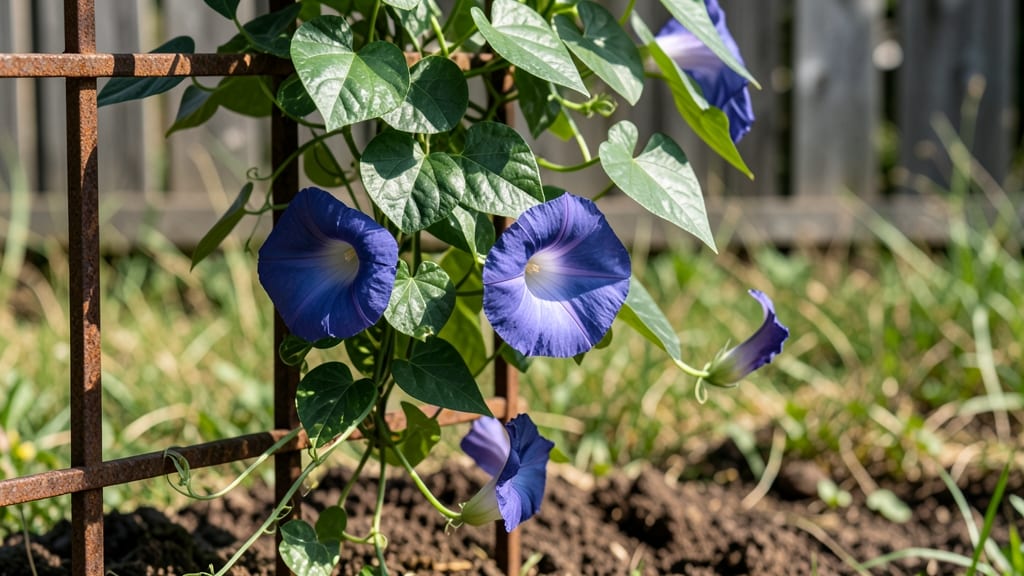
The blue morning glory flower thrives in Pacific Northwest gardens where frost can’t stop its vibrant climb. 🌿 I’ve watched these twinkling blue trumpets unfurl every summer, even after late spring frosts—once you know how to coax them along.
Their fast growth and striking color make them a favorite for trellises, arbors, and even old fences, but they need the right start to avoid becoming a tangled mess.
These vines love full sun to partial shade and well-draining soil, though they’re tough enough to handle the PNW’s damp springs. Plant seeds directly after the last frost (around mid-May here), about an inch deep, and give them space to sprawl—10 to 12 feet isn’t uncommon.
The key? A sturdy trellis or support to keep those heavy blooms from dragging everything to the ground.
By mid-summer, you’ll have a canopy of sky-blue flowers that open at dawn and close by noon, earning their name. They’re drought-tolerant once established but reward consistent watering with bigger blooms.
Just be ready for their aggressive growth—prune regularly to keep them in check and prevent them from smothering nearby plants.
Perfect for cottage gardens, vertical spaces, or even container growing with the right support. With a few simple tricks, you’ll have a frost-resistant, low-maintenance climbing star that outshines any store-bought annual. Let’s get those seeds in the ground!
📚 In This Guide
- What you need
- Instructions
- Tips and common mistakes
- Wrapping up and next steps
What you need
- ● Blue Morning Glory Seeds: 1 packet (50–100 seeds) of Ipomoea tricolor or Ipomoea nil (ensure they’re labeled "blue" or "heavenly blue").
- ● Pro tip: Choose heirloom or organic seeds for better frost resistance in cooler climates like the PNW! 🌡️
- ● Growing Containers or Garden Bed: Containers: 5–10 gallon pots (with drainage holes) for each plant, or a raised bed (minimum 12" depth).
- ● Garden Bed: Well-draining soil with full sun exposure (6+ hours/day) or partial shade in hotter PNW summers.
- ● Potting Mix: 1 bag (1–2 cubic feet) of lightweight, well-draining potting mix (e.g., 60% peat moss, 30% perlite, 10% compost).
- ○ Optional: Add 1 tbsp of worm castings per pot for nutrient boost.
- ● Trellis or Support Structure: A 6–10 ft tall trellis, arbor, or fence (morning glories climb vigorously!).
- ● DIY tip: Use bamboo stakes or a simple wire mesh for budget-friendly options! 💡
- ● Watering Can or Hose: With a gentle spray nozzle to avoid disturbing seedlings.
- ● Fertilizer: Balanced, water-soluble fertilizer (e.g., 10-10-10) or compost tea for organic growth.
- ● Seed Starting Trays (if sowing indoors 4–6 weeks before last frost).
- ● Mulch (straw or shredded leaves) to retain moisture and insulate roots in cooler PNW springs.
- ● Plant Tags to track varieties (especially if growing multiple colors!).
- ● Garden Gloves (to protect hands from prickly vines).
Step-by-step instructions for cultivating Pacific Northwest frost-resistant morning glories
This hardy climber thrives in cooler climates—here’s how to coax vibrant blue blooms from seed to trellis.
🌱 Step 1: Time Your Planting for Cool-Season Success
Morning glories in the Pacific Northwest handle light frost, but they germinate best when soil reaches 55-65°F. Start seeds indoors 8-10 weeks before your last frost date—around early March for most of the region. Use biodegradable pots to avoid root disturbance later. I like to sow seeds ¼ inch deep in a light, sterile mix, then cover the tray with plastic wrap until sprouts appear.
Here's the thing—morning glories are sensitive to cold soil, but they hate being transplanted after true leaves form. If you’re sowing directly outside, wait until soil warms to 60°F and plant seeds ½ inch deep in well-drained soil. You’ll see seedlings emerge in 7-14 days, but don’t rush them—wait until they’re 3-4 inches tall before offering support.
☀️ Step 2: Provide Support and Optimal Sunlight
Morning glories need a sturdy trellis, fence, or obelisk to climb—6-8 feet tall is ideal for blue varieties. Install support as soon as seedlings show their first true leaves. I use a simple wooden lattice or a metal trellis because it lasts multiple seasons. Gently wrap vines around the structure as they grow; they’ll twine naturally but need guidance early on.
These flowers adore full sun (6+ hours daily), but in hot afternoons, they’ll appreciate partial shade to prevent wilting. In the Pacific Northwest, morning sun with afternoon shade works perfectly. You’ll notice blooms lasting longer and vines growing more vigorously when they’re not stressed by intense afternoon heat.
💧 Step 3: Water Deeply and Fertilize Lightly
Morning glories are drought-tolerant once established, but young plants need consistent moisture. Water 1-2 inches per week, letting the soil dry slightly between waterings. Overhead watering can cause mildew, so I use a soaker hose or water at the base in the morning. You’ll know it’s working when the soil feels damp 2 inches down but not soggy.
Feed plants with a balanced, water-soluble fertilizer (10-10-10) every 4-6 weeks during the growing season. Too much nitrogen makes them focus on leaves instead of flowers, so I cut back to half-strength after mid-summer. You’ll see more vibrant blue blooms and fewer leggy vines when you keep fertilizer light.
✂️ Step 4: Deadhead and Prune for Continuous Blooms
Morning glories produce nonstop blooms if you deadhead spent flowers daily. Simply pinch off faded blossoms at the base with your fingers—no tools needed. This encourages new flowers to form and keeps the plant looking tidy. I do this in the late afternoon when blooms are wilting, so I don’t accidentally remove fresh ones.
If vines get too leggy or overcrowded, trim back ⅓ of the plant in early summer. This promotes bushier growth and more flowers. Just be careful not to cut into the main stem—focus on side shoots. You’ll see a surge of new growth and blooms within 2-3 weeks of pruning.
⏰ Step 5: Prepare for Winter and Next Year’s Growth
Morning glories are frost-resistant but die back to the ground in winter. In the Pacific Northwest, they often reseed themselves, but you can collect seeds from dried pods for next year. Let a few flowers go to seed, then harvest the pods when they turn brown and papery. Store seeds in a cool, dry place until spring.
If you want a head start, start seeds indoors again in early spring. The key is consistency—morning glories reward patience with their stunning blue trumpet-shaped blooms. With the right support and care, they’ll climb, bloom, and spread joy for years.
Tips & tricks for cultivating Pacific Northwest morning glories
A few strategic moves that'll help you coax those stunning blue blooms from seed to trellis with minimal fuss.
Soil Temperature Secret: That 55-65°F soil temperature range is non-negotiable for germination. I've learned the hard way—if your soil feels cool to the touch, wait it out. For direct sowing, use a soil thermometer to confirm 60°F before planting, especially in cooler Pacific Northwest springs. The difference between success and failure often comes down to these few degrees.
Support System Strategy: Don't wait until vines are struggling to install your trellis. The moment you see those first true leaves, get that 6-8 foot support structure in place. Morning glories twine naturally, but they need guidance early. I've had the best luck with wooden lattices—they're sturdy enough for the weight of blooms and last multiple seasons without rusting.
Watering Wisdom: The 1-2 inches per week guideline works, but timing matters just as much. Water in the morning so foliage has all day to dry, preventing fungal issues. I use a soaker hose buried slightly below the soil surface to deliver moisture directly to roots without wetting leaves. This keeps your plants healthy and your blooms vibrant longer.
Fertilizer Timing: That 10-10-10 fertilizer needs precision timing. Apply it every 4-6 weeks during active growth, but cut back to half-strength after mid-summer. Too much nitrogen later in the season will give you lush leaves at the expense of those stunning blue flowers. I've seen plants go from vibrant blooms to leafy monsters when this rule gets ignored.
Pro Tips for Blue Morning Glory Flower
- A few strategic moves that'll help you coax those stunning blue blooms from seed to trellis with minimal fuss.
- Soil Temperature Secret: That 55-65°F soil temperature range is non-negotiable for germination.
- Support System Strategy: Don't wait until vines are struggling to install your trellis.
Frequently asked questions
How cold can blue morning glory flowers tolerate?
The Ipomoea indica (blue morning glory) is a tender annual in most climates, but the Ipomoea purpurea (heavenly blue morning glory) can handle light frosts down to 25–30°F (-4 to -1°C). In the Pacific Northwest, mulching heavily in winter helps protect roots. For extra safety, grow them as annuals and replant each spring.
Are blue morning glory flowers invasive?
Yes, blue morning glory can be highly invasive in warm climates, spreading aggressively via seeds and runners. In the Pacific Northwest, where winters are cooler, growth slows but isn’t fully contained. Contain them in containers or raised beds and deadhead spent blooms to limit seed spread. Avoid planting near wild areas.
How long does it take for blue morning glory to flower?
From seed, blue morning glory typically blooms in 60–90 days under ideal conditions (warm soil, full sun). In cooler PNW springs, germination may take longer—2–4 weeks—so start seeds indoors 4–6 weeks before the last frost. Transplants may flower 2–4 weeks earlier than direct-sown seeds.
What’s a good alternative if blue morning glory struggles in my garden?
If you love vibrant blue climbers but need frost-hardier options, try:
- Clematis (e.g., Clematis ‘Jackmanii’) – Hardy to Zone 4, thrives in shade.
- Honeysuckle (e.g., Lonicera sempervirens) – Native-friendly, hummingbird magnet.
- Morning Glory (Heavenly Blue) – A hardier cousin (Ipomoea tricolor) that tolerates Zone 7.
Why aren’t my blue morning glory flowers opening?
Blooms may stay closed due to:
- Not enough sun – Needs 6+ hours of direct sunlight daily.
- Overcrowding – Thin vines for better airflow and light.
- Cool temperatures – Blue morning glory thrives in 70–85°F (21–29°C).
- Lack of pollinators – Hand-pollinate with a soft brush if bees are scarce.
Wrapping up and next steps
The blue morning glory isn’t just a stunning addition to your Pacific Northwest garden—it’s a hardy, frost-resistant climber that thrives with minimal fuss.
Whether you’re a seasoned gardener or just starting, its vibrant blooms and easy care make it a must-have for adding vertical charm and color to your outdoor space.
Ready to transform your garden? Start small—plant a few seeds or vines this season and watch your walls and trellises burst into life! 🌸 For even more tips, explore companion plants or creative ways to train this beauty up your favorite structures.