
Size
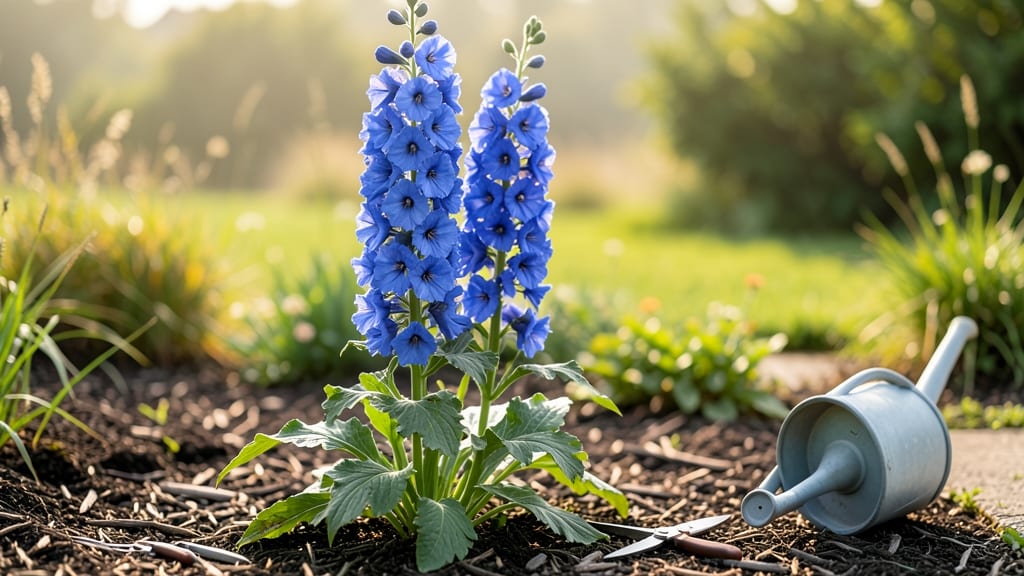
Tall blue delphiniums in your Pacific Northwest garden aren’t just flowers—they’re frost-proof vertical statements that turn borders into dramatic backdrops. 💙 These spiky giants thrive where summers are mild and winters are damp, shooting up to 6 feet without flopping, even after heavy rain.
I’ve used them to anchor perennial beds, frame entryways, and create blue-green "walls" that dwarf daylilies and coneflowers.
The secret to their staying power lies in their roots—plant them in well-drained soil with afternoon shade to prevent bolting, and they’ll reward you with 3-4 weeks of bold blooms starting in early summer.
Pair them with silver foliage (like lamb’s ear) or warm yellows (black-eyed Susans) to let their cobalt spikes pop, or tuck them behind purple clematis for a royal-blue curtain effect. They even handle light frosts, so you’ll get late-season interest when many perennials fade.
What makes them truly special is how they dominate a space without overpowering it—their airy stems let sunlight through to shorter plants below. Deadhead spent blooms to encourage second flushes, and stake them early (they’re top-heavy!).
In containers, they need 10+ gallons of space, but their height makes them instant focal points in mixed arrangements with grasses or salvias.
For PNW gardeners, these are the workhorse perennials you’ll return to year after year. They multiply slowly but reliably, and their frost resistance means fewer winter losses.
Try them as a back-row border, a cut-flower powerhouse, or even a moisture-loving woodland edge—just give them room to stretch their legs.
📚 In This Guide
- What you need
- Instructions
- Tips and common mistakes
- Wrapping up and next steps
What you need
- ● Delphinium plants: 10–20 Delphinium elatum (tall blue varieties) plants (e.g., 'Blue Lake,' 'Pacific Giant') for a striking border or focal point.
- ● OR 50–100 seeds (if starting from scratch—germination can take 2–4 weeks!).
- ● Soil amendments: 2–3 gallons of well-draining potting mix or native soil blended with compost (for pots).
- ● 1 cup bone meal or phosphorus-rich fertilizer (10-20-10 ratio) per plant to boost root and bloom strength.
- ● Sunlight: Full sun (6+ hours daily)—Delphiniums thrive in the PNW’s bright but cool conditions!
- ● Planting tools: 1 trowel or transplant spade.
- ● 1 garden fork (for loosening heavy or clay-heavy PNW soil).
- ● 1 pair of pruning shears (for deadheading spent blooms).
- ○ Support structures (optional but recommended): 4–6 sturdy garden stakes (3–4 ft tall) or a flower ring per plant (Delphiniums can grow 4–6 ft tall!).
- ● 1 roll of soft plant ties (to secure stems without damaging them).
- ● Watering: 1 watering can or hose with a gentle spray nozzle (Delphiniums hate soggy roots!).
- ○ Drip irrigation kit (optional, for large plantings).
- ● Mulch: 2–3 inches of organic mulch (e.g., straw or wood chips) to retain moisture and protect roots from frost.
How to grow Pacific Northwest-friendly delphiniums for stunning height and frost resistance
Here's my battle-tested method for growing tall blue delphiniums that thrive in cool climates.
🌱 Step 1: Choose the Right Site and Prepare Soil for Delphiniums
Delphiniums need a location with full sun to partial shade—at least 6 hours of sunlight daily—but in hotter Pacific Northwest summers, afternoon shade helps prevent bolting. I always test the soil first: dig a hole, add water, and wait. If it drains within 15 minutes, the soil is perfect. If it stays soggy after an hour, amend with 2 inches of coarse sand per hole.
These plants crave well-draining, fertile soil with a pH between 6.5 and 7.5. I mix 2 cups of compost into the bottom 6 inches of soil for each plant. The reason? Delphiniums have shallow but fibrous roots that need both nutrients and aeration. Skip the heavy clay—it’ll rot those roots before your plants even bloom.
🪴 Step 2: Plant Bare-Root Delphiniums at the Right Time and Depth
In the Pacific Northwest, plant bare-root delphiniums in early spring (March-April) or fall (September-October) when soil temperatures hover around 50-60°F. Soak the roots in lukewarm water for 2 hours before planting—this jumpstarts hydration and reduces transplant shock. I always trim any mushy or blackened roots with clean scissors; healthy roots should be firm and white.
Dig a hole twice as wide as the root ball but only as deep as the crown (where roots meet stems). The crown must sit just above soil level—burying it too deep causes rot, while leaving it exposed leads to stem collapse. Space plants 2-3 feet apart for mature height (they’ll reach 4-6 feet tall with proper care). Here’s the thing—delphiniums are top-heavy, so staking early prevents flopping in windy PNW summers.
☀️ Step 3: Water Deeply and Establish a Consistent Routine
Water deeply once a week during the first growing season, aiming for 1-1.5 gallons per plant. The soil should be dry 2 inches down before watering again—delphiniums hate soggy feet but need consistent moisture. I use a soaker hose to avoid wetting leaves, which reduces fungal risks like powdery mildew. Mulch with 2 inches of straw around the base to retain moisture and suppress weeds.
After the first year, delphiniums develop deeper roots and become more drought-tolerant. By year two, you can reduce watering to every 10-14 days, checking for dryness 3 inches down. The key is deep watering—shallow puddles encourage weak roots. You’ll know you’re doing it right when the foliage stays deep green and upright, not wilting or yellowing.
✂️ Step 4: Stake and Support for Height and Wind Resistance
Install 6-foot bamboo stakes or metal cages at planting time—delphiniums grow fast, and waiting means wrestling with flopping stems later. I tie stems loosely with soft plant ties (never wire) every 12 inches up the stem. The goal is to guide growth, not restrict it. Watch for sideways bending—this is your signal the stake isn’t tall enough or the ties are too tight.
Deadhead spent blooms after the first flush (late spring) to encourage a second round of flowers. Cut stems back to the first set of healthy leaves, but never remove more than ⅓ of the plant at once. In fall, cut back stems to 6 inches tall and add a 2-inch layer of compost around the base. This protects the crown over winter and feeds next year’s growth.
⏰ Step 5: Winterize for Pacific Northwest Frost Resistance
Delphiniums are surprisingly hardy for their height (USDA Zones 3-8), but young plants need extra care. In late fall, mound 4-6 inches of straw or leaves over the crown after the first hard frost. This insulation prevents heaving (when roots freeze and thaw, pushing plants out of the ground). I also water deeply before the ground freezes—hydrated roots survive winter better.
In early spring, remove the mulch and check for heaving. If the crown is exposed, gently press it back into the soil and add a 1-inch layer of fresh mulch. New growth should appear within 2-3 weeks if temperatures stay above 40°F. Here’s where it gets fun—watch for blue flower spikes by mid-summer, signaling your delphiniums are thriving in the cool PNW climate.
Tips & tricks for Pacific Northwest frost-resistant delphiniums
Growing towering blue delphiniums in the Pacific Northwest takes a few strategic moves—here's how to avoid the pitfalls I learned the hard way.
Sunlight Strategy: While delphiniums need at least 6 hours of sunlight daily, I've found that positioning them where they receive morning sun and afternoon shade during our hottest summer months prevents bolting—the sudden flowering that cuts growth short. In Step 1, if you're unsure about your spot, test it by observing how long sunlight lingers in your garden. A simple trick: use a white plate to track sun exposure for a week.
Soil Test Simplified: The 15-minute drainage test in Step 1 is crucial, but here's what I do differently: I add a handful of perlite to the hole before planting. This extra aeration helps prevent waterlogging, especially in our clay-heavy PNW soils. For the 2 cups of compost, I use worm castings instead of regular compost—they're gentler on young roots and provide slow-release nutrients that prevent fertilizer burn.
Planting Depth Visual: Getting the crown depth right in Step 2 can be tricky. I use a simple visual: the crown should sit at the same level as it did in the nursery pot. Imagine it as a pancake—you wouldn't bury the whole stack, just leave the top visible. This ensures proper air circulation at the base while preventing rot from buried stems. For spacing, I mark 2-foot intervals with small pebbles before planting to maintain that critical 2-3 feet between plants.
Watering Hack: The deep watering routine in Step 3 works wonders, but I've perfected a timing trick: water in the early morning when temperatures are coolest. This gives the soil time to absorb moisture before the heat of day. For the 1-1.5 gallons per plant, I use a simple formula: 1 gallon for plants under 3 feet tall, plus an extra half gallon for every additional foot of height. This ensures your towering delphiniums get enough water to reach their full potential.
Pro Tips for Delphinium Tall Blue Flowers
- Growing towering blue delphiniums in the Pacific Northwest takes a few strategic moves—here's how to avoid the pitfalls I learned the hard way.
- In Step 1, if you're unsure about your spot, test it by observing how long sunlight lingers in your garden.
- Soil Test Simplified: The 15-minute drainage test in Step 1 is crucial, but here's what I do differently: I add a handful of perlite to the hole before planting.
Frequently asked questions
about growing delphinium tall blue flowers—especially in the Pacific Northwest—can make all the difference in your gardening success! Here are answers to the most common queries to help you cultivate these stunning blooms with confidence.How tall do delphiniums grow, and do they need staking?
Tall delphinium varieties, like 'Pacific Giant' or 'Black Night', can reach 4 to 6 feet (or even taller in ideal conditions!). Yes, they absolutely need support—use bamboo stakes or pea stakes tied gently with soft twine. Plant them 18–24 inches apart to avoid overcrowding, which weakens stems. Pro tip: Bury stakes at planting time to avoid disturbing roots later!
Are delphiniums truly frost-resistant in the PNW?
Yes! These hardy perennials thrive in the Pacific Northwest’s USDA Zones 3–9, handling frost and even light snow. However, young plants may need mulch or a frost cloth in their first winter. Once established, they’ll bounce back dramatically in spring. Bonus: Their deep roots make them drought-tolerant once mature—just water deeply during dry spells.
When is the best time to plant delphiniums in the PNW?
For spring blooms, plant bare-root delphiniums in early spring (March–April) or container-grown plants in fall (September–October). Fall planting gives roots time to establish before winter. Avoid late summer planting—heat stress can shock young plants. Timing hack: Soak roots in water for 1–2 hours before planting for a head start!
What pests or diseases should I watch for with delphiniums?
Delphiniums are generally low-maintenance, but keep an eye out for:
- Slugs/snails: They love young leaves—use beer traps or diatomaceous earth.
- Japanese beetles: Handpick or use neem oil if infestations occur.
- Powdery mildew: Improve airflow and avoid overhead watering to prevent this fungal issue.
Can I grow delphiniums in containers, or do they need a garden bed?
While they prefer garden beds for their deep roots, you can grow dwarf varieties (like 'Blue Bird') in 12–15 inch pots with well-draining soil. Use a heavy container to prevent tipping, and fertilize regularly. Container hack: Mix in compost and perlite for optimal drainage—delphiniums hate soggy roots!
Wrapping up and next steps
Delphinium’s tall, striking blue blooms bring unmatched drama to Pacific Northwest gardens—thriving in frost, drought, and even rocky soils! Whether you’re drawn to their elegant height or low-maintenance resilience, these flowers are a dream for both beginners and seasoned gardeners. 🌿
Ready to transform your outdoor space? Start by choosing the right variety for your zone, then grab your gloves—planting these beauties is the first step toward a show-stopping garden. Your future blooms will thank you!
- 💡 Pro Tip: Pair delphiniums with silver foliage plants for extra contrast.
- ✨ Next Step: Sketch your garden layout—height matters!