
Flowers
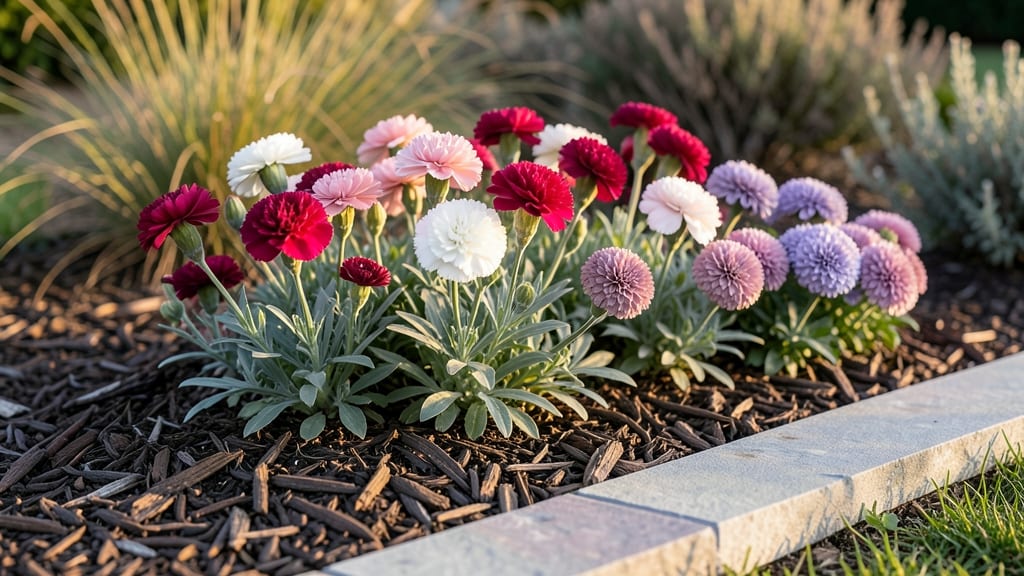
A dianthus flower bed in the Pacific Northwest isn't just a garden feature—it's a fragrant, textured statement that thrives where others fade. 🌿 I learned this the hard way after my first attempt withered in damp shade, but once I mastered the right varieties and placement, my bed became the neighborhood's most talked-about focal point.
The secret lies in choosing climate-hardy varieties like 'Firewitch' for heat tolerance or 'Matrona' for cold resilience, paired with sun-loving companions like lavender and catmint. These plants create vertical layers that catch light beautifully, while their silvery foliage contrasts perfectly with dianthus' bold blooms.
By summer, you'll have a fragrant cloud of pink, red, and white that hums with bees and butterflies—no deadheading required. The key is well-drained soil and even spacing (12-18 inches apart) to prevent mildew, which I now check religiously after our rainy springs.
Whether you're going for cottage charm or modern minimalism, dianthus adapts—just adjust the color palette and companion plants. Let's turn your space into a PNW garden showstopper that lasts from spring through fall.
📚 In This Guide
- What you need
- Instructions
- Tips and common mistakes
- Wrapping up and next steps
What you need
- ● Dianthus plants: Choose Dianthus barbatus (Sweet William) or Dianthus chinensis (China Pink). Aim for 12–15 plants per 4’ x 4’ bed (adjust spacing for taller varieties). Opt for bare-root or 4” pots for best results.
- ● Well-draining soil: Mix 1 part native soil with 1 part compost and 1 part coarse sand or perlite (PNW’s clay-heavy soil needs this!). 5–10 cubic feet per 4’ x 4’ bed.
- ● Organic mulch: 2–3 inches of cedar chips or pine bark to retain moisture and deter weeds.
- ○ Vertical support (optional but recommended): For raised beds: 1–2” lattice panels or bamboo stakes (1 per plant).
- ● For slopes/containers: coconut coir or wire mesh to secure stems.
- ● Garden tools: Trowel or hand shovel
- ● Pruners (sterilized)
- ● Garden gloves (PNW’s soil can be gritty!)
- ● Rake or hoe for bed prep
- ○ Optional but handy: Slow-release 10-10-10 fertilizer (1 lb per 10 sq ft)
- ● Epsom salt (1 tbsp per gallon of water for magnesium boost)
- ● Drip irrigation kit (if automating watering)
- ● Prerequisites: Full sun spot (6+ hours/day—PNW’s partial shade won’t cut it!)
- ● Windbreak (dianthus hates gusts; use trees, fences, or stakes).
Step-by-Step instructions for creating a dianthus flower bed
Here's how to craft a fragrant, vertical garden showstopper that thrives in PNW's unique climate.
🪴 Step 1: Prepare the Planting Area with Proper Drainage
Dianthus roots rot easily in soggy soil—critical in the PNW's wet winters. Choose a site with 6-8 hours of sunlight and amend the soil with 2-3 inches of coarse sand or perlite mixed into the top 12 inches of native soil. This creates the free-draining conditions these Mediterranean natives crave.
Test your soil's drainage by digging a 6-inch deep hole, filling it with water, and timing how long it takes to drain. If it takes longer than 30 minutes, add more sand or gravel. I like to add a 1-inch layer of gravel at the bottom of the bed before planting to create a permanent drainage layer.
🌱 Step 2: Plant Dianthus in Clusters for Maximum Impact
Dig holes twice as wide as the root ball but only as deep as the container's root base. Space plants 12-18 inches apart—closer for dwarf varieties, wider for taller types. This spacing creates that lush, layered look while allowing airflow to prevent fungal diseases that plague PNW gardens.
Gently remove plants from containers and tease apart any circling roots. Place each plant so the top of the root ball sits just below soil level—burying too deep suffocates stems, while planting too high leaves roots exposed. Water immediately after planting to settle soil around roots and eliminate air pockets.
☀️ Step 3: Establish a Mulch Barrier for Winter Protection
Spread 2-3 inches of ornamental gravel around each plant (not over the crown) to prevent soil splash that spreads disease. In fall, add a 3-inch layer of shredded bark mulch around the base, keeping it 2 inches away from stems to prevent rot. This mulch acts like a blanket during PNW's wet winters while allowing rain to penetrate.
Here's the thing—dianthus hate soggy crowns. The gravel barrier prevents water from pooling against stems during our frequent winter rains. I always mark planting locations with small stakes before mulching to avoid smothering the plants accidentally.
💧 Step 4: Water Deeply but Infrequently After Establishment
Once established, water once weekly during dry summer months, delivering 1 inch of water per session. Let the top 2 inches of soil dry between waterings—this encourages deep root growth that makes plants more drought-tolerant. Water at soil level rather than overhead to prevent fungal spores from splashing onto leaves.
You'll notice healthy dianthus develop a slightly woody base after their first year—this indicates strong root systems. During PNW's rainy season, most mature plants need no supplemental watering once established, though containers may require occasional watering during prolonged dry spells.
✂️ Step 5: Prune and Deadhead for Continuous Bloom
After the first flush of blooms fades, cut back spent stems to the first set of healthy leaves using clean, sharp shears. This encourages reblooming and prevents seed formation that weakens plants. I always sterilize my shears with rubbing alcohol between cuts to prevent disease spread.
In late fall, cut back all stems by one-third to promote bushier growth next season. Remove any dead or diseased foliage immediately—dianthus are particularly susceptible to powdery mildew in our humid summers, so prompt removal is critical for maintaining plant health.
Tips & tricks for perfect dianthus flower beds
Here's what nobody tells you about keeping your dianthus thriving year-round in our damp climate.
Soil Test Tip: That 30-minute drainage test in Step 1 is non-negotiable—dianthus roots literally suffocate if water pools. I've seen entire beds fail because gardeners skipped this step. If your soil drains slower than 30 minutes, mix in horticultural sand rather than just gravel for finer particle drainage. The goal is to mimic their Mediterranean homeland's rocky soil conditions.
Planting Depth Secret: When placing your dianthus in Step 2, press the soil gently around the root ball until it's firm but not compacted. This creates micro-pores that help roots establish faster. I use my fingers to make small dimples around the base—this guides water directly to the roots during those critical first weeks after planting.
Winter Protection Hack: The gravel barrier in Step 3 works wonders, but here's the extra trick: place small terracotta pot shards (broken ones work) around each plant stem. These create tiny air pockets that prevent water from pooling against the crown during our relentless winter rains. It's like building a tiny drainage system around each plant.
Pruning Timing: That one-third fall pruning in Step 5 should happen after the first hard frost when growth naturally slows. Cutting back too early can stimulate new growth that won't survive winter. I always prune on a dry day when temps are above 40°F to prevent stressing the plants. Sterilizing shears between cuts (as mentioned) is crucial—dianthus are particularly susceptible to fungal transfer through dirty tools.
Pro Tips for Dianthus Flower Bed
- Here's what nobody tells you about keeping your dianthus thriving year-round in our damp climate.
- Soil Test Tip: That 30-minute drainage test in Step 1 is non-negotiable—dianthus roots literally suffocate if water pools.
- Planting Depth Secret: When placing your dianthus in Step 2, press the soil gently around the root ball until it's firm but not compacted.
Frequently asked questions
Got questions about creating a stunning dianthus flower bed in the Pacific Northwest? You’re not alone! Here are answers to the most common queries to help you craft the perfect fragrant display.
When is the best time to plant dianthus in the PNW?
The ideal planting window is late spring to early summer (May–June), after the last frost. For fall-blooming varieties, plant in early autumn (September) to establish roots before winter. The PNW’s mild climate allows for year-round planting, but avoid extreme heat or frost—dianthus thrives in cool to moderate temperatures.
How often should I water my dianthus flower bed?
Water deeply once or twice a week, ensuring the soil stays moist but not soggy. The PNW’s damp climate means less frequent watering in winter, but mulch heavily to retain moisture. Avoid overhead watering to prevent fungal diseases—opt for drip irrigation or soaker hoses instead.
Are dianthus plants prone to pests or diseases in the Pacific Northwest?
Yes, but they’re generally hardy. Watch for aphids, slugs, and powdery mildew (common in humid PNW summers). Neem oil or diatomaceous earth deters pests, while improved airflow (prune crowded stems) prevents mildew. Deadhead spent blooms to encourage reblooming and reduce disease risk.
Can I mix dianthus with other flowers in my PNW garden?
Pair dianthus with lavender, catmint, or ornamental grasses for a low-maintenance, drought-tolerant bed. Avoid heavy feeders like petunias—dianthus prefers well-draining, lean soil. For vertical accents, try echeveria or sedum in nearby containers to complement their rugged charm.
Do dianthus survive PNW winters, and how do I protect them?
Most dianthus varieties are perennial in Zones 5–9, but the PNW’s wet winters can stress them. Mulch with 2–3 inches of straw or bark in late fall, and consider lightweight row covers in heavy rain or snow. Prune back dead foliage in early spring to encourage fresh growth.
What’s the secret to keeping dianthus blooming all season?
Consistent care is key! Deadhead spent blooms regularly, fertilize lightly with low-nitrogen, high-phosphorus food (like 5-10-10) in spring, and prune lightly after blooming to shape plants. In the PNW, spring and fall are peak blooming seasons—extend this with partial shade in summer to prevent stress.
Wrapping up and next steps
Creating a stunning dianthus flower bed in the Pacific Northwest is all about embracing bold colors, fragrant charm, and vertical flair—perfect for adding drama to any garden! 🌸 Whether you’re a seasoned gardener or just starting, these fragrant blooms bring year-round interest with minimal fuss.
Now that you’re armed with the right materials, tips, and answers, it’s time to roll up your sleeves and let your creativity bloom.
Ready to transform your space? Sketch your design, gather your supplies, and plant with confidence! Your future garden guests—and your senses—will thank you. 🌿