
Flowers
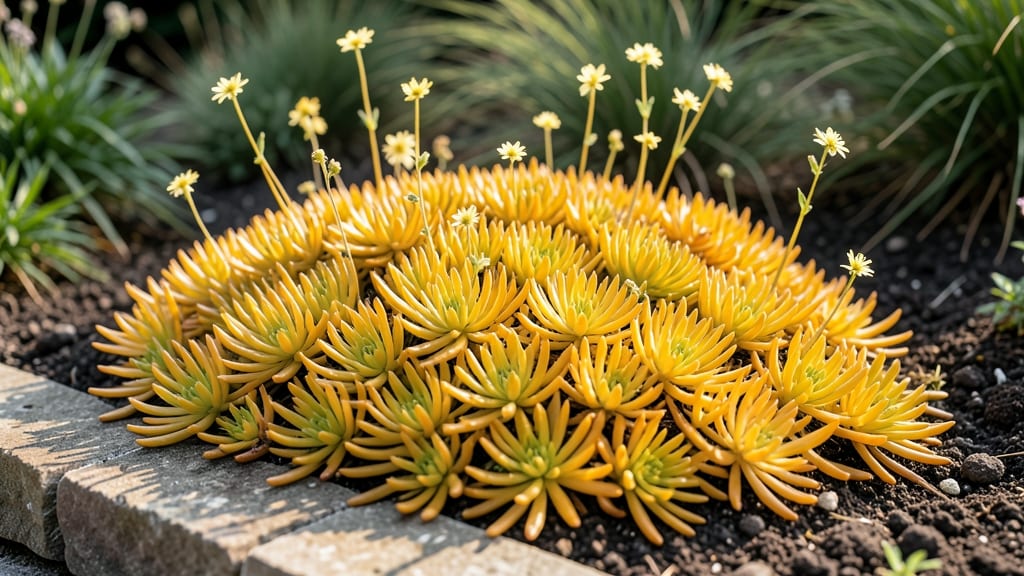
Transform your garden into a sun-drenched masterpiece with ground cover sedum featuring cheerful yellow flowers, these hardy perennials spread effortlessly while needing almost no water once established. other plants struggle.
My favorite varieties like 'Angelina' and 'Dragon's Blood' create cascading waves of golden foliage that turn brilliant red in fall, while 'Autumn Joy' bursts with golden-yellow blooms in late summer. They thrive in hot, dry climates and even handle poor soil, yet still deliver that showstopping seasonal color you crave.
Imagine a front yard where you spend 10 minutes a year on maintenance instead of hours weeding and watering. These sedums stay compact, suppress weeds naturally, and attract pollinators—all while looking like a professional landscaper did the work. The yellow flowers alone make them worth growing.
Whether you're filling a rocky slope, lining a pathway, or adding drama under mature trees, these plants deliver year-round interest with minimal fuss. Let's find the perfect spot for your sun-loving, drought-proof garden hero.
📚 In This Guide
- What you need
- Instructions
- Tips and common mistakes
- Wrapping up and next steps
What you need
- ● Sedum plants: Choose Sedum ‘Angelina’ (golden foliage with yellow flowers) or Sedum ‘Matrona’ (bright yellow blooms). Buy 5–10 mature plants (spaced 12–18 inches apart) or seed packets (if starting from scratch).
- ● Well-draining soil: Mix 1 part native soil with 1 part coarse sand or perlite (improves drainage). Test soil pH—sedum thrives in neutral to slightly alkaline (6.0–7.5).
- ● Mulch: 2–3 inches of gravel or pebbles (retains moisture, deters weeds, and mimics sedum’s natural habitat).
- ● Garden trowel or shovel (for planting).
- ● Pruning shears (to trim dead foliage or shape plants).
- ○ Gloves (optional but recommended for comfort).
- ● Watering can or hose with a gentle spray nozzle (sedum hates soggy roots!).
- ● Measuring tape or ruler (to space plants 12–18 inches apart).
- ● Slow-release fertilizer (like 10-10-10)—apply once in early spring.
- ● Drip irrigation system (for automated, low-water care).
- ● Companion plants: Pair with thyme, lavender, or ornamental grasses for a pollinator-friendly display.
- ● Edging stones (to define garden beds and prevent soil erosion).
How to establish a thriving sedum ground cover with golden blooms
This hardy perennial spreads effortlessly while delivering vibrant yellow flowers—here's how to create a sun-loving, water-wise carpet.
🌱 Step 1: Select the Right Variety and Prepare the Site
Choose a yellow-flowering sedum like Sedum 'Angelina' or Sedum 'Matrona' for their golden foliage and cheerful blooms. These varieties thrive in full sun and tolerate poor, rocky soil—ideal for slopes or between pavers. Clear the planting area of weeds and loosen the soil to a depth of 6 inches using a garden fork.
Test your soil's drainage by digging a 12-inch hole, filling it with water, and timing how long it takes to drain. If water remains after 4 hours, amend with 2-3 inches of coarse sand or gravel to improve drainage. Sedum roots rot quickly in soggy conditions, so prioritize well-draining sites above all else.
☀️ Step 2: Plant at the Correct Spacing and Depth
Plant 4-inch nursery plugs (or divisions) in early spring or fall when temperatures are mild. Space plants 12-18 inches apart—closer spacing encourages faster ground cover but may delay flowering. Dig holes slightly deeper than the root ball to encourage root expansion, but never plant deeper than the top of the root crown.
Gently remove each plant from its container and tease apart any circling roots. Place it in the hole so the top of the root ball sits level with the surrounding soil. Backfill with native soil, pressing lightly to eliminate air pockets. Water deeply immediately after planting to settle the soil and remove any air gaps around the roots.
💧 Step 3: Water Sparingly and Monitor Growth
For the first 2-3 weeks, water newly planted sedum once weekly to help roots establish. After that, reduce watering to every 2-3 weeks—sedum stores moisture in its thick leaves and stems, making it extremely drought-tolerant. Overwatering is the fastest way to kill these plants, so let the soil dry completely between waterings.
Watch for new growth in 3-4 weeks as a sign of successful establishment. If leaves appear yellow or wilted, you're likely overwatering. Sedum should look plump and firm when healthy. Once established, these plants require almost no maintenance beyond occasional trimming to control spread or encourage bushier growth.
✂️ Step 4: Prune and Maintain for Long-Term Beauty
In early spring, trim back any dead or damaged stems to 2-3 inches above the ground. This encourages fresh, vibrant growth and prevents the plant from becoming leggy. Avoid heavy pruning in late summer, as this can reduce fall blooms. Instead, simply remove spent flower stalks to redirect energy into next year's growth.
Fertilize once in early spring with a balanced, slow-release fertilizer (5-10-5 ratio) at half the recommended rate. Sedum thrives in lean conditions, so too much fertilizer promotes weak growth and fewer flowers. Mulch with 2 inches of gravel or coarse bark to suppress weeds and retain moisture without smothering the plants.
🌿 Step 5: Divide and Expand Over Time
Sedum spreads aggressively through underground runners, but you can control its growth by dividing clumps every 3-4 years. Dig up sections in early spring and replant them in new areas or share with neighbors. Each division should have 3-5 stems to ensure vigorous regrowth.
Use this method to fill gaps, create new borders, or even repair thinning areas. Sedum's ability to self-seed means you'll likely find volunteer plants popping up in nearby cracks or crevices—simply transplant any strays to maintain a neat, intentional look. With minimal care, your golden sedum ground cover will flourish for years with almost no effort.
Tips & tricks for perfect ground cover sedum with golden blooms
Creating a vibrant sedum ground cover doesn't have to be complicated—just a few strategic moves make all the difference.
Soil Preparation Secret: When testing your soil's drainage in Step 1, I recommend using a clear plastic bottle with drainage holes instead of a hole in the ground. This gives you a more accurate, controlled test—especially if your soil is naturally dense. If you find poor drainage, mix in 2-3 inches of coarse sand or gravel (as specified) but avoid compacting it. Loose, airy soil is key for those thick, succulent stems.
Planting Depth Technique: In Step 2, the "slightly deeper than the root ball" rule is crucial, but don't overthink it. A mere half-inch deeper than the container line is perfect—this encourages roots to spread horizontally without burying the crown. If you plant too deep, you risk rot from poor air circulation. After backfilling, give the soil a gentle tap with the back of your hand to eliminate air pockets without compacting.
Watering Wisdom: The 2-3 week initial watering schedule in Step 3 is flexible based on your climate. In hot, dry regions, you might need to water weekly for the full 3 weeks until roots establish. Check moisture by sticking your finger 1 inch deep—if it's dry, water. If damp, wait. Overwatering here is the #1 killer of sedum, so err on the side of less rather than more. Once established, these plants can go weeks without water.
Pruning Precision: When trimming in Step 4, use sharp, clean pruners to avoid tearing stems. Cut just above a set of leaves (where new growth emerges) rather than at random points. This encourages bushier growth and prevents the plant from becoming leggy. For fall blooms, only remove dead or spent flower stalks—never cut back more than one-third of the plant in late summer, as this can stress the plant before winter.
Pro Tips for Ground Cover Sedum Yellow Flowers
- Creating a vibrant sedum ground cover doesn't have to be complicated—just a few strategic moves make all the difference.
- Soil Preparation Secret: When testing your soil's drainage in Step 1, I recommend using a clear plastic bottle with drainage holes instead of a hole in the ground.
- Planting Depth Technique: In Step 2, the "slightly deeper than the root ball" rule is crucial, but don't overthink it.
Frequently asked questions
When is the best time to plant yellow-flowering sedum for ground cover?
The ideal time to plant sedum is in early spring or early fall when temperatures are mild (50–75°F). This gives roots time to establish before extreme heat or cold. Avoid planting in peak summer—sedum hates soggy soil and may rot. Pro tip: If you’re in a warm climate, plant in late fall to beat summer drought stress!
How often should I water sedum with yellow flowers?
Once established, sedum is extremely drought-tolerant—water only when the top inch of soil is dry (about every 2–3 weeks in most climates). Newly planted sedum needs weekly watering for the first month to encourage root growth. Overwatering is the #1 killer! Let the soil dry out completely between waterings to prevent rot.
What pests or diseases should I watch for in yellow sedum?
Sedum is generally pest-resistant, but keep an eye out for:
- Aphids (tiny green/black bugs on stems)—spray with water or use insecticidal soap.
- Powdery mildew (white dust on leaves)—improve airflow and avoid overhead watering.
- Root rot (yellowing, mushy stems)—caused by overwatering; ensure well-draining soil.
If pests appear, handpick or use neem oil for a natural fix. Healthy sedum rarely needs intervention!
Can I use yellow sedum as a living mulch or to suppress weeds?
Sedum’s dense, spreading growth makes it a fantastic living mulch—it smothers weeds, retains soil moisture, and reduces erosion. Plant it 3–6 inches apart for full coverage. Bonus: It looks just as good as mulch but never needs replacing! Pair it with other succulents for a low-maintenance, weed-free garden.
Will yellow sedum survive winter in cold climates?
Most sedum varieties are hardy to USDA zones 3–9, but yellow-flowering types (like Sedum ‘Angelina’ or Sedum ‘Matrona’) may need winter protection in zones below 5. In harsh winters:
- Apply a 2–3 inch layer of mulch (straw or shredded leaves) after the first frost.
- Avoid heavy snow buildup—brush it off to prevent stem breakage.
- In containers, move pots to a sheltered, unheated garage if temps drop below 10°F.
Come spring, your sedum will bounce back with vibrant yellow blooms!
Wrapping up and next steps
Ready to transform your garden into a vibrant, low-maintenance oasis? Ground cover sedum with yellow flowers is your perfect solution—drought-resistant, sun-loving, and effortlessly beautiful! 🌞 Whether you're a seasoned gardener or just starting, these hardy plants bring color and texture with minimal fuss.
Take the next step: visit your local nursery or order online to pick your favorite varieties. Plant them this weekend and enjoy a garden that thrives on sunshine and neglect! 🌱