
Pruning
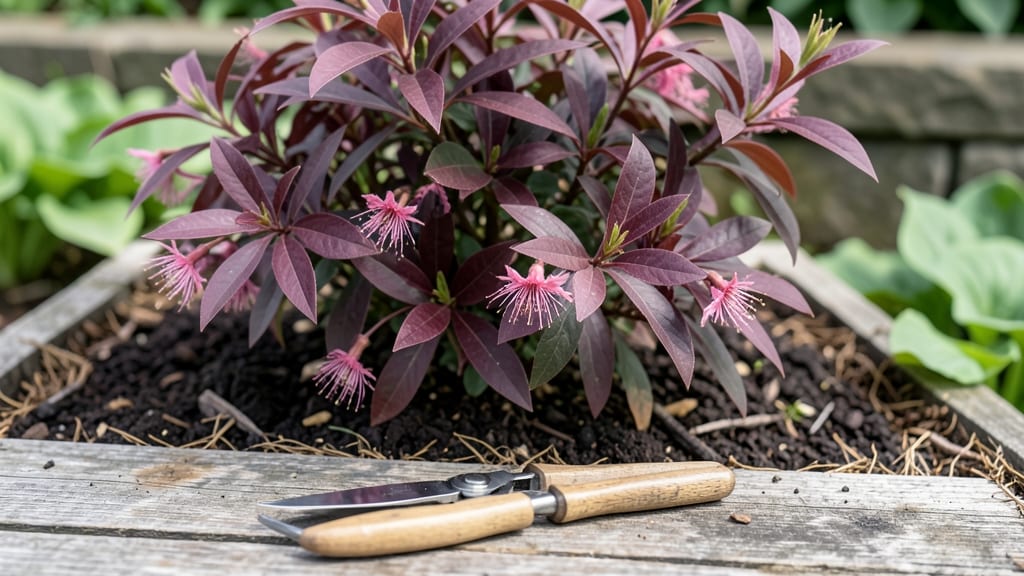
Pruning Chinese fringe flower (Loropetalum chinense) transforms it from a scraggly shrub into a vibrant, blooming powerhouse—and the secret lies in timing and technique. 🌿 I’ve revived struggling specimens just by following these three simple steps, and the difference is night-and-day: more flowers, denser foliage, and a shape that actually fits its space.
The best time to prune is late winter or early spring, before new growth starts, when the plant is dormant but not yet stressed. You’ll need sharp bypass pruners and a clean cutting surface—no jagged edges allowed.
Cut just above a leaf node or bud, at a 45-degree angle, to encourage water to run off and prevent rot. This isn’t about drastic cuts; think of it as giving your plant a haircut, not a buzz.
After pruning, your Chinese fringe flower will rebound with lush new growth within weeks. The blooms return thicker and more frequent, and the foliage stays deep purple or burgundy (depending on your variety) instead of sparse and leggy.
Just keep an eye out for over-pruning—never remove more than one-third of the plant at once, or you’ll shock it into dormancy.
This method works for all varieties, from compact ‘Purple Petticoats’ to larger ‘Yankee Doodle’. Whether you’re shaping a hedge or a standalone shrub, the same principles apply. Ready to see your fringe flower come back stronger than ever? Let’s get those shears out.
📚 In This Guide
- What you need
- Instructions
- Tips and common mistakes
- Wrapping up and next steps
What you need
- ○ Pruning shears: Bypass pruners (sharp, clean, and 1.5–2.5-inch blade length for precision cuts). Optional: Loppers (for thicker stems, 8–12 inches) if your plant is mature.
- ● Hand pruners: Anvil-style (for small stems, but avoid on delicate foliage).
- ● Gloves: Heavy-duty gardening gloves (to protect against thorns and sap).
- ● Disinfectant: 70% isopropyl alcohol or bleach solution (1 part bleach to 9 parts water) to sterilize tools and prevent disease.
- ○ Pruning sealant: Tree wound dressing (optional, for large cuts to prevent sap loss).
- ● Trash bag or bucket: For collecting pruned branches (aim for 1–2 gallons capacity).
- ● Notebook & pen: To jot down notes on cuts (e.g., "removed 30% of old blooms" or "trimmed leggy stems").
- ● Best time to prune: Late winter/early spring (just before new growth starts) or right after blooming (summer). Never prune in fall—it encourages tender growth vulnerable to frost.
- ● Weather check: Choose a dry, overcast day (humidity can spread bacteria). Avoid pruning if rain is forecasted within 24 hours.
- ● Safety first: Wear closed-toe shoes (thorns are sharp!).
- ● Have a first-aid kit nearby (just in case).
- ● Plant assessment: Inspect your Chinese fringe flower for: Dead, diseased, or crossing branches (mark them with a flagging tape if needed).
- ● Leggy or overcrowded growth (aim to open up the center for airflow).
- ● 🔪 Sharpen your tools: Dull blades tear stems, causing more damage. Use a file or sharpening stone before starting.
- ● 🌡️ Work in layers: Prune 10–15% of the plant at a time to avoid shocking it. Spread out heavy pruning over 2–3 sessions if needed.
- ● ✨ Save the clippings: Dry and store pruned branches for compost or use as mulch around the base of other plants.
Step-by-Step guide for pruning Chinese fringe flower
Here's how I revive this striking shrub for continuous blooms—no guesswork, just proven timing and technique.
✂️ Step 1: Time Your First Prune After Spring's Last Frost
Wait until after your area's final frost date but before new growth appears. Chinese fringe flower (Loropetalum chinense) blooms on old wood, so cutting too early removes next year's flowers. Look for the first flush of bright green leaves—that's your signal. I prune mine in early April in Zone 7, but adjust for your climate.
Start by removing any dead, crossing, or weak branches with clean cuts just above a leaf node. Use sharp bypass pruners to avoid tearing bark. If a branch is completely dead, cut it back to the main stem. You'll see healthy stems have smooth bark with visible buds—these are your growth points for new blooms.
✂️ Step 2: Shape and Thin for Airflow and Light Penetration
Step back and assess the shrub's natural form. Chinese fringe flower responds well to open, rounded shapes. Remove up to one-third of the oldest stems at their base to encourage new growth from the center. This prevents the classic "woody center" problem that blocks light and air.
For each remaining branch, cut back by one-third to one-half its length. Focus on branches that are growing inward or rubbing against others. Make cuts at a 45-degree angle just above an outward-facing bud. You'll notice the plant's natural tiers—preserve these for a layered, full appearance. Avoid shearing, which creates dense, weak growth and fewer flowers.
✂️ Step 3: Light Maintenance Prunes for Year-Round Blooms
After the initial spring prune, perform light maintenance every 6-8 weeks to remove spent blooms and shape new growth. Deadhead faded flowers by cutting back to the nearest leaf node. This redirects energy to new blooms rather than seed production. I do this even in winter when flowers appear—they'll reward you with fresh blooms in early spring.
In late summer, give the plant a final light prune to tidy up any leggy growth. Focus on branches that have lost their compact shape. Never remove more than 10% of the plant's volume in any single pruning session. You'll see the difference in 4-6 weeks with fuller foliage and continuous blooms. Mulch with 2-3 inches of organic mulch after pruning to retain moisture and protect roots.
Here's the thing—Chinese fringe flower is forgiving, but timing matters. If you prune too late in the season, you risk losing next year's blooms. But with this method, you'll have vibrant flowers from early spring through fall.
Tips & tricks for pruning Chinese fringe flower
A few strategic moves that'll transform your Chinese fringe flower from overgrown to showstopping.
Timing is Everything: The 6-8 week maintenance schedule in Step 3 is non-negotiable for continuous blooms. Mark your calendar after the initial spring prune—set reminders every 2 months so you don't miss those critical deadheading sessions. I keep a small garden journal where I note each pruning date and observe how the plant responds. This helps me anticipate when to expect new blooms, which is especially helpful for winter flowers that appear unexpectedly.
Tool Selection Matters: Those sharp bypass pruners aren't just recommended—they're essential. Dull pruners crush stems and create jagged cuts that invite disease. I invest in a pair of Felco pruners (around $25) that last years and make clean cuts through branches up to ½-inch thick. For thicker branches, use loppers with the same sharp blade design. Always clean your tools with rubbing alcohol between cuts to prevent spreading any potential pathogens.
Visual Cues for Perfect Cuts: When making those 45-degree angle cuts in Step 2, imagine you're cutting just above where a leaf meets the stem (the leaf node). The outward-facing bud should be clearly visible—this is your growth point for next year's blooms. I like to visualize the plant's natural tiers like a layered cake, preserving that architectural shape. If you're unsure, make a small test cut first to see how the plant responds before committing to your final shape.
Post-Prune Care: That 2-3 inches of organic mulch after pruning isn't just decorative—it's protective. Spread it evenly around the base but keep it 2-3 inches away from the trunk to prevent moisture buildup that could cause rot. I use shredded hardwood mulch because it breaks down slowly and improves soil structure over time. Water deeply after mulching to help the mulch settle and create that protective barrier against temperature fluctuations.
Pro Tips for Pruning Chinese Fringe Flower
- A few strategic moves that'll transform your Chinese fringe flower from overgrown to showstopping.
- Timing is Everything: The 6-8 week maintenance schedule in Step 3 is non-negotiable for continuous blooms.
- Tool Selection Matters: Those sharp bypass pruners aren't just recommended—they're essential.
Frequently asked questions
Got questions about keeping your Loropetalum chinense thriving with the perfect prune? Here are answers to the most common concerns—so you can confidently shape your Chinese fringe flower for stunning, year-round blooms.
When is the best time to prune Chinese fringe flower for maximum blooms?
The ideal time is late winter or early spring (just before new growth starts) or right after flowering (late spring to early summer). Avoid heavy pruning in fall—it can stimulate tender growth that may not survive winter. For variegated varieties, prune lightly to preserve foliage color.
How much can I prune without harming my Chinese fringe flower?
You can safely remove up to one-third of the plant’s height in a single session, but avoid cutting into old wood (gray/brown stems)—new growth emerges from green or reddish-brown branches. For shaping, focus on thinning out crowded stems to improve airflow and light penetration.
What should I do if my Chinese fringe flower isn’t blooming after pruning?
Check these fixes:
- Light: Ensure it gets 6+ hours of sunlight daily—partial shade may reduce blooms.
- Fertilizer: Use a balanced, acid-loving fertilizer (like 8-8-8 or 10-10-10) in spring and summer.
- Watering: Keep soil consistently moist but not soggy—drought stress can stunt blooms.
- Age: Young plants (<3 years) may need 1-2 more years to mature and flower heavily.
Can I propagate Chinese fringe flower from pruned cuttings?
Take 4-6 inch semi-hardwood cuttings in late spring or summer, dip in rooting hormone, and plant in a mix of perlite and peat moss. Keep humidity high (use a plastic bag) and roots should form in 4-8 weeks. Transplant outdoors after establishing roots!
Why are my Chinese fringe flower’s leaves turning yellow or dropping after pruning?
Yellowing or leaf drop usually signals over-pruning or stress. If you cut too aggressively, the plant may focus energy on recovery instead of foliage. Water deeply and avoid fertilizing for 4-6 weeks to help it recover. If only a few leaves yellow, it’s likely normal seasonal shedding—no cause for alarm!
Wrapping up and next steps
Pruning your Chinese Fringe Flower (Loropetalum) doesn’t have to be intimidating—with the right timing, tools, and technique, you’ll unlock a cascade of vibrant blooms all year long! 🌸 By focusing on deadheading spent flowers, shaping for airflow, and seasonal maintenance, you’re not just tidying up—you’re nurturing a healthier, more resilient plant.
Remember, consistency is key, so check your fringe flower every few weeks to keep it thriving.
Ready to see your garden transform? Grab your pruners and give your Loropetalum the care it deserves—your next step could be experimenting with colorful cultivars or even propagating cuttings to share with fellow plant lovers! 🌿