Planting
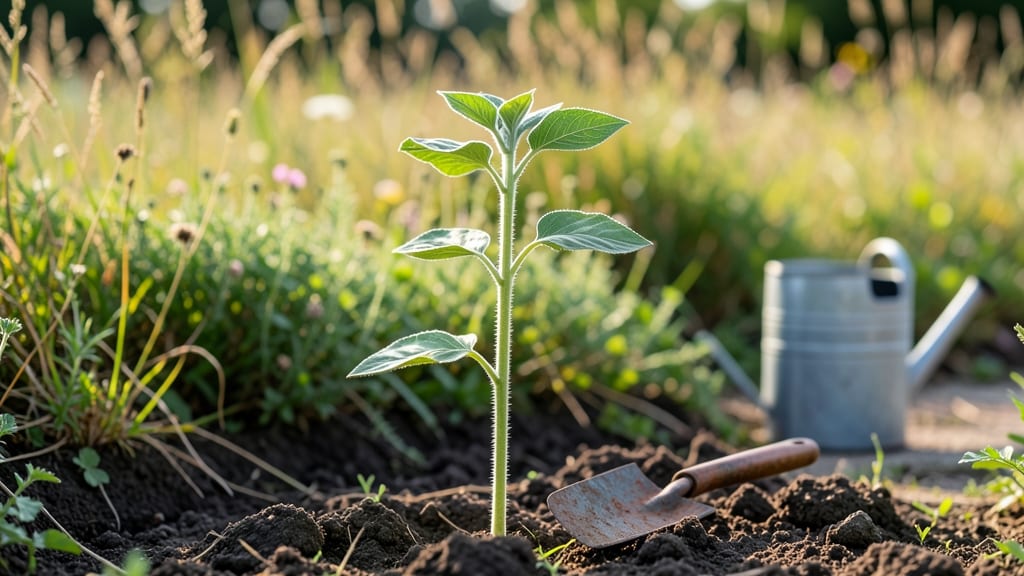
Recognizing those first sunflower leaves is your secret weapon for strong stems—they’re fuzzy, lance-shaped, and packed with potential. 🌱 These early leaves, called cotyledons, appear just days after germination, and their health sets the stage for everything that follows.
If they look pale or stunted, you’ve got a window to correct soil moisture or light exposure before it’s too late.
Keep soil consistently moist but never soggy—sunflowers hate wet feet at this stage—and place them in full sun from day one. Watch for aphids clustering on tender new growth; a strong spray of water usually sends them packing.
With the right care, those first leaves will unfurl into the bold, serrated foliage that supports towering stems later in the season.
📚 In This Guide
- What you need
- Instructions
- Tips and common mistakes
- Wrapping up and next steps
What you need
- ● Sunflower seeds: Choose a variety suited for your climate (e.g., Mammoth or Teddy Bear). Buy 10–20 seeds (or more if experimenting).
- ● Seed-starting mix: 2–3 cups of sterile, well-draining potting soil (avoid garden soil—it may harbor pests!).
- ● Containers: Small pots (2–3 inches deep) or seed trays with drainage holes (use 1–2 per seed).
- ● Watering can or spray bottle: For gentle hydration—no soaking!
- ● Grow lights or sunny windowsill: Sunflowers need 6–8 hours of light/day to avoid leggy sprouts.
- ● Heat mat: Keeps soil warm (70–75°F) for faster germination.
- ● Humidity dome: Retains moisture and warmth (great for first 5–7 days).
- ● Fertilizer (balanced, 5-5-5): A ¼ tsp mixed into soil before planting boosts early growth.
- ● Plant labels: Mark pots to track varieties and planting dates!
How to nurture sunflower seedlings through first true leaves
Here's how I turn fragile sunflower sprouts into sturdy plants ready for transplanting.
🌱 Step 1: Identify and Support the First True Leaves
The moment you see those first true leaves—deep green and larger than the initial seed leaves—is when everything changes. These leaves signal the plant has broken through its early energy reserves and is ready to grow on its own. Handle them gently; sunflower seedlings are surprisingly delicate at this stage.
Watch for the leaves to unfurl fully before you make any adjustments. If they're still curled tightly, give them another day or two. The first true leaves should appear within 10-14 days of planting, depending on your growing conditions. If you're using a heat mat, you might see them even sooner.
☀️ Step 2: Position for Maximum Light Immediately
Sunflowers need full sun from the very beginning—6-8 hours daily—to prevent leggy growth. Move your seedlings within 4 inches of a south-facing window or under a grow light running 14-16 hours per day. You'll notice seedlings stretching toward light if they're not getting enough; this is a classic sign of etiolated growth that weakens stems.
If using a grow light, keep it 2-3 inches above the tallest seedling and raise it as they grow. The light should be bright enough that you can't see the seedlings' shadows when standing directly beneath it. Rotate the tray a quarter turn daily so plants grow straight rather than leaning.
💧 Step 3: Water with Precision at the Base
Water only when the top inch of soil feels dry—sunflower seedlings hate soggy roots but also can't tolerate drying out completely. Use a spray bottle for gentle moisture until the first true leaves appear, then switch to bottom-watering by placing the tray in ½ inch of water for 10-15 minutes. This encourages deep root growth.
Watch for wilting leaves as your signal to water. Sunflowers are surprisingly drought-tolerant once established, but seedlings need consistent moisture. Avoid overhead watering after the first leaves appear—it can spread disease and weaken stems. Water at the base in the morning so leaves dry quickly.
🌿 Step 4: Strengthen Stems with Gentle Support
Once seedlings reach 3-4 inches tall with their first true leaves fully unfurled, it's time to introduce support. I like to use toothpicks or small stakes inserted ½ inch deep beside each seedling. This prevents stems from bending as they grow heavier. Don't push the stake into the stem—just place it close enough to guide growth.
You'll notice stems thickening noticeably as they reach for the light. This is when you know your seedlings are developing the strength needed for transplanting. If stems feel soft or bend easily, they need more light. Strong stems should feel firm but flexible, like a healthy green stalk.
⏰ Step 5: Prepare for Transplanting in 3-4 Weeks
Sunflower seedlings are ready for transplanting when they have 4-6 true leaves and the first true leaves are 3-4 inches long. This usually happens 3-4 weeks after germination, depending on your growing conditions. Harden them off by placing outside in partial shade for 1-2 hours daily, gradually increasing to full sun over 7-10 days.
Watch for leaves that look darker green and more vibrant after hardening off—that's your sign they're ready for the garden. Transplant on a cloudy day or in the late afternoon to reduce transplant shock. The key is to keep the root ball intact and water deeply right after planting to help roots establish quickly.
Tips & tricks for perfect sunflower seedling care
Real talk: those first few weeks with sunflower seedlings can make or break your harvest. Here's what nobody tells you about turning fragile sprouts into sturdy plants.
Lighting Strategy: The 6-8 hours of daily sun in Step 2 is non-negotiable, but here's the secret: if your seedlings start leaning toward one side, they're not getting enough light. I've seen seedlings grow toward a single window like they're trying to escape—rotate your tray every 12 hours instead of just daily to prevent this. A simple timer reminder works wonders.
Soil Moisture Secret: That top inch dry test in Step 3 is your best friend, but don't rely solely on your finger. Sunflower seedlings often show wilting before the soil actually feels dry—this is their way of telling you they need water. I keep a spray bottle handy to give quick misting when I notice leaves starting to droop, especially in the morning when they're most vulnerable.
Support System Insight: When you reach Step 4 and add those toothpicks, here's what I learned the hard way: place them at a 45-degree angle rather than straight up. This gives stems better leverage to grow thicker and more stable. The angle helps distribute the plant's weight more evenly as it reaches for the light, preventing that classic "flopping" that weakens stems.
Transplanting Timing: The 3-4 weeks in Step 5 is a guideline, but watch for these signs instead: when your seedlings have 4-6 true leaves AND the first true leaves are 3-4 inches long, they're ready. I've transplanted too early when leaves were still small, and the plants struggled to recover. Wait until you see that vibrant dark green color that signals they're truly ready for the garden.
Pro Tips for Sunflower First Leaves
- Real talk: those first few weeks with sunflower seedlings can make or break your harvest.
- Lighting Strategy: The 6-8 hours of daily sun in Step 2 is non-negotiable, but here's the secret: if your seedlings start leaning toward one side, they're not getting enough light.
- Soil Moisture Secret: That top inch dry test in Step 3 is your best friend, but don't rely solely on your finger.
Frequently asked questions
Got questions about those first delicate sunflower leaves? You’re not alone! Here are some of the most common concerns—plus quick, actionable answers to help you nurture healthy seedlings from the start.
What do sunflower first leaves look like, and how do I know if they’re healthy?
The first leaves (called cotyledons) are small, round, and smooth-edged, often with a slightly fuzzy texture. Healthy leaves should be a vibrant green, firm to the touch, and free of yellowing or browning. If they’re wilted, shriveled, or spotted, check for overwatering, under-watering, or pests like aphids.
How long does it take for sunflower first leaves to appear after planting?
Sunflower seedlings typically sprout their first leaves in 7–14 days after planting, depending on soil warmth and moisture. If planted indoors, they may appear faster (5–10 days) because of controlled conditions. If no leaves emerge after 2 weeks, gently check for moisture—dry soil or poor germination can delay growth.
What’s the best temperature range for sunflower first leaves to thrive?
Sunflowers love warmth! Ideal soil temperatures for germination and early growth are between 70–90°F (21–32°C). If nights dip below 50°F (10°C), seedlings may grow slowly or develop weak stems. Use row covers or plant in late spring to avoid chilly setbacks.
Can I transplant sunflower seedlings after the first leaves appear?
Yes, but wait until the second set of true leaves (not cotyledons) emerges for best results. Harden off seedlings by placing them outdoors in partial shade for 3–5 days before transplanting. Handle gently by the leaves (not stems) and water thoroughly after moving to reduce shock.
What should I do if my sunflower first leaves turn yellow?
Yellowing cotyledons often signal overwatering or nutrient deficiency. Let the soil dry slightly between waterings and ensure pots/drainage holes prevent soggy roots. If yellowing spreads to true leaves, add a balanced fertilizer (like 10-10-10) or compost to boost nutrients. Avoid crowding—seedlings need space to avoid competition.
Are there alternatives to sunflowers for beginners with similar early growth?
If sunflowers seem tricky, try these easy-to-grow alternatives with comparable early stages:
- Marigolds: Fast-growing, pest-repellent, and tolerant of cooler temps.
- Zinnias: Bright first leaves and quick to bloom (great for cutting flowers).
- Pumpkins: Large cotyledons make them easy to spot and monitor.
- Nasturtiums: Edible, cold-hardy, and resilient for beginners.
Wrapping up and next steps
Watching those first sunflower leaves unfurl is pure magic—it’s your sign that all your hard work is paying off! 🌱 By focusing on proper spacing, soil prep, and gentle care, you’ve set your sunflowers up for a towering, vibrant future.
Now, keep an eye on those early growth stages, and soon you’ll be rewarded with sun-kissed blooms that brighten every day.
Ready to take it further? Next up: Learn how to support strong stems as your sunflowers reach for the sky—because the best is yet to come!