
Plants
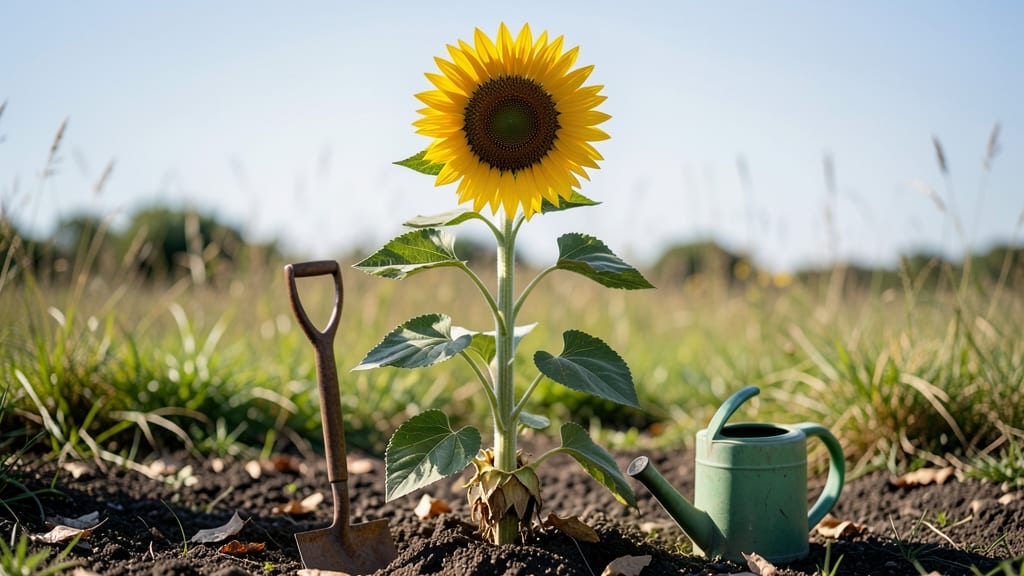
What do sunflower stalks look like in their early days—sturdy, hairy stems shooting straight up like nature’s flagpoles—and spotting them fast helps you plan your garden or catch issues early.
Those fuzzy young stalks—covered in fine, downy hairs—give way to thicker, ribbed stems as they mature, reaching heights that make your neighbors do a double take. The leaves?
Broad, rough-edged, and arranged in a spiral pattern that hugs the stem like a green ribbon, with veins that stand out under the sun.
Here’s the thing—healthy stalks are uniform in color, a deep, vibrant green that fades to golden-brown as the flower blooms. If you notice pale patches or weak spots, it’s time to check your soil or watering routine.
And don’t overlook the branching: most varieties stay single-stemmed, but some types (like the giant ‘Mammoth’ or branching ‘Autumn Beauty’) send out side shoots that create a bushier look. That’s how you tell a champion from a flop before the flower even opens.
Young stalks are all about potential—tender, fast-growing, and eager to reach for the sky. But as they mature, those stalks develop a woody texture and deep ridges that give them incredible strength, even in windy conditions.
The leaf patterns also shift: early on, they’re fuzzy and soft, but by midsummer, they’ve toughened up into coarse, jagged-edged greenery that can handle heat and drought like a pro. It’s a transformation worth watching.
Knowing what to expect helps you diagnose issues early—like powdery mildew (which looks like white dust on leaves) or aphid damage (sticky residue on stalks). And if you’re planning your garden, these traits tell you exactly how much space to leave between plants.
A single-stemmed variety needs 2-3 feet of clearance, while bush types thrive in tighter groups. That’s how you turn a wild guess into a showstopping display by summer.
📚 In This Guide
- What you need
- Instructions
- Tips and common mistakes
- Wrapping up and next steps
What you need
- ● Fresh or dried sunflower stalks – Harvested from mature sunflowers (preferably Helianthus annuus), 3–6 feet tall, with or without leaves. Tip: 💡 Use stalks from plants that have bloomed and are in the late summer/early fall stage for best texture.
- ● Pruning shears or sharp knife – For clean cuts (avoid jagged edges). A bypass pruner works best for thick stalks.
- ● Measuring tape or ruler – To document stalk height, diameter, and node spacing (inches/cm).
- ● Notebook or digital device – For sketching or noting observations (e.g., leaf patterns, stem color changes).
- ○ Magnifying glass (optional but helpful) – To inspect fine details like fuzzy trichomes or vascular bundles.
- ● Camera or smartphone – Capture close-ups of stalk textures, leaf arrangements, or growth stages.
- ● Drying rack or paper towels – If preserving stalks for crafts (e.g., wreaths, centerpieces).
- ● Food-safe knife & cutting board – If experimenting with sunflower stalk peeling (for snacks or tea—note: only use young, tender stalks and avoid bitter older ones!).
- ● Potting soil & small pots – For propagating sunflower cuttings (requires rooting hormone and patience!).
- ● Field guide or plant ID app – To compare your findings with other Compositae family plants.
How to identify sunflower stalks at every growth stage
Recognizing sunflower stalks early prevents confusion with weeds or other plants.
Spot the Germinated Seedling
Within 5-10 days of planting, you’ll see the first sign: a tiny 1-2 inch sprout with two small, rounded cotyledon leaves (the first true leaves). These look like tiny, fuzzy green shields and appear directly above the soil line.
Here’s the thing—sunflower seedlings are delicate. If the soil stays too wet, they’ll rot before you spot them. Keep the soil lightly moist but never soggy. The cotyledons will unfurl flat against the stalk, giving you your first clue that a sunflower is growing.
Watch for the First True Leaves
After 10-14 days, the cotyledons will drop off, and the first true leaves will emerge. These are longer, lance-shaped, and arranged alternately along the stalk. The leaves have a slightly fuzzy texture and a deep green color with visible veins.
This is when sunflower stalks start to resemble their mature form. The leaves grow in a spiral pattern up the stem, which helps distinguish them from weeds. If you see a single stem with leaves spiraling upward, that’s your sunflower.
Identify the Developing Stalk
By 3-4 weeks, the stalk will have thickened into a sturdy, hollow tube with rough texture. The leaves will be larger, broader, and still slightly fuzzy, especially along the edges. The stalk itself will stand 1-2 feet tall at this stage.
At this point, you’ll notice the distinctive pattern: the leaves grow in a clockwise spiral as they ascend. This isn’t just random growth—it’s how sunflowers maximize sunlight exposure. If you see this pattern, you’re looking at a sunflower stalk.
Recognize the Mature Stalk
By 6-8 weeks, the stalk will have reached its full height, often 6-12 feet tall, depending on the variety. The leaves will be large, coarse, and deeply veined, with a rough, hairy texture on both sides. The stalk itself will feel thick and woody when you touch it.
The most obvious sign at this stage is the bud at the top, which will eventually bloom into the iconic sunflower head. Even before the flower opens, the bud is a dead giveaway. If you see a tall, sturdy stalk with large, fuzzy leaves and a rounded bud, that’s your mature sunflower.
Differentiate From Weeds or Other Plants
Sunflower stalks are single-stemmed, meaning they don’t branch out like weeds or some other plants. If you see multiple stems growing from the base, it’s likely a weed or a different plant. Sunflowers also have deeply lobed leaves with a distinctive fuzzy coating, which sets them apart from most garden weeds.
Here’s a quick check: run your fingers along the leaf edges. If they feel slightly rough or hairy, it’s probably a sunflower. If the leaves are smooth or have serrated edges, it’s something else. This texture is one of the most reliable ways to confirm you’ve got a sunflower stalk on your hands.
Tips & tricks for identifying sunflower stalks at every stage
Here's what nobody tells you about those early days when sunflower growth is still a mystery.
Early Growth Clues: In Step 1, when you're checking for those 1-2 inch sprouts, pay close attention to the soil surface. Sunflower seedlings emerge just above the soil line, unlike many weeds that push through from below. The cotyledons will unfurl flat against the stalk—this is your first visual confirmation. I've seen gardeners miss this stage because they assumed the tiny sprouts were weeds.
Leaf Pattern Matters: By Step 2, when those first true leaves appear after 10-14 days, focus on the arrangement. The leaves grow in a distinctive clockwise spiral pattern that's unique to sunflowers. This isn't just random growth—it's how the plant maximizes sunlight exposure. If you see leaves spiraling upward in a single stem, that's your sunflower.
Texture Test: One trick I use in Step 5 is the texture check. Run your fingers along the leaf edges—sunflower leaves have a slightly rough, fuzzy texture that's different from most weeds. This tactile confirmation is especially helpful when identifying young plants that haven't reached their full height yet.
Bud Confirmation: In Step 4, when you're looking at mature stalks, don't overlook the bud at the top. Even before the flower opens, that rounded bud is a dead giveaway. I've seen gardeners mistake sunflower buds for other garden growth until they noticed this distinctive shape at the very top of the stalk.
Pro Tips for What Do Sunflower Stalks Look Like
- Here's what nobody tells you about those early days when sunflower growth is still a mystery.
- Early Growth Clues: In Step 1, when you're checking for those 1-2 inch sprouts, pay close attention to the soil surface.
- Leaf Pattern Matters: By Step 2, when those first true leaves appear after 10-14 days, focus on the arrangement.
Frequently asked questions
Got questions about sunflower stalks? You’re not alone! Here are some of the most common queries—plus quick, practical answers to help you identify, care for, or even repurpose them with confidence.
What do sunflower stalks look like when they’re young vs. mature?
Young sunflower stalks are slim, hairy, and bright green, often covered in fuzzy downy hairs (especially near the leaves). As they mature, they thicken into a woody, hollow stem (up to 3 inches in diameter!) with deep vertical grooves. Leaves turn rough and jagged—think serrated edges like a saw.
How long do sunflower stalks stay green before turning brown?
Sunflower stalks remain green for 80–120 days (depending on the variety) before the plant redirects energy to seed production. The leaves and stems turn yellow/brown as the flower head matures. Pro tip: If stalks brown prematurely (before flowering), check for fungal issues or nutrient deficiencies (like nitrogen).
Can you reuse sunflower stalks after the flowers die?
Once the flower head drops, the stalk is highly versatile:
- Compost: Chop into small pieces for fast decomposition (rich in potassium!).
- Crafts: Dry and bundle for rustic decor or bird feeders (leave seeds intact!).
- Animal bedding: Shredded stalks work for rabbit hutches or chicken coops.
Why do my sunflower stalks look twisted or gnarled?
Twisted stalks usually signal stress or pests:
- Overcrowding: Thin seedlings to 12–18 inches apart to reduce competition.
- Pests: Sunflower moth larvae or borers can chew stems. Handpick eggs or use neem oil as a deterrent.
- Wind damage: Stake tall varieties (like ‘Russian Giant’) in high-wind areas.
Are sunflower stalks edible for humans or livestock?
Sunflower stalks are non-toxic but not typically eaten by humans (though young, tender stalks can be blanched and stir-fried like celery!). For livestock:
- Safe for: Goats, horses, and rabbits (chop finely to avoid choking).
- Avoid for: Chickens (hard to digest; stick to seeds or greens).
Wrapping up and next steps
Now that you’ve explored the towering, textured beauty of sunflower stalks—from their woody, ribbed stems to their fuzzy, serrated leaves—you’re ready to appreciate these plants even more! Whether you’re growing them for their stunning blooms or their versatile stalks, every detail adds to their charm. 🌻
Ready to take the next step? Plant your own sunflowers this season and watch their stalks grow from seedling to sun-soaked giants! Or, if you’re feeling creative, harvest the stalks for crafts, compost, or even culinary experiments. Happy gardening! 🌱