
Pruning
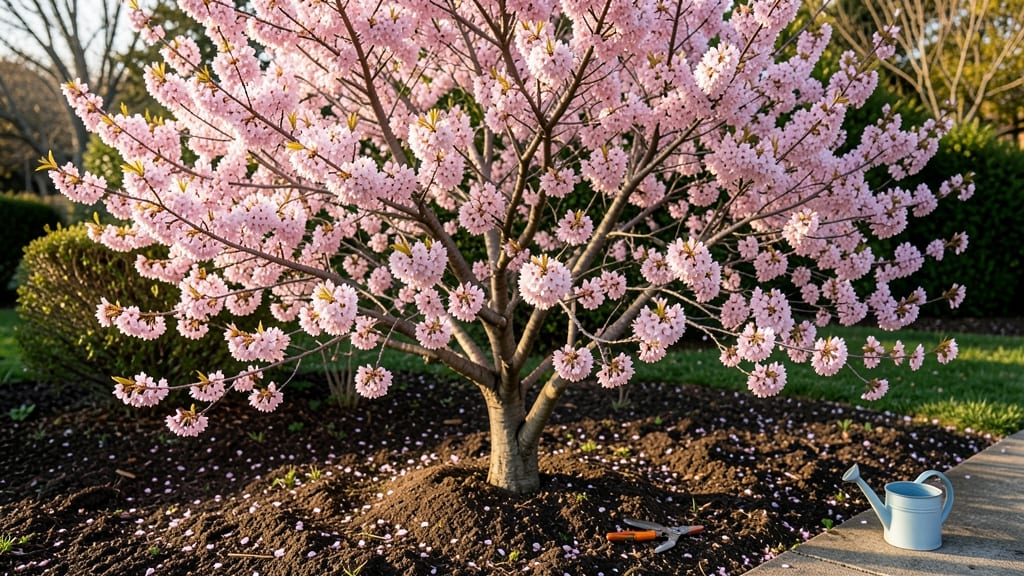
With its stunning blooms and yoshino flowering cherry tree size of 15–30 feet tall and wide, this tree transforms any space into a springtime spectacle. I planted mine in a tight urban lot, and the way it arches over the sidewalk every spring feels like a secret gift for neighbors.
The key isn’t just its size but how it fills space with delicate pink blossoms that perfume the air for weeks.
What makes this tree work in compact areas is its natural growth habit—it doesn’t need aggressive pruning to stay proportional. A light shaping in late winter keeps it balanced, and the branches grow outward gracefully, creating that iconic weeping silhouette.
For a 20-foot-wide yard, it thrives as a centerpiece; in tighter spaces, plant it near a fence where its branches can spill over without overwhelming the area.
Pair it with low-growing perennials like hostas or ferns to highlight its trunk, or add climbing roses to weave through its lower branches for year-round interest. The trade-off? You’ll need patience—full bloom takes 5–7 years, but the payoff is worth every wait.
Once established, it’s nearly maintenance-free, just asking for occasional water and an annual pruning to keep its shape.
Here’s the real secret: this tree doesn’t just fit small spaces—it elevates them. The way its blossoms turn streets into tunnels of pink is magic that works in backyards, parks, or even large containers if you’re creative. Let’s talk about how to make it work for your space.
📚 In This Guide
- What you need
- Instructions
- Tips and common mistakes
- Wrapping up and next steps
What you need
- ● Yoshino cherry tree: A dwarf or semi-dwarf variety (15–25 ft mature height) or a container-grown sapling (3–5 ft tall). Check local nurseries for Prunus × yedoensis ‘Compacta’ or similar cultivars.
- ● Well-draining soil: Mix 1 part native soil with 1 part compost and 1 part perlite or sand (for containers, use a 5-gallon pot with drainage holes).
- ● Pruning tools: Bypass pruners (for small branches, ¼–¾ inch thick)
- ● Loppers (for thicker branches, ¾–1½ inches)
- ● Hand saw (for stubborn, 1½+ inch branches)
- ● Disinfectant: 70% rubbing alcohol or bleach solution (1 part bleach to 9 parts water) to sterilize tools between cuts.
- ● Mulch: 2–3 inches of organic mulch (wood chips or shredded bark) to retain moisture and suppress weeds.
- ● Tree support: A stake or cage (for young trees in windy areas).
- ● Slow-release fertilizer: Balanced 10-10-10 or cherry-specific formula (apply in early spring).
- ● Tree guard: Plastic or metal spiral wrap to protect the trunk from pests.
- ● Container grower’s kit: If planting in pots, add hydrogel crystals or self-watering trays for convenience.
How to select and maintain a Yoshino flowering cherry tree for small gardens
This elegant tree thrives in tight spaces while delivering breathtaking spring blooms.
Choose the Right Cultivar for Your Space
The Yoshino cherry (Prunus × yedoensis) typically matures between 20-30 feet tall with a 20-25 foot spread, but dwarf cultivars like 'Cloud Nine' or 'Royal Celebration' stay under 15 feet—ideal for small yards. Always check the specific cultivar's mature size before purchasing, as even Yoshino varieties can vary by 5-10 feet depending on rootstock.
For urban settings or tiny gardens, consider grafting a Yoshino branch onto a dwarfing rootstock like 'Colt' or 'Flame' cherry rootstock. This approach gives you the classic Yoshino blooms on a 10-12 foot tree. Look for nursery tags specifying mature dimensions—this is the single most important factor in avoiding future disappointment.
Plant in the Correct Location for Optimal Growth
Yoshino cherries need full sun (6-8 hours daily) to produce their signature pink-white blossoms, but they tolerate partial shade better than most flowering trees. In hot climates, afternoon shade prevents leaf scorch. The tree's spreading habit means it should be planted 15-20 feet from structures to allow for mature spread without crowding.
Dig a hole twice as wide as the root ball but no deeper. The top of the root ball should sit 1-2 inches above ground level—this prevents water pooling around the trunk. Amend the native soil with 2-3 inches of compost mixed into the bottom of the hole to improve drainage, as Yoshino cherries are sensitive to soggy roots.
Prune Strategically to Control Size and Shape
Prune immediately after flowering (late spring) to avoid removing next year's blossom buds. Remove suckers at the base and crossing branches first—these compete for energy and distort the tree's natural vase shape. For size control, limit annual pruning to removing no more than 25% of the canopy in any one season.
To encourage a more compact form, focus pruning on the upper third of the tree where branches spread outward. Use clean, sharp pruners to make cuts just outside the branch collar. Avoid "heading back" (cutting back to a lateral branch)—this creates dense, weak growth. Instead, remove entire branches down to the trunk when necessary.
Maintain Soil and Water for Long-Term Health
Yoshino cherries prefer well-draining, slightly acidic soil (pH 5.5-6.5). Mulch with 2-3 inches of organic mulch (like shredded bark) over the root zone, keeping it 6 inches away from the trunk to prevent rot. Water deeply 2-3 times per week during the first growing season to establish roots, then taper to once weekly once established—unless experiencing drought.
Fertilize lightly in early spring with a balanced 10-10-10 formula at half the recommended rate. Over-fertilizing encourages leafy growth at the expense of flowers. Watch for yellowing leaves—this often signals iron deficiency, which can be corrected with a chelated iron supplement applied in early spring when new growth begins.
Protect Against Common Pests and Diseases
Yoshino cherries are relatively disease-resistant, but powdery mildew and cankers can occur in humid climates. Improve air circulation by pruning densely packed branches and avoid overhead watering. If mildew appears, treat with neem oil applied in late afternoon to prevent leaf burn.
Watch for cherry fruit flies (even if no fruit develops) and borers—signs include sawdust-like frass at branch bases or oozing sap. Apply beneficial nematodes for larvae control or dormant oil spray in late winter to smother overwintering pests. A healthy Yoshino should require minimal intervention if planted correctly and maintained with proper spacing.
Tips & tricks for perfect Yoshino flowering cherry tree size management
Between us, the key to keeping your Yoshino cherry compact lies in smart selection and consistent care—here’s how to avoid common pitfalls that turn small-space dreams into headaches.
Cultivar Selection: When choosing between standard Yoshino cherries (20-30 feet) and dwarf varieties (10-15 feet), always verify the mature height on the nursery tag. I learned this the hard way after purchasing what I thought was a 'Royal Celebration' that turned out to be a full-sized tree—double-check before bringing it home. For true compact growth, graft Yoshino branches onto dwarfing rootstock like 'Colt'; this guarantees the classic blossoms on a manageable frame.
Pruning Precision: The 25% canopy rule in Step 3 isn’t arbitrary—it’s the sweet spot for maintaining size without stressing the tree. Focus on removing only the most vigorous branches in the upper third, as this naturally encourages a more compact, vase-like shape. I recommend using a pruning saw for thicker branches (over 1 inch) to avoid tearing the bark, which can invite disease. And never skip the late-spring timing—pruning too early risks cutting off next year’s flower buds.
Soil and Water Balance: That 2-3 inches of compost in Step 2 isn’t just about drainage—it’s about creating the right environment for compact growth. Yoshino cherries in small spaces need well-aerated roots to prevent outward sprawling. After planting, water deeply but infrequently (2-3 times weekly for the first year) to encourage deep root development. Overwatering leads to weak, leggy growth that fills space faster than you’d like.
Seasonal Maintenance: The early spring fertilization tip in Step 4 deserves emphasis: use only half the recommended rate of 10-10-10 fertilizer. Too much nitrogen promotes leafy growth at the expense of blossoms, and that’s the last thing you want in a small garden where every inch counts. For iron deficiency (yellowing leaves), apply chelated iron in early spring—this targeted approach keeps your compact tree flowering beautifully without excessive foliage.
Pro Tips for Yoshino Flowering Cherry Tree Size
- Between us, the key to keeping your Yoshino cherry compact lies in smart selection and consistent care—here’s how to avoid common pitfalls that turn small-space dreams into headaches.
- Cultivar Selection: When choosing between standard Yoshino cherries (20-30 feet) and dwarf varieties (10-15 feet), always verify the mature height on the nursery tag.
- Pruning Precision: The 25% canopy rule in Step 3 isn’t arbitrary—it’s the sweet spot for maintaining size without stressing the tree.
Frequently asked questions
Got questions about Yoshino flowering cherry trees?
You’re not alone! Whether you’re planning a garden or just curious about their care, here are some of the most common queries—and their answers—to help you grow this stunning tree with confidence.
How big does a Yoshino flowering cherry tree get at maturity?
A mature Yoshino cherry tree typically reaches 25–35 feet tall and 20–30 feet wide with proper spacing. However, regular pruning can keep it smaller—ideal for urban gardens or small yards! If space is tight, consider dwarf varieties or container planting for a more manageable size.
How long does it take for a Yoshino cherry tree to bloom?
Young Yoshino trees may take 3–5 years to produce their iconic pink blossoms, depending on climate and care. Patience pays off—once established, they bloom spectacularly for 1–2 weeks in early spring (usually March–April in most U.S. zones). Choose a healthy, well-placed tree to speed up the process!
Can a Yoshino cherry tree grow in a pot or container?
Yes! Yoshino cherries thrive in large containers (at least 20+ gallons) if pruned regularly to control growth. Use well-draining soil and ensure the pot has drainage holes. However, they’ll need winter protection in cold climates (e.g., wrapping the pot or moving it indoors). Containers work best for dwarf varieties or as temporary plantings.
When and how should I prune a Yoshino cherry tree?
Prune immediately after blooming (late spring) to avoid cutting off next year’s flowers. Focus on removing dead, crossing, or overcrowded branches—never prune more than 25% of the canopy at once. Sterilize tools with rubbing alcohol to prevent disease. For compact growth, prune lightly in summer to shape the tree.
Are Yoshino cherry trees messy? Do they drop a lot of debris?
Yes, but it’s part of their charm! After blooming, they shed petals, leaves, and small fruits (cherries), which can create a colorful (but temporary) mess. To minimize cleanup, plant them near a grass area or mulch heavily beneath the tree. Rake up debris regularly to keep your space tidy.
Wrapping up and next steps
The Yoshino flowering cherry tree is a stunning choice for small gardens, offering breathtaking blooms without overwhelming your space. With mature sizes ranging from 20 to 30 feet, its compact nature makes it perfect for urban yards, patios, or even large containers.
Whether you’re pruning for shape, health, or sheer beauty, this tree delivers year-round charm with minimal fuss.
Ready to transform your outdoor space? Start planning your planting or pruning today! 🌸 Whether you’re a seasoned gardener or a beginner, this tree’s manageable size and stunning flowers make it a rewarding project. Happy gardening! 🌱