
Container Gardens
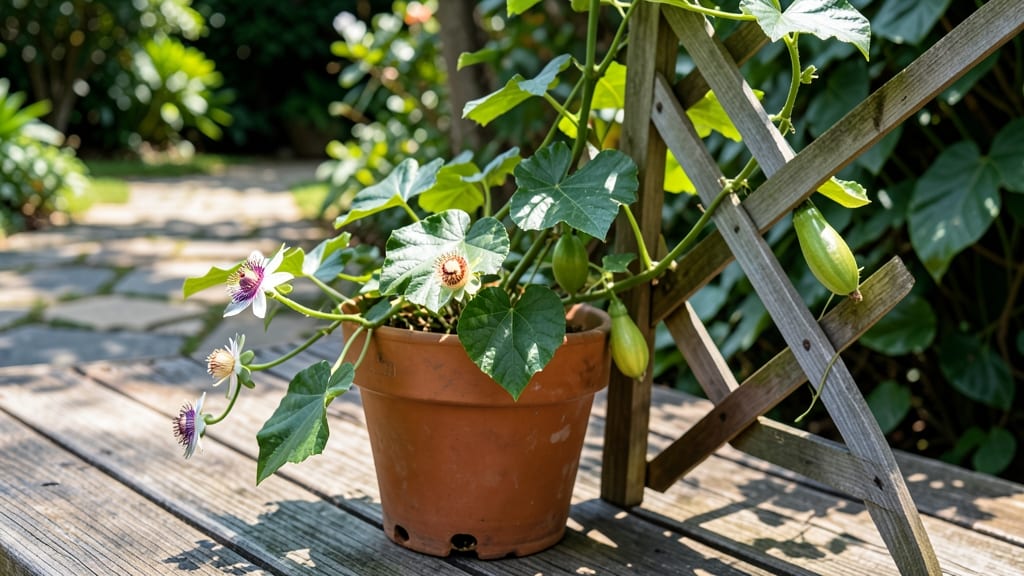
Growing passion flowers in pots turns even the smallest balcony into a jungle of fragrant vines and exotic blooms. 🌿 I’ve watched my own passiflora climb a trellis in a 5-gallon container, producing velvety purple flowers that hummingbirds adore—all without taking up yard space.
The key isn’t just the pot size but matching the plant’s tropical roots to the right soil mix and sunlight balance.
You’ll need a pot with drainage holes (at least 12 inches deep), a well-draining potting mix, and a sturdy trellis or cage for support. Passion vines are thirsty but hate soggy roots, so a self-watering container or regular moisture checks keep them happy.
Varieties like Passiflora caerulea (blue passionflower) or Passiflora edulis (fruit-bearing) thrive in pots with minimal fuss.
By summer’s end, you’ll be rewarded with vibrant blooms and maybe even edible fruit, depending on the variety. The vines grow fast—prune in early spring to control size and encourage bushier growth.
Even in small spaces, this tropical beauty becomes the star of your garden without the commitment of in-ground planting.
Perfect for renters, urban gardeners, or anyone who wants drama without the yard. Let’s get those vines climbing!
📚 In This Guide
- What you need
- Instructions
- Tips and common mistakes
- Wrapping up and next steps
What you need
- ● Container: A well-draining pot (12–18 inches in diameter) with drainage holes. Terracotta or fabric pots are ideal!
- ● Passion Flower Plant: A healthy Passiflora cutting or young plant (e.g., Passiflora edulis or Passiflora caerulea).
- ● Potting Mix: A lightweight, well-draining soil mix (50% potting soil + 50% perlite, sand, or orchid bark).
- ● Fertilizer: A balanced, water-soluble fertilizer (10-10-10 or 20-20-20) or organic compost.
- ● Support Structure: A trellis, cage, or sturdy stake (at least 4–6 feet tall) for climbing vines.
- ● Watering Can or Hose: With a gentle spray nozzle for even moisture.
- ● Pruning Shears: Sharp, clean shears for trimming.
- ● Mulch (e.g., pine bark or straw) to retain moisture.
- ● Slow-release fertilizer pellets for convenience.
- ● A humidity tray if your climate is dry.
- ● Epsom salt (for magnesium boosts, if needed).
- ● Garden gloves for easy handling.
Step-by-Step guide to cultivating passion flower in containers
Here's how to coax these exotic vines into flourishing even in limited urban spaces.
🪴 Step 1: Select the Right Container and Soil Mix
Passion flowers need room to spread—choose a 12-15 gallon pot with drainage holes for each vine. The roots appreciate aeration, so avoid heavy clay containers. I use well-draining potting mix amended with 20% perlite or orchid bark to prevent compaction. This mimics their native tropical soil conditions while preventing root rot.
Fill the pot 2/3 full with your mix, then tap it gently on the table to settle. The goal is a loose, crumbly texture that won't suffocate roots. Add a slow-release fertilizer (like 10-10-10) mixed at 1 cup per cubic foot of soil—this gives them a nutrient boost without burning tender roots.
🌱 Step 2: Plant and Position for Maximum Growth
Dig a hole twice as wide as the root ball but only as deep as the container's original planting depth. This prevents stem rot from buried stems. Place your passion flower vine in the center, then backfill with soil while gently pressing to eliminate air pockets. Water immediately until moisture runs from the drainage holes—this settles the roots.
Position your pot in full sun (at least 6-8 hours daily). Passion flowers are tropical vines that thrive in warmth. If you're in a cooler climate, bring them indoors during winter or use a grow light for 12-14 hours/day. The key is maintaining 65-85°F soil temperatures—any cooler and growth slows dramatically.
💧 Step 3: Water and Feed for Optimal Vine Development
Water when the top 2 inches of soil feel dry to the touch. Passion flowers are drought-tolerant once established, but young plants need consistent moisture. I water deeply 2-3 times per week in summer, reducing to once weekly in winter. Overwatering causes yellow leaves and root rot—always check drainage holes for excess moisture.
Feed every 4-6 weeks with a balanced liquid fertilizer (like 20-20-20) diluted to half strength. You'll see new leaves and tendrils as a sign it's working. Stop fertilizing in late summer to encourage dormancy if growing in cooler zones. Here's the thing—passion flowers respond well to organic options like compost tea too, but stick to the synthetic for faster results.
✂️ Step 4: Prune and Train for Healthy Growth
Prune in early spring before new growth begins. Cut back one-third of the previous year's growth to encourage bushier vines. Remove any dead or diseased stems immediately—passion flowers are susceptible to fungal issues in humid conditions. I also pinch back the first few sets of leaves to promote branching rather than long, leggy growth.
Train vines using a trellis or obelisk placed at planting. Passion flowers are vigorous climbers that need support. Gently tie new growth to the structure with soft plant ties every 6-8 inches. This prevents stem breakage from heavy blooms later in the season. Real talk: if you skip this, your vine will sprawl everywhere—be prepared for a jungle.
☀️ Step 5: Overwinter and Prepare for Next Season
In USDA zones 9-11, passion flowers stay evergreen year-round. For cooler climates, move pots to a bright, cool indoor space (like a garage with natural light) where temperatures stay 50-60°F. Reduce watering to once every 2-3 weeks and stop fertilizing entirely. This mimics their natural dry season and prevents winter dieback.
In late winter, inspect roots for rot or pests. Trim any damaged areas with sterilized pruners, then repot if roots have filled the container. This is the moment that matters: fresh potting mix gives them a clean slate for spring growth. Watch for new shoots emerging in 4-6 weeks—that's your cue to resume regular care.
Tips & tricks for thriving passion flower in containers
Between us, container-growing passion flowers has its quirks—but these tricks will turn your balcony into a jungle oasis without the guesswork.
Container Size Matters: That 12-15 gallon range isn't arbitrary—passion flowers spread aggressively. For every additional vine, add 2-3 gallons of capacity. I've seen people cram two vines into a 10-gallon pot, and by summer, the roots were circling like a tangled mess. Pro tip: Use pots with built-in trellises to maximize vertical space and prevent root competition.
Soil Texture is Non-Negotiable: The 20% perlite/orchid bark amendment in Step 1 isn't just fluff—it's insurance against root rot. If your mix feels dense when squeezed, add more aeration. I test soil moisture by sticking my finger 2 inches deep: if it's damp beyond that, hold off on watering. Overwatering is the #1 killer of container-grown passion flowers, and it shows up as yellowing leaves first.
Lighting Hacks for Small Spaces: Those 6-8 hours of sunlight? Critical. In tight urban balconies, I supplement with a 12-14 hour LED grow light during shorter days. Position it 12-18 inches above the plant and angle it so leaves don't bake. Watch for leaves stretching toward light—this means your vine is light-starved. Rotate the pot weekly so growth stays even.
Pruning for Bushier Growth: That one-third cut in early spring isn't just about tidiness—it's about redirecting energy. When you pinch back the first few sets of leaves, you're telling the plant to branch out instead of growing one long, floppy stem. I prune again in midsummer to remove any leggy growth, and my vines end up twice as bushy by fall. Just remember: always prune above a leaf node where new growth can sprout.
Pro Tips for Growing Passion Flower In Pots
- Between us, container-growing passion flowers has its quirks—but these tricks will turn your balcony into a jungle oasis without the guesswork.
- Container Size Matters: That 12-15 gallon range isn't arbitrary—passion flowers spread aggressively.
- Soil Texture is Non-Negotiable: The 20% perlite/orchid bark amendment in Step 1 isn't just fluff—it's insurance against root rot.
Frequently asked questions
Got questions about growing passion flower in pots? You’re not alone! Here are some of the most common concerns—and their easy solutions.
What’s the best pot size for passion flower?
Start with a 5-gallon container for young plants, but aim for at least 10 gallons as vines mature. Passion flowers need room for roots and support—opt for wide, shallow pots with drainage holes. If space is tight, choose dwarf varieties like Passiflora caerulea (blue passionflower), which thrive in smaller pots.
How long does it take for passion flower to bloom in a pot?
Patience is key! With ideal conditions (sun, warmth, and consistent watering), you might see blooms within 1–2 years. Young plants focus on root and vine growth first. Prune leggy growth to encourage bushier, flower-heavy vines. Pro tip: Feed with a balanced fertilizer (10-10-10) every 4–6 weeks during growing season for faster blooms!
Why are my passion flower leaves turning yellow?
Yellow leaves usually signal overwatering or nutrient deficiency. Let the top 1–2 inches of soil dry out between waterings, and avoid soggy pots. Check for pests like spider mites too—wipe leaves with soapy water if needed. For yellowing edges, boost potassium with a banana peel tea or compost.
Can I grow passion flower indoors?
Possible, but tricky! Passion flowers crave sunlight—place pots near a south-facing window or use grow lights (12+ hours/day). Humidity is critical; mist leaves or use a pebble tray. Expect slower growth and fewer blooms indoors. If you’re set on indoor growing, Passiflora edulis (passionfruit) is the most adaptable.
What can I plant with passion flower in a pot?
Pair it with companion plants that love similar conditions:
- Trailing plants: Nasturtiums or sweet potatoes for ground cover.
- Herbs: Basil or oregano to deter pests naturally.
- Dwarf shrubs: Mexican bush sage or salvia for color contrast.
Wrapping up and next steps
Growing passion flower in pots is a rewarding way to enjoy lush vines and stunning blooms—even in small spaces! 🌱 With the right container, soil, and a little care, you can cultivate a thriving plant that adds beauty and charm to your balcony or patio.
Start small, monitor your vine’s needs, and soon you’ll be rewarded with vibrant flowers and maybe even edible fruits.
Ready to take the next step? Experiment with different varieties or try training your vine along a trellis for a stunning vertical display. Happy gardening—your passion flower awaits! 🌸